










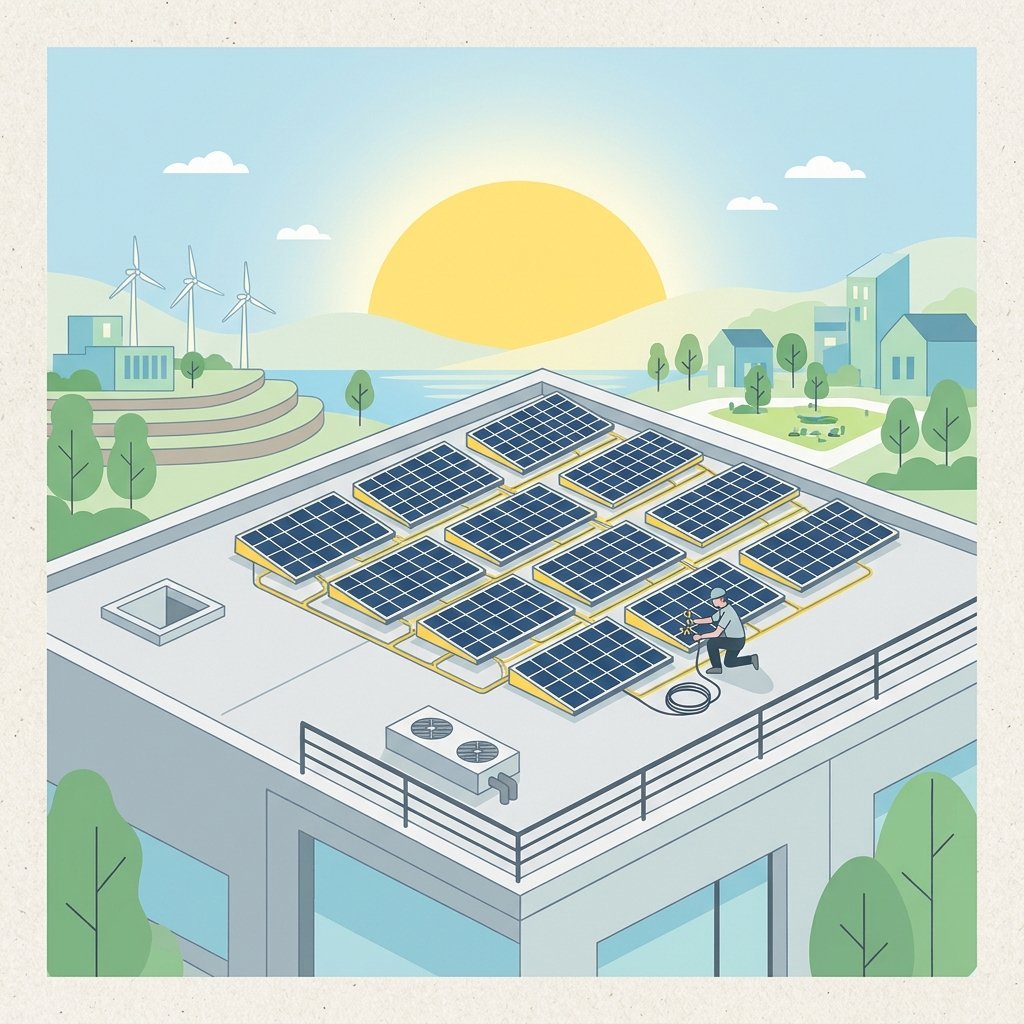
How Solar Panels Work: A Simple Guide for Homeowners
Solar panels look simple: glass, metal frames, and a dark surface that catches the sun. Behind that surface, though, is a process that turns light into electricity you can use to run a fridge, a fan, or an air conditioner.
The basic idea
Most home solar panels are made of silicon cells. When sunlight hits a cell, photons knock electrons loose inside the silicon. A built-in electric field pushes those electrons in one direction, creating a flow of direct current (DC). This is called the photovoltaic effect.
A single panel produces only a modest amount of power, so manufacturers wire many cells together into one module, and installers connect several modules into an array.
From DC to the power in your home
Household appliances run on alternating current (AC), not DC. That is why every solar system needs an inverter. The inverter converts the panels' DC output into AC that matches the grid's voltage and frequency.
Many homes use string inverters, one unit for the whole array. Others use microinverters, one small unit per panel, which can help when parts of the roof are shaded.
What affects how much power you get
- Sunlight: More direct sun means more output. Location, weather, and season all matter.
- Orientation and tilt: In the northern hemisphere, south-facing roofs usually perform best. The right tilt depends on your latitude.
- Shade: Even partial shade from a tree or chimney can reduce output more than you might expect.
- Temperature: Panels lose some efficiency as they heat up, so cooler, well-ventilated panels often perform better.
- Dirt and maintenance: Dust, leaves, and bird droppings reduce output. Occasional cleaning helps, but heavy rain often does most of the work.
Grid-tied, battery, or off-grid
Most homes are grid-tied. Extra electricity flows to the utility, and you draw from the grid at night or on cloudy days. Some utilities credit you for exported power through net metering. Rules vary by region, so check local policy.
Battery storage lets you use more of your own power after sunset, and it can provide backup during outages. Off-grid systems go further, relying entirely on batteries and often a generator for backup.
Before you buy
Get several quotes and compare the panel brand, inverter type, warranty terms, and estimated annual output for your roof. Ask for a production estimate based on your address rather than a generic figure. Check whether your roof structure can carry the weight, and confirm the installer is licensed and insured.
The takeaway
Solar panels convert sunlight into direct current through the photovoltaic effect, and an inverter turns that into the alternating current your home uses. Your roof, local weather, and system design determine how much you save. A careful site assessment matters more than any single product choice.