









What Is Quantum Computing? 9 Essential Facts About the Best New Technology
Quantum computing processes information using quantum bits (qubits) that can exist in superpositions of 0 and 1 simultaneously and can be linked through entanglement — letting certain problems be solved in fundamentally fewer steps than any classical computer needs. It will not replace your laptop: for email, video calls and spreadsheets, classical machines remain faster, cheaper and far superior. What quantum machines target is a specific class of problems — simulating molecules, optimising complex systems, and breaking certain encryption — where the mathematics of the quantum world offers real shortcuts. Here are the 9 essential facts that explain the field honestly, without the hype.
Fact 1: Qubits Are Not Just Fancy Bits
A classical bit is a switch: 0 or 1, definitively one or the other. A qubit is a quantum system — typically a superconducting circuit, a trapped ion, or a photon — that can exist in a superposition of both states at once, described by probabilities that evolve according to quantum mechanics. Measure it, and it collapses to a definite 0 or 1; before measurement, it holds a weighted combination.
The common misconception: “so a qubit is both 0 and 1, therefore it stores two numbers.” Not quite. The power is not storage but interference — quantum algorithms choreograph amplitudes so that wrong answers cancel out and right answers reinforce, before the single measurement at the end. A qubit is better understood as a dial with continuous settings than a coin with two faces.
Fact 2: Entanglement Is the Real Engine — and What Is Quantum Computing Without It
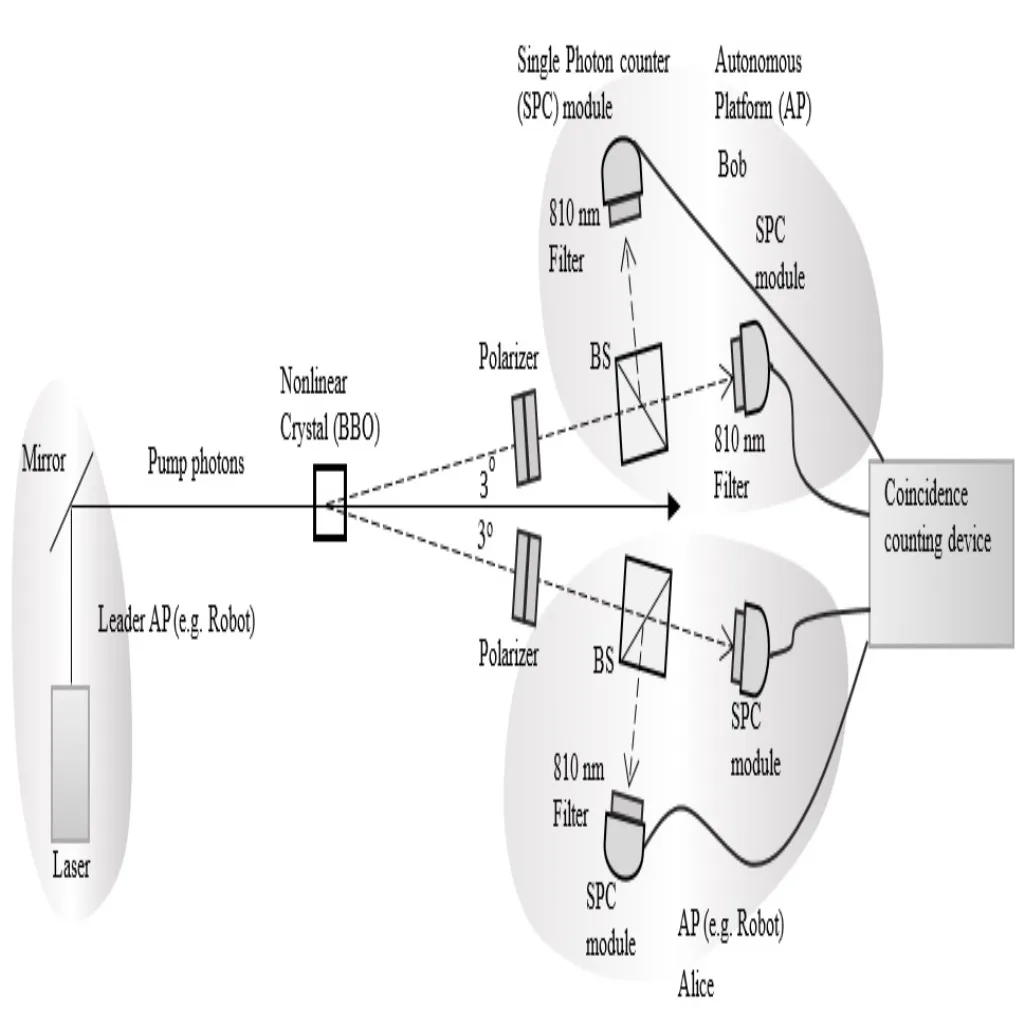
Superposition alone gives little advantage — two qubits in superposition still yield just one random bit at measurement. The magic ingredient is entanglement: qubits linked so their outcomes are correlated in ways impossible for classical systems. Einstein famously called it spooky action at a distance, though modern physics stresses carefully that it transfers no usable information faster than light itself.
- Classical: N bits hold one of 2^N states at a time.
- Quantum: N entangled qubits hold amplitudes for all 2^N states simultaneously — a 300-qubit system spans more configurations than atoms in the observable universe.
- The catch: you cannot read all those amplitudes. Algorithms must extract the answer through clever interference — which is why only specific problem classes benefit.
Fact 3: What Is Quantum Computing Good At? Specific Problem Classes
The honest map of where quantum advantage is expected:
| Problem class | Quantum speedup | Why |
|---|---|---|
| Simulating quantum systems (molecules, materials) | Exponential | Nature is quantum; a quantum machine simulates it natively — the original application Feynman proposed in 1982 |
| Integer factoring (Shor’s algorithm) | Exponential | Breaks RSA encryption — the reason post-quantum cryptography exists |
| Unstructured search (Grover’s algorithm) | Quadratic | Square-root speedup; useful but not dramatic |
| Optimisation (portfolios, logistics) | Promising, unproven | Heuristic approaches like QAOA — active research area |
| Machine learning | Speculative | Data-loading bottlenecks currently limit practical advantage |
| Everyday computing (web, video, documents) | None | Classical machines are faster and cheaper at these, permanently |
Drug discovery and materials science are the most credible near-term prizes here: simulating molecular interactions is exponentially hard on classical machines, and exponentially natural on quantum ones.
Fact 4: Decoherence Is the Central Engineering Battle
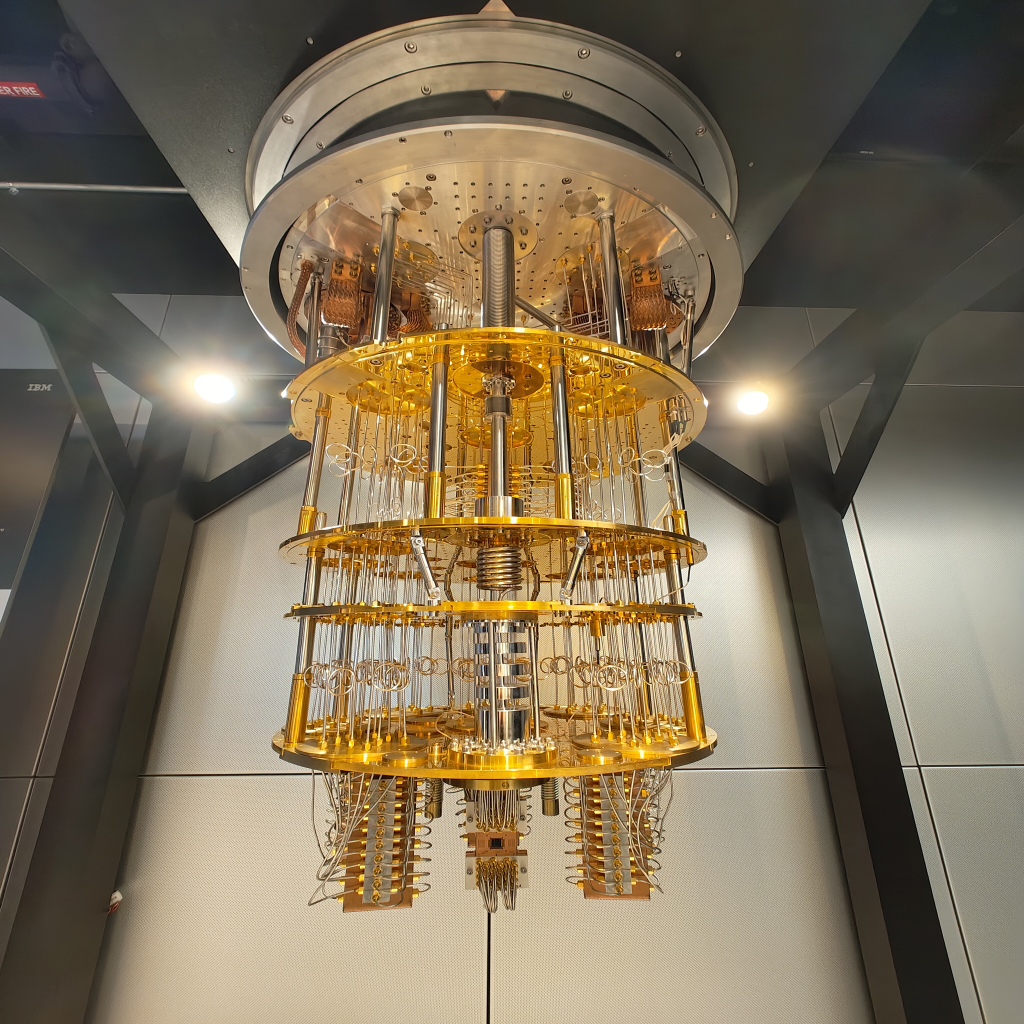
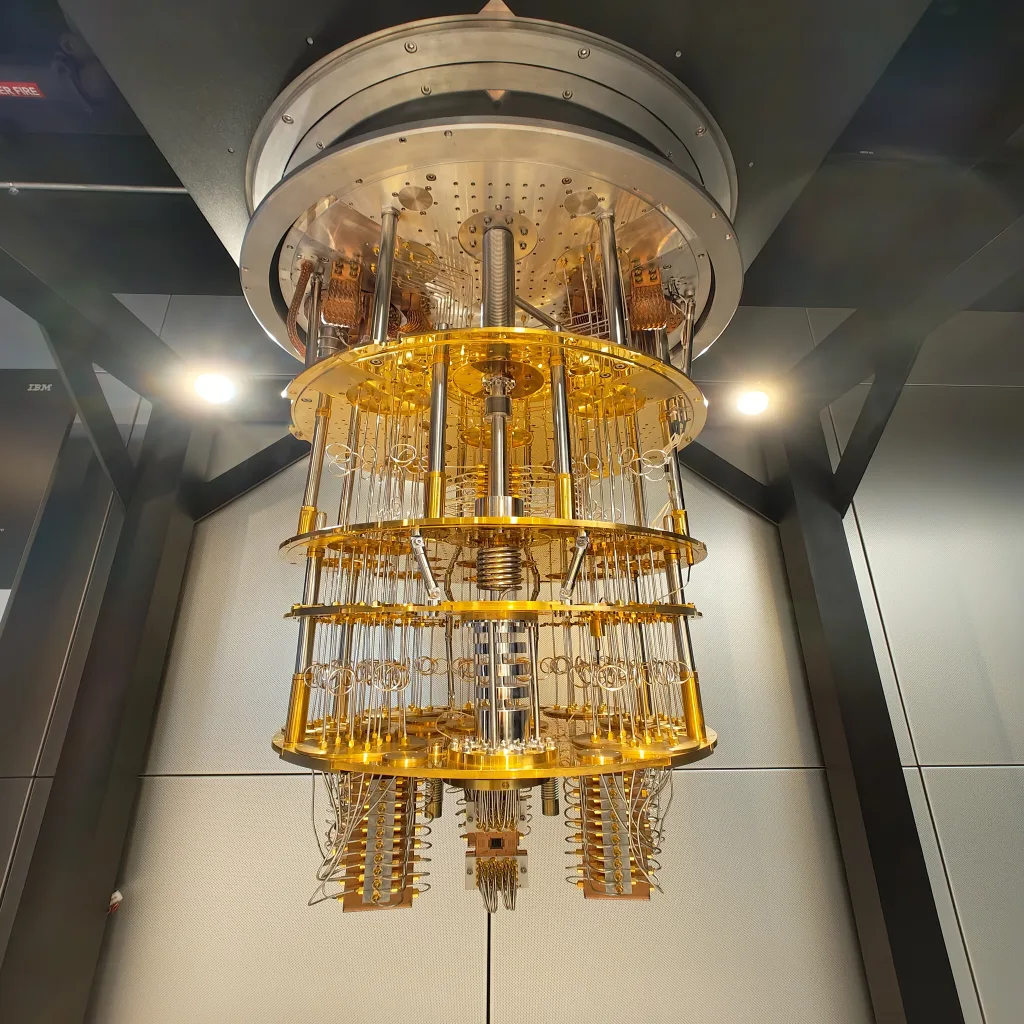
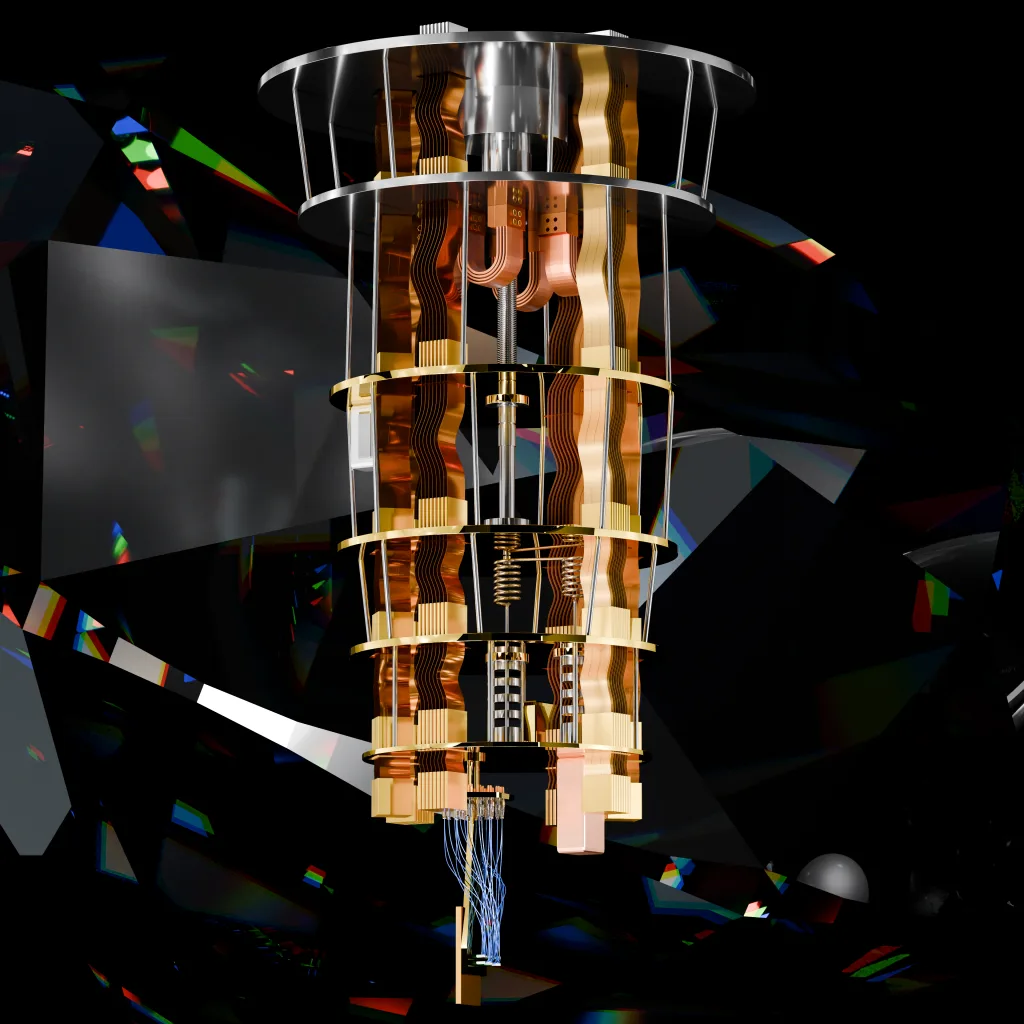
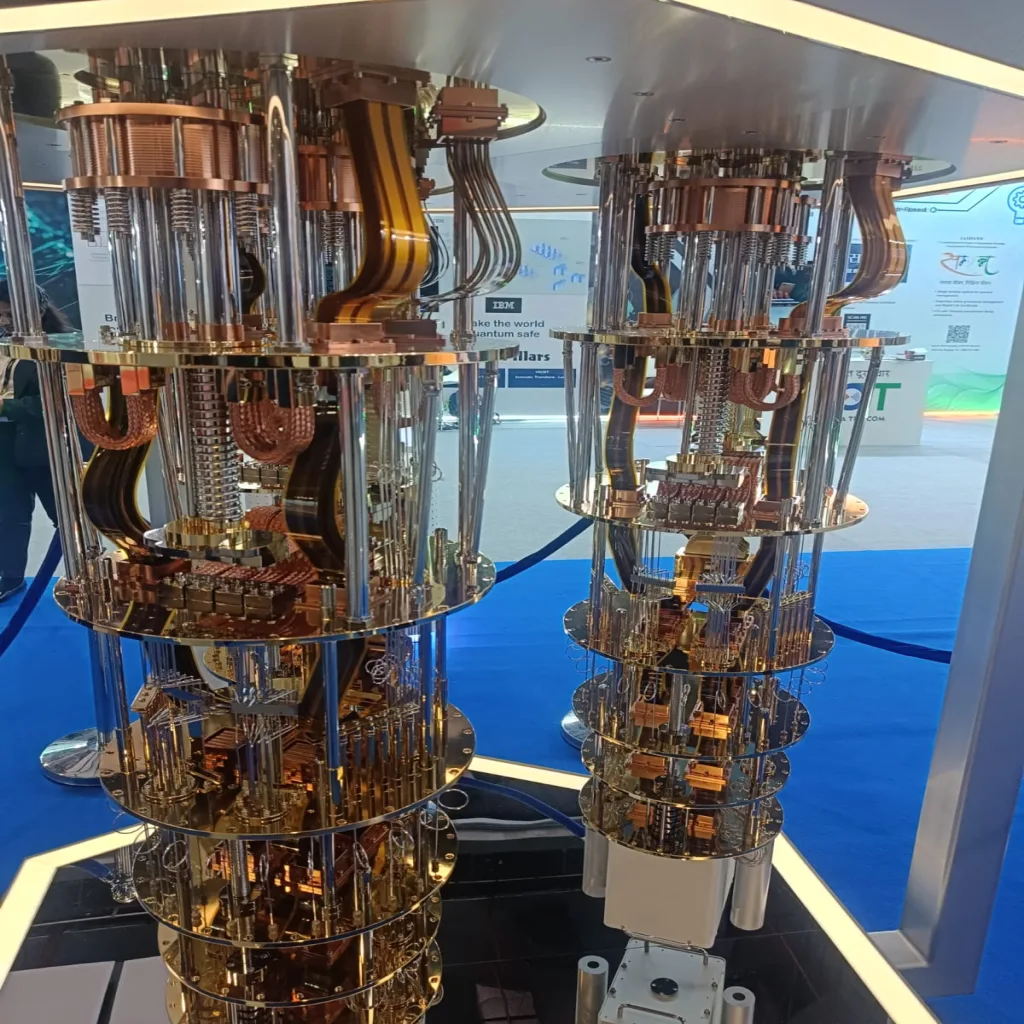
Qubits are extraordinarily fragile. Heat, stray electromagnetic fields, cosmic rays — nearly any interaction with the environment collapses superpositions, a process called decoherence. Today’s superconducting qubits hold their quantum state for microseconds to milliseconds, and must operate at around 15 millikelvin — colder than deep space — inside dilution refrigerators the size of rooms.
Every engineering choice flows from this fragility: the dilution refrigerators, the shielding, the short wires, the microwave control pulses timed to nanoseconds. The field’s progress is best measured not in qubit counts but in error rates and coherence times — the numbers that determine whether useful computation is even possible.
Fact 5: Error Correction Needs Roughly 1,000 Physical Qubits per Logical Qubit
Quantum errors cannot be copied-and-repeated like classical errors (the no-cloning theorem forbids it). The solution — quantum error correction — spreads one logical qubit across many physical qubits, detecting errors without measuring the data itself. Current surface-code estimates: roughly 1,000 physical qubits per reliable logical qubit.
This arithmetic deflates the hype around qubit-count headlines: a 1,000-physical-qubit machine yields about one reliable logical qubit. Running Shor’s algorithm against RSA-2048 is estimated to need thousands of logical qubits — millions of physical ones. That is the honest distance between today’s demonstrations and cryptographically relevant machines.
Fact 6: Today’s Machines Are “NISQ” — Noisy, Intermediate-Scale Quantum
Physicist John Preskill coined the term for the current era: devices with 50–1,000+ physical qubits, too noisy for full error correction, but usable for experiments and niche demonstrations. IBM, Google, IonQ, Quantinuum and others operate cloud-accessible NISQ machines today — anyone can run circuits on real quantum hardware through their APIs.
What NISQ machines have achieved: Google’s 2019 “quantum supremacy” experiment (a contrived sampling task in minutes that would take classical supercomputers considerable time), and continuous improvements in error rates since. What they have not achieved: a commercially valuable application outperforming classical computers on a real problem. The gap between “quantum advantage on a contrived benchmark” and “quantum value in production” is the field’s central open challenge.
Fact 7: Post-Quantum Cryptography Is Already Being Deployed
Because a future quantum computer could break RSA and elliptic-curve encryption, the security world is not waiting. The US National Institute of Standards and Technology (NIST) finalised its first post-quantum cryptography standards in 2024 — algorithms based on mathematical problems (lattices, hashes) believed hard even for quantum machines.
- The threat model: “harvest now, decrypt later” — adversaries recording encrypted traffic today to decrypt once quantum machines mature.
- The response: browsers, banks and governments are migrating to hybrid classical-plus-post-quantum key exchange already.
- Realistic timeline: cryptographically relevant quantum computers remain likely a decade-plus away; the migration is happening now because large cryptographic transitions take decades.
Fact 8: India Is Building Quantum Capability Deliberately
India’s National Quantum Mission (approved 2023, ₹6,003 crore over 8 years) targets: intermediate-scale quantum computers with 50–1,000 physical qubits by 2030, satellite-based quantum communication over 2,000 km, quantum key distribution networks, and magnetometry/sensing applications. IISc Bangalore, IITs Madras/Bombay/Delhi, TIFR and C-DOT host the research base; startups including Qpiai and Qulabs are emerging in the ecosystem.
For Indian readers, the practical relevance: quantum-secure communications for banking and defence, better materials for batteries and pharmaceuticals (a major Indian industry), and a workforce premium for quantum-literate engineers — the field is hiring across physics, EE and CS backgrounds.
Fact 9: The Honest Timeline of What Is Quantum Computing’s Future
| Horizon | Realistic expectations |
|---|---|
| Now–2027 | Better error rates, early logical-qubit demonstrations, cloud experimentation, quantum-chemistry prototypes on small molecules |
| 2027–2033 | First commercially valuable applications in chemistry/materials simulation; early fault-tolerant machines; continued crypto migration |
| 2033–2040 | Possible cryptographically relevant machines; meaningful advantage in optimisation; hybrid quantum-classical workflows in industry |
| Never (as far as known) | Quantum laptops, quantum replacement of classical computing, overnight decryption of everything |
The deepest correction to popular imagination: quantum computers are specialised accelerators — closer to GPUs than to general replacements. Your 2040 computer will almost certainly be classical, with quantum access as a cloud service for the specific problems that need it.
The Physics Behind the Headlines: Superposition Done Carefully
Because superposition is the most misused word in quantum marketing, it deserves one careful paragraph. A qubit’s state is a vector in a two-dimensional complex space, written formally as α|0⟩ + β|1⟩, where α and β are complex numbers whose squared magnitudes give the probabilities of measuring 0 or 1. The crucial subtlety: α and β are not just probabilities — they carry phase, a sign-and-angle relationship between the two components. Phase is invisible to a single measurement but drives interference between possibilities inside an algorithm.
An analogy without misleading physics: think of waves on water. Two ripples meeting can cancel (trough meets peak) or reinforce (peak meets peak). Quantum amplitudes behave like those ripples, but for possibilities rather than water. A quantum algorithm arranges the ripples of every computation path so that paths leading to wrong answers cancel each other, while paths to the right answer reinforce. When measurement finally happens, the surviving outcome is overwhelmingly likely to be the answer you wanted. This is where the speedup lives — not in “trying everything at once,” a phrase that sounds good and explains nothing.
How Quantum Computers Are Actually Built: Four Hardware Races
Multiple technologies compete to make qubits scalable, each with a different profile of strengths and weaknesses:
| Platform | What it is | Strengths | Weaknesses |
|---|---|---|---|
| Superconducting circuits | Cryogenic circuits (IBM, Google, Rigetti) | Fast gates (nanoseconds), semiconductor-style fabrication, cloud maturity | Millikelvin temperatures, microsecond coherence, wiring complexity scales badly |
| Trapped ions | Individual atoms held in electromagnetic fields (IonQ, Quantinuum) | Best fidelities, long coherence (seconds-minutes), identical qubits | Slow gates (microseconds-milliseconds), hard to scale beyond ~100 ions |
| Photonics | Light particles on silicon chips (Xanadu, PsiQuantum) | Room temperature operation, natural networking, fab-compatible | Photon loss, probabilistic gates, component complexity |
| Neutral atoms | Arrays of atoms in optical tweezers (QuEra, Pasqal) | Rapidly scaling arrays (1,000+ atoms), flexible geometry | Younger platform, gate fidelity still climbing |
Microsoft pursues a fifth route (topological qubits) with potentially intrinsically error-resistant states — higher risk, potentially game-changing payoff. No one knows which platform wins; the honest answer is that different platforms may serve different niches, the way CPUs, GPUs and ASICs coexist in classical computing.
Quantum Computing vs Classical Computing: A Side-by-Side Reality Check
| Aspect | Classical computer | Quantum computer |
|---|---|---|
| Basic unit | Bit (0 or 1, stable) | Qubit (superposition, fragile) |
| Operating temperature | Room temperature (with cooling) | ~15 mK for superconducting — colder than space |
| Error rate | Effectively zero (10⁻¹⁸) | 10⁻² to 10⁻³ per gate — errors every few hundred operations |
| Memory persistence | Years (storage) | Microseconds to milliseconds |
| Programmability | Universal, mature stack | Limited circuits, evolving frameworks |
| Best problems | Everything everyday | Quantum simulation, factoring, specialised search |
| Cost per useful operation | Vanishingly cheap | Astronomically expensive (for now) |
Read the table as complementarity, not competition. Classical machines will handle everything they handle today, forever. Quantum machines slot in as co-processors for the narrow problems where their physics pays — accessed through the cloud, orchestrated by classical code, and useless for the other 99% of computing.
Five Quantum Computing Claims to Doubt (A Skeptic’s Checklist)
Quantum computing attracts more hype than any technology since cryptocurrency. When you read a claim, test it against these patterns:
- “X million qubits!” — Ask: physical or logical? Noisy or error-corrected? A million noisy physical qubits may compute less reliably than 100 error-corrected logical ones. Count quality-corrected qubits, not raw ones.
- “Quantum advantage achieved!” — Ask: on what task? A contrived sampling benchmark (like Google’s 2019 experiment) is a scientific milestone but not a useful application. Advantage must be on a problem anyone actually wants solved, against the best classical competitor — and classical competitors keep improving.
- “Solves all optimisation problems!” — Ask: which algorithm, with what proven speedup? Grover’s is quadratic (helpful), annealing claims remain empirically shaky, and classical heuristics are astonishingly good. Real speedups here are hard-won and narrow.
- “Breaks all encryption today!” — Factually wrong. No machine today can factor even modest RSA numbers. The threat is future-tense, which is exactly why NIST’s post-quantum standards exist and why migration is calm, methodical and already underway.
- “Invest now, revolution by Tuesday!” — The physics is real, the engineering is heroic, and timelines are measured in decades for the hardest applications. Genuine experts consistently project patience; only promotional materials promise speed.
The same checklist, inverted, explains why measured optimism is warranted: cloud access is real, error rates fall on credible curves, national programmes (US, China, EU, India) treat this as strategic infrastructure, and the underlying physics has no known showstopper. The field is neither snake oil nor magic — it is difficult engineering on a fifty-year path that is perhaps a decade or two along, with real payoffs accumulating at the frontier.
The bottom-line question — what is quantum computing going to mean for an ordinary user in ten years — probably looks like this: nothing visible, directly. No quantum phones or quantum laptops. Instead, better medicines discovered faster, new battery chemistries and materials emerging from simulated rather than trial-and-error chemistry, stronger encryption quietly replaced by quantum-resistant versions after your bank migrates, and specialised cloud services handling the rare problems where quantum hardware wins. Like the transistor and the GPS satellite before it, the deepest technological impacts arrive as infrastructure.
It stays invisible to users while transforming what the visible layer can do. The quantum decade ahead will be judged successful not by headlines about qubits but by exactly that kind of quiet, structural improvement in what science and industry can accomplish.
Frequently Asked Questions
What is quantum computing in simple terms?
A quantum computer uses qubits that can hold combinations of 0 and 1 and link together through entanglement, letting specially designed algorithms solve certain problems — simulating molecules, factoring huge numbers — far faster than any ordinary computer. For everyday tasks it offers no advantage; it is a specialised tool, not a faster laptop.
How is a qubit different from a normal bit?
A classical bit is definitely 0 or 1. A qubit can exist in a superposition of both, with measurable probabilities, and can be entangled with other qubits so their outcomes correlate. But you get only one classical answer per measurement — the art is designing algorithms whose answers survive that collapse.
Can a quantum computer break all encryption?
Only certain encryption. Shor’s algorithm threatens RSA and elliptic-curve cryptography (the “public-key” systems securing websites and messages). Symmetric encryption like AES survives with doubled key lengths. The defence — post-quantum cryptography — is already standardised and being deployed, so the transition is underway decades ahead of any credible threat.
When will quantum computers be useful?
Honest estimates: niche scientific applications (quantum simulation) within roughly 5–10 years; broad commercial advantage later and less certain. Today’s machines are experimental — valuable for research and learning, not yet for production workloads. Anyone promising a specific near-term date is selling something.
Do quantum computers think like human brains?
No — this is a persistent myth. Quantum computers perform mathematical operations on probability amplitudes; they have no connection to consciousness or neural processing. The brain remains a classical (mostly) system, and quantum computing contributes nothing to AI directly except as a speculative future accelerator for specific optimisation subroutines.
Can I use a quantum computer today?
Yes — IBM Quantum, Amazon Braket, Microsoft Azure Quantum and Google offer free or cheap cloud access to real quantum processors. Programmers can run genuine circuits in Python (Qiskit, Cirq) within minutes. Expect tiny machines, noisy results, and a steep but learnable curve — an excellent way to understand the field from the inside.
What should a student study to enter quantum computing?
Linear algebra and quantum mechanics form the core; programming (Python) and one hardware-adjacent specialisation (superconducting circuits, photonics, ion traps) or the software side (error correction, algorithms). India’s National Quantum Mission is funding PhD positions and research programmes — the field is small enough that motivated students can genuinely enter it.
The Bottom Line
What is quantum computing? It is computation rebuilt on the strange but well-verified rules of quantum mechanics: superposition for parallel possibility, entanglement for correlation, interference for answer extraction. It is real — cloud machines run today — but young: noisy, small in logical power, and years from the headline applications. Its realistic future is as a specialised accelerator for molecular simulation, optimisation and cryptanalysis, not as a laptop replacement. The field rewards precisely calibrated expectations: enormous long-term potential, modest current capability, and a full decade of genuinely fascinating engineering work still between the two points today.
Related: How Do Vaccines Work? and Why Is the Sky Blue?.
Sources
- NIST — Post-Quantum Cryptography project
- Google Quantum AI — research and announcements
- IBM Quantum — cloud access and documentation
- Department of Science & Technology (India) — National Quantum Mission
Explore more on Dangit: health, technology, science, nature, featured, lifestyle, society, the local business directory and more reading.





[…] Read next on Dangit: what quantum computing is. […]
[…] Read next on Dangit: what quantum computing is. […]