









Why Is the Sky Blue? 3 Simple Physics Facts That Explain It
The sky is blue because air molecules scatter short-wavelength blue light about 10 times more strongly than long-wavelength red light — a phenomenon called Rayleigh scattering. Sunlight contains all colours; as it passes through the atmosphere, blue photons bounce around the sky in every direction, and when you look up, you see that scattered blue coming from everywhere. At sunset the same physics turns the sky red, because light travels through much more air and the blue is scattered away before reaching your eyes.
Light Is a Wave: Wavelengths and Colours Before We Start
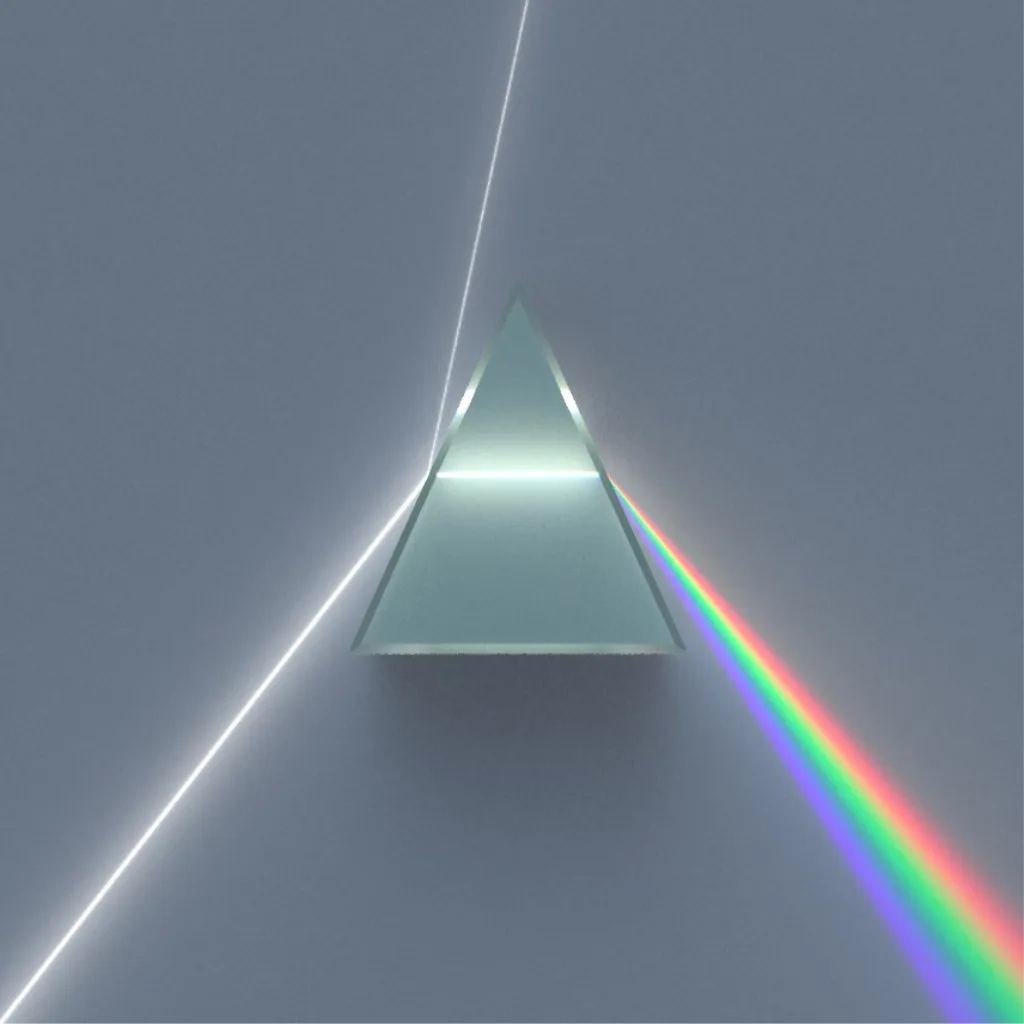
Everything in this article rests on one physical fact: visible light is an electromagnetic wave, and what your brain calls “colour” is really a wavelength measurement. White light from the sun is a superposition of waves from roughly 380 to 750 nanometres. A prism proves the mixture — it bends each wavelength by a different amount, unmixing white into the rainbow. Isaac Newton demonstrated this with two prisms in the 1660s: the first split sunlight, the second recombined it back to white, showing the colours travel together in the beam and separate only when treated differently.
Keep two numbers in mind as we go. Blue light: about 450 nanometres. Red light: about 650 nanometres. The ratio between them — roughly 1.4× — will be raised to the fourth power when scattering enters, and that difference in treatment is the entire answer to the sky’s colour. Atmosphere, wavelength, geometry: three ingredients and nothing more.
The Short Answer
Sunlight looks white but contains every colour, each travelling as a wave with a different wavelength — violet around 400 nanometres, blue around 450, green around 520, yellow around 580, red around 650. When light enters the atmosphere, it collides with nitrogen and oxygen molecules far smaller than the light’s wavelength. Physicist Lord Rayleigh worked out the rule in the 1870s: scattering strength varies with the inverse fourth power of wavelength (1/λ⁴).
That fourth power is the whole story. Blue light (450 nm) scatters roughly (650/450)⁴ ≈ 4.4 times more than red — and violet, being shorter still, scatters even more. So sunlight hitting the atmosphere sprays blue light across the entire dome of the sky. Wherever you look up, scattered blue reaches your eye. Space has no atmosphere, hence no scattering — which is why astronauts see a black sky even in daylight.
But Why Not Violet? The Sky Is Blue, Not Purple
The classic follow-up question. Violet scatters more than blue, yet the sky is not violet, for three stacked reasons:
- The sun emits less violet than blue. Sunlight’s spectrum peaks near green-blue; violet output is weaker to begin with.
- Your eyes are less sensitive to violet. Human cone cells respond weakly at 400 nm; the same energy of violet light simply looks dimmer than blue.
- Some violet is absorbed in the upper atmosphere before it ever reaches the ground.
Add those factors and the mix of scattered light your eye receives lands squarely in blue. This is a good example of physics answering “why is the sky blue” only partially — the full answer needs the biology of vision too. The sky’s colour is a property of the interaction, not of the light alone.
Why Sunsets Are Red: The Same Physics, More Air
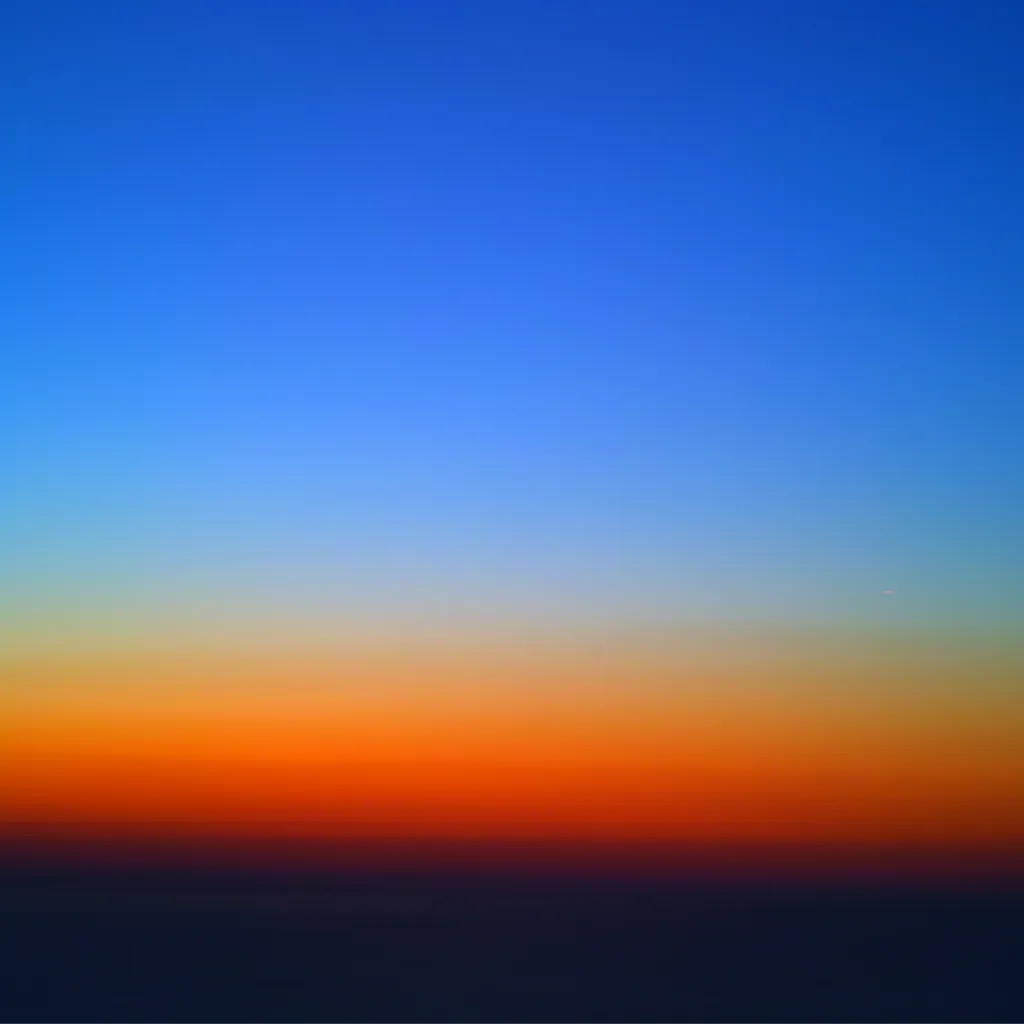
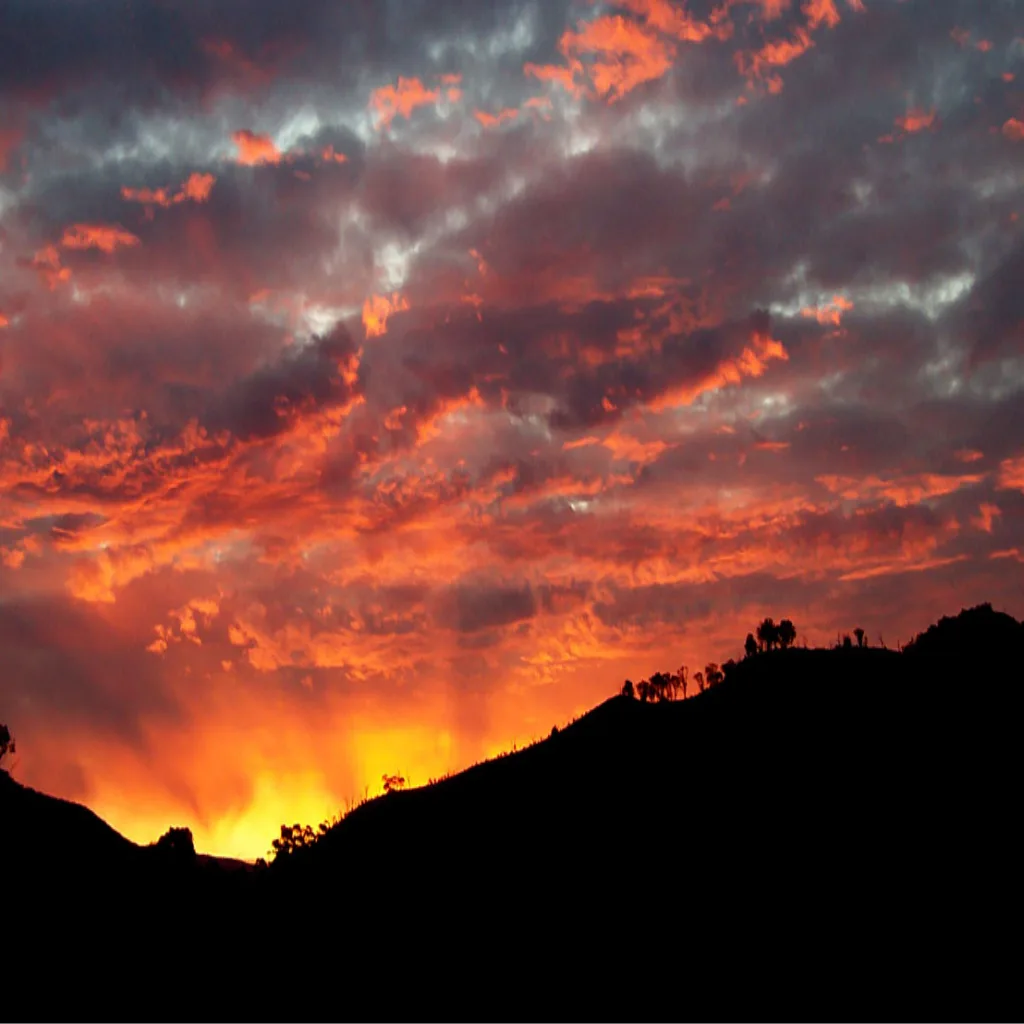
At noon, sunlight reaches you through roughly 10 km of atmosphere straight overhead. At sunset, light grazes in sideways through up to 40 times more air before reaching your eyes. All that extra path scatters the blue out of the beam entirely — what remains travelling directly to you is the leftover red and orange. The same molecules, the same rule; only the path length changed.
- Midday: short path → blue scattered everywhere → blue sky overhead.
- Sunset: long path → blue scattered away en route → red transmitted beam + blue skies elsewhere.
- After sunset: high-altitude scattering still catches sunlight and glows red-purple — that is the twilight gradient you see in the east.
What Changes the Sky’s Exact Shade of Blue
The blue is not constant — humidity, dust and altitude all tune it:
- Humid, hazy days: water droplets and aerosols are larger than molecules, and they scatter all wavelengths roughly equally (Mie scattering). Equal scattering washes the colour toward pale, milky white — the reason monsoon skies look washed out.
- Mountain air / high altitude: thinner air means less scattering, so the sky darkens toward deep navy; above roughly 15–20 km it becomes black.
- Pollution episodes: fine particles add Mie scattering and brown-grey tints; severe haze can make even noon look dim.
- Ozone: absorbs some red and violet, adding a slight indigo tint to the high-sky blue — part of why the zenith looks deeper blue than the horizon.
The horizon is whiter than the zenith for the same reason sunsets are red: looking toward the horizon, light passes through more air, adds more scattering passes, and the colours average out toward white.
The Two Kinds of Scattering That Paint the Sky
| Property | Rayleigh scattering | Mie scattering |
|---|---|---|
| Particle size | Much smaller than wavelength (air molecules) | Comparable to wavelength (droplets, dust, pollen) |
| Wavelength dependence | Strong — blue 10× red | Weak — all colours roughly equal |
| Result in sky | Deep blue sky | White haze, halos, washed-out colour |
| Cloud colour | — | Clouds are white (equal scattering); dense clouds grey (light absorbed) |
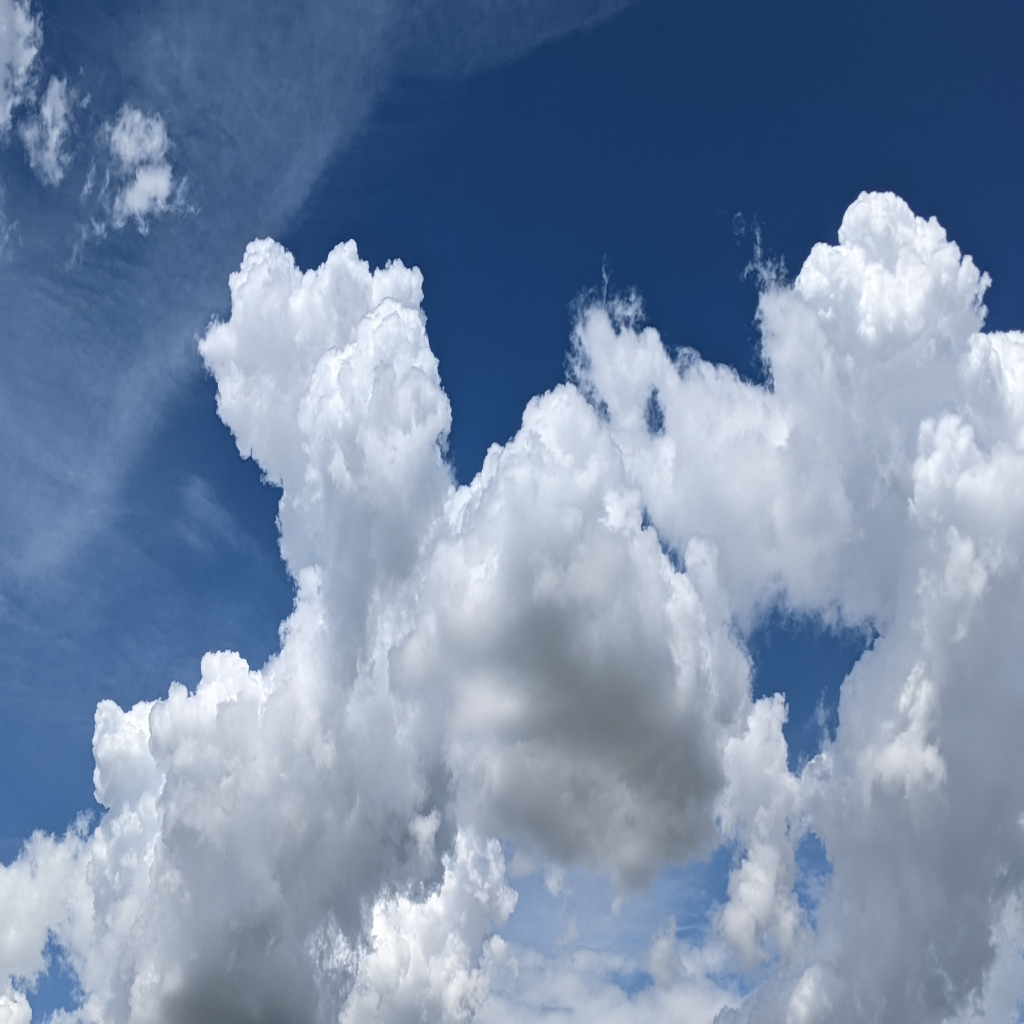
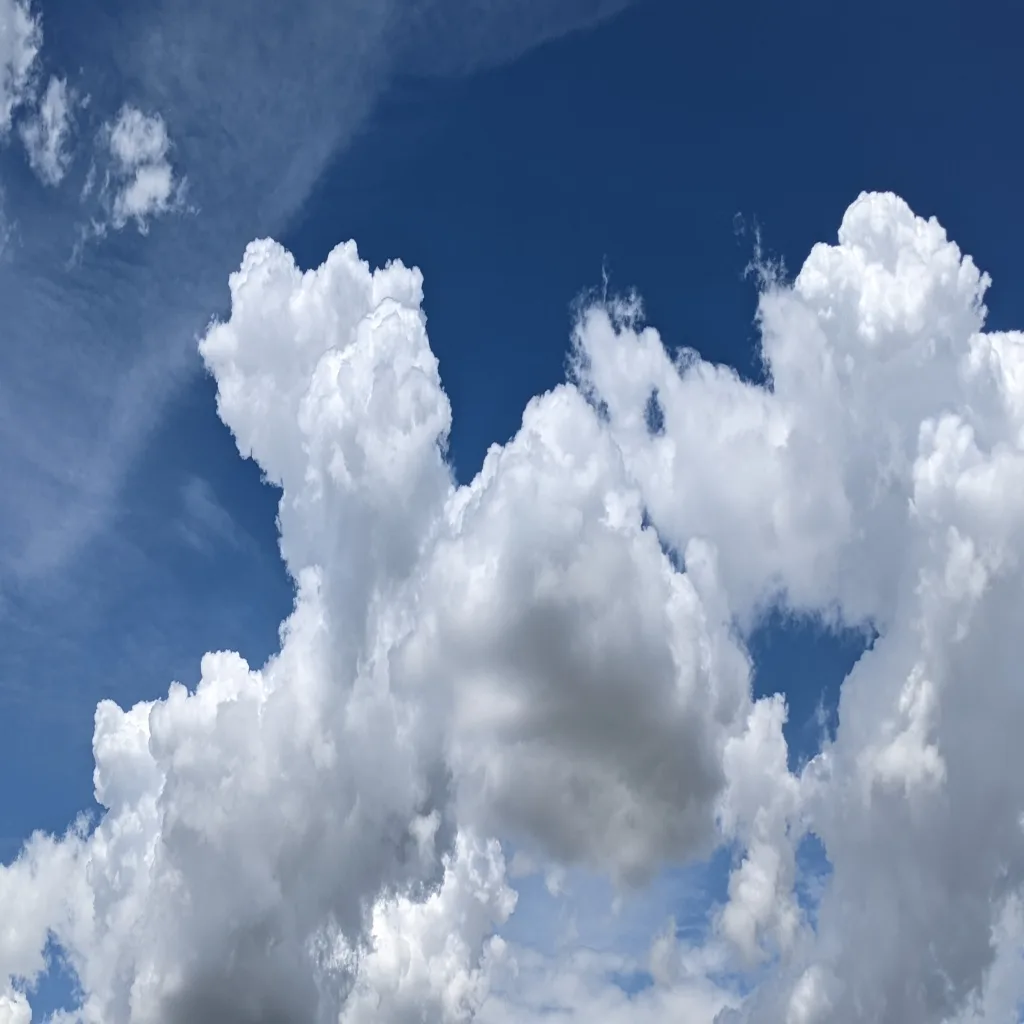
Clouds sit inside this framework neatly: droplets are huge compared to molecules, so they scatter all colours equally — white. Thick storm clouds become grey because their density blocks the light rather than scattering it. Every sky colour you have ever seen is some combination of these two mechanisms plus your own eyes.
Why Weather and Pollution Change the Sky’s Colour
Daily variation in the blue comes from what else is floating in the air besides molecules:
- Rain-washed air. After a storm, precipitation scrubs dust and aerosols out of the boundary layer. Fewer large particles means purer Rayleigh conditions — the post-rain sky is famously the deepest blue of the week.
- Winter haze. Temperature inversions trap particles near the ground; Mie scattering from that load adds white and grey, bleaching the blue. Delhi’s winter skies demonstrate this daily.
- Sea breezes versus dust storms. Salt particles and mineral dust differ in size; each shifts the balance between blue-scattering and white-scattering in its own direction.
- Volcanic years. Major eruptions inject sulphate aerosols into the stratosphere, muting sunsets into weird greens and purples worldwide for a year or two — historical paintings document these “volcanic sunsets” precisely.
- Smoke plumes. Wildfire haze does double duty: Mie scattering whitens the sky while selective absorption tints the sun itself red or orange at noon — a preview of permanent sunset conditions.
The lesson generalises: molecular scattering gives the blue baseline, and everything suspended in the air subtracts from or adds to it. The bluest skies on Earth occur in clean, dry, mid-altitude places — which is why observatories are built exactly there.
How We Know: The History and the Experiments
The blue-sky question has a long scientific pedigree:
- Aristotle guessed the sky’s colour came from the air’s nature — an observation without a mechanism.
- Newton and prism work (1666 onwards) established that white light is a mixture of colours, setting the stage.
- John Tyndall (1859) showed that small particles scatter light blue — the “Tyndall effect” you can see in any dusty sunbeam.
- Lord Rayleigh (1871) proved mathematically that molecules themselves suffice — no dust required. The scattering of light by molecules smaller than its wavelength is now called Rayleigh scattering in his honour.
- Einstein (1908–1910) derived the same result from thermodynamics, and used it to calculate Avogadro’s number from the sky’s blue — a beautiful proof that air molecules really exist.
One common classroom myth says the sky is blue because it “reflects the ocean.” Reflection cannot explain it: the sky is blue inland, over deserts, and at altitude far from any sea — and if reflection were the cause, the sky would be brightest over water, not overhead. Scattering explains every observation; reflection explains none of them.
Why Is the Sky Blue Elsewhere? Sky Colours on Other Worlds
Comparing planets shows how the answer depends on each atmosphere:
- Mars: a thin, dusty CO₂ atmosphere. Dust scatters reds forward — the Martian daytime sky is butterscotch, while sunsets around the Sun glow blue. Exactly the reverse of Earth, from the same physics with different particles.
- Venus: a thick sulphuric-acid cloud deck; surface views show orange-white haze regardless of the sun’s position.
- The Moon: no atmosphere at all — the sky is black even in full daylight, and stars are visible around the sunlit landscape.
These comparisons prove the point locally: the sky’s colour is not a property of sunlight (same everywhere) but of each atmosphere’s molecules and particles. Change the scatterers, change the sky.
Common Myths About the Blue Sky
Before the experiments, let’s retire some persistent wrong answers — each fails against simple evidence:
- “It reflects the ocean.” Fails immediately inland: the sky is equally blue over deserts, forests and mountains. Also, reflection would make the sky brightest near the horizon over water — the opposite of what we observe.
- “The sky IS the ocean seen from above.” Same failure mode, plus altitude: mountaineers and pilots see the bluest sky where the ocean is farthest away.
- “Oxygen is blue, like liquid oxygen.” Liquid oxygen is indeed pale blue, but that colour comes from different physics (electronic absorption), and nitrogen — 78% of the air — is colourless in every state. Molecular scattering, not bulk colour, paints the sky.
- “The ozone layer makes it blue.” Ozone absorbs ultraviolet (that is its protective job) and only slightly tints visible light; the blue exists in the scattering by nitrogen and oxygen throughout the whole atmosphere.
- “Air has no colour, so the sky must be something else.” Correct instinct, wrong conclusion: pure air is invisible, but its molecules still scatter light — invisibility and scattering coexist, and the second is what you see.
Experiments You Can Do at Home
- The soap-cloud sky: fill a clear glass with water, add a drop of milk, shine a white torch through it. From the side you see bluish scattered light; from the end, an orange-red transmitted beam. You have built a miniature sunset.
- Watch a shadow’s edge: shadows are edged in colour because skylight (blue) fills them differently from direct sunlight (white). Sharp eyes can see faint blue fringes on paper shadows.
- Polarised sky: through polarised sunglasses, rotate your head 90° — the sky’s brightness changes because scattered blue light is partially polarised. Bees navigate by exactly this pattern.
- Sunset timing experiment: photograph the sun’s colour every 10 minutes before sunset. The sequence white → yellow → orange → red is the Rayleigh rule in action as path length grows.
The Sky’s Colour as a Science Lesson
The blue overhead is one of the best teaching examples in all of science, because it shows how a simple question unfolds across disciplines:
- Physics: the inverse-fourth-power law of scattering, derived from the wave nature of light and the size of molecules.
- Chemistry: the composition of air — 78% nitrogen, 21% oxygen — determines which molecules do the scattering; a different gas mix would tint differently.
- Biology: the colour you perceive depends on human cone-cell sensitivities; bees and birds, with different receptors, perceive the same sky differently, including patterns in the ultraviolet we cannot see.
- Meteorology: humidity, aerosols and weather fronts modulate the colour hour by hour — the sky as an air-quality readout anyone can see.
- Astronomy: the same scattering that colours the day sky blots out stars at night and forces telescopes to high mountains and space.
When a child next asks why the sky is blue, the honest answer is a doorway: one visible fact that connects light, matter, eyes and weather into a single explanation. Few everyday phenomena carry that much science in so plain a package — and the proof that the explanation works is written across every sunset, every hazy afternoon and every rain-washed morning sky.
Two more everyday observations confirm the mechanism rather than just describing it. First, the sky is brightest blue away from the sun: look toward the sun’s side and the light near it washes white from direct glare plus forward-scattered light; look 90 degrees away and the blue is deepest, because there you receive pure sideways-scattered photons. Second, shadows are lit by the sky, not the sun — the shadowed side of an object is illuminated by blue skylight alone, which is why photographs of snow shadows show a distinctly blue cast. Neither observation fits a reflection story, and both fit scattering perfectly.
Small, checkable details like these separate a genuine physical explanation from a plausible-sounding one. They cost nothing to verify on the next clear afternoon, and each one doubles as evidence that the answer you just gave the curious child was not merely memorised but understood.
Frequently Asked Questions
Why is the sky blue in one sentence?
Air molecules scatter short-wavelength blue sunlight about ten times more than red in all directions, so blue light arrives at your eyes from every part of the sky.
Why isn’t the sky violet, since violet scatters even more?
Three stacked reasons: the sun emits less violet than blue, human eyes are much less sensitive to violet, and some violet is absorbed high in the atmosphere. The net result of physics plus eye biology is blue.
Why are sunsets red if the sky is blue?
At sunset, sunlight travels up to 40 times farther through the atmosphere; the blue is completely scattered out along the way, leaving the red and orange to reach your eyes directly. Same physics, longer path.
Is the sky on Mars also blue?
No — it is butterscotch in daytime because fine dust scatters reds forward, while Martian sunsets show a blue glow around the sun. Earth and Mars are mirror images of the same scattering physics with different particles.
Do clouds have a colour for the same reason?
Clouds are white because their droplets are large and scatter all colours equally (Mie scattering). Very dense clouds look grey because they absorb rather than scatter light — the colour difference is density, not wavelength.
Does the sky look different at high altitude?
Yes — with less air above you, less scattering occurs, so the sky deepens from pale blue toward dark navy. From aircraft at cruise altitude the sky above is already noticeably darker, and it fades to black in space.
What is the Tyndall effect?
Scattering of light by particles small enough to colour the beam blue — visible in dusty sunbeams, muddy water, and blue smoke. Tyndall demonstrated it in 1859; Rayleigh then showed plain air molecules do the same, which is the modern explanation of the sky.
The Bottom Line
Why is the sky blue? Because molecules in the air scatter short wavelengths of sunlight far more than long ones, and the scattered blue light reaches your eyes from every direction — while sunsets turn red because long atmospheric paths strip the blue away, and space stays black because there is no atmosphere to scatter anything. One elegant rule, discovered in the 1870s, explains every sky you will ever see on Earth — and, with different atmospheres, every sky astronauts will ever see anywhere else.
Related: Is This Website Safe? and What Is a VPN?.
Sources
- NASA Science — Visible Light and colour
- EOS (AGU) — The physics of the blue sky
- Britannica — Rayleigh scattering
- UK Met Office — Why is the sky blue?
Explore more on Dangit: health, technology, science, nature, featured, lifestyle, society, the local business directory and more reading.






[…] Why Is the Sky Blue? and Vitamin D Deficiency […]
[…] Related: How Do Vaccines Work? and Why Is the Sky Blue?. […]
[…] Read next on Dangit: why the sky is blue. […]
[…] Why Is the Sky Blue? 3 Simple Physics Facts That Explain It […]
[…] article explains general science concepts. For the light physics behind pigment absorption, see why the sky is blue, and for the biology of how these pathways arose, what evolution […]