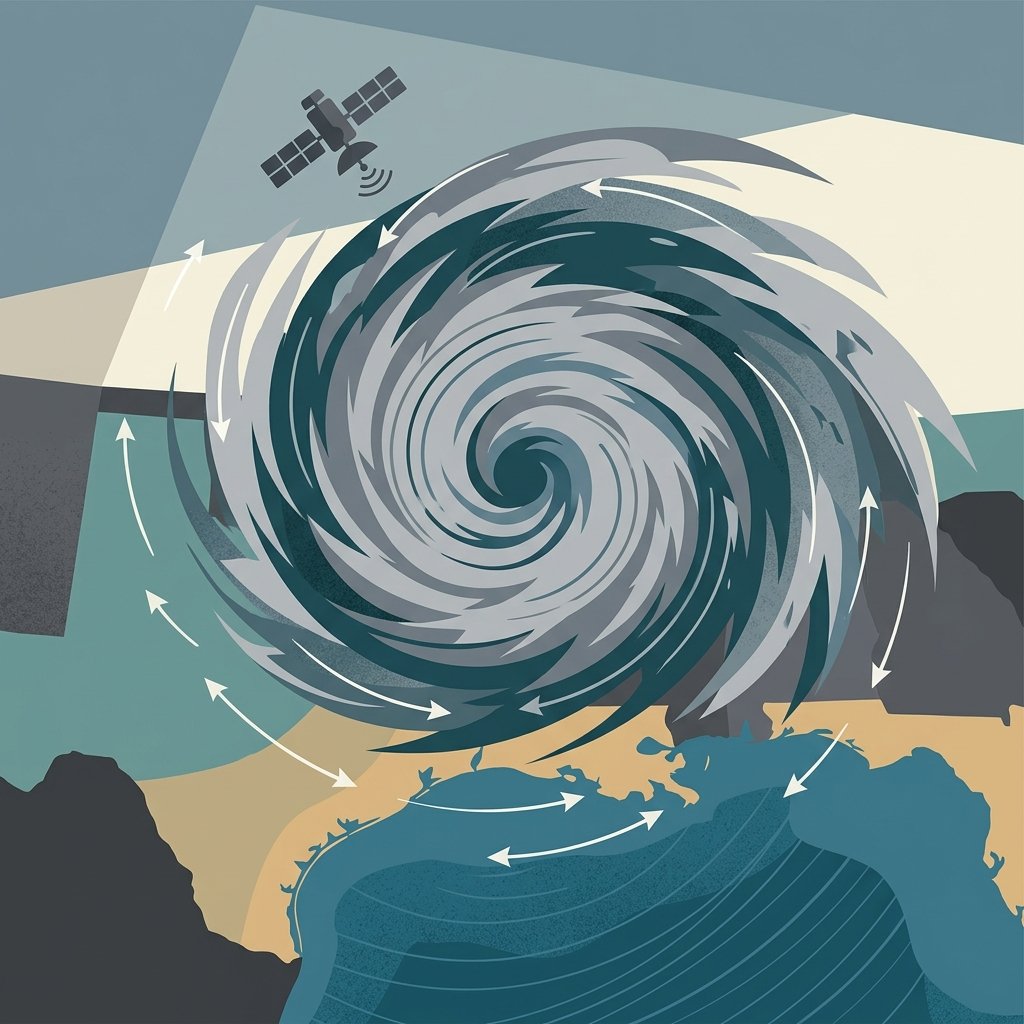
Hurricane Isaias made landfall near Destin, Florida, on the night of Friday 9 October 2026 as a Category 2 storm, then weakened quickly as it moved inland over Alabama. It was the ninth named storm, the first hurricane and the first major hurricane of the 2026 Atlantic season. Officials confirmed four deaths in the United States, hundreds of thousands of customers lost power, and most Gulf of Mexico oil output was paused.
This explainer covers how the storm formed, how it strengthened, where it hit, what the impacts were, and where it stands now. Figures come from the National Hurricane Center’s advisories as summarised in the Wikipedia entry for the storm, and from CBS News and Fox 10 reporting. Outage and damage numbers are provisional and differ between trackers, so this article gives them as reported rather than as final.
How Isaias formed
The National Hurricane Center began watching the southwestern Gulf of Mexico on 3 October, when a low-pressure area was expected to develop. The system was designated Invest 92L on 5 October and became Tropical Depression Nine on 6 October. It was named Isaias on 7 October, when it reached tropical-storm strength.
Wind shear over the Gulf had weakened, which helped the storm organise. Wikipedia notes that shear had been higher than average across the season, partly because of the developing El Niño.
Rapid strengthening to a major hurricane
Isaias was upgraded to a hurricane early on 8 October, based on reconnaissance flights. That made it the first hurricane of the season, and tied the record for the latest date a first Atlantic hurricane has formed since 1905.
The storm strengthened quickly. It peaked on 9 October with sustained winds of 120 mph (195 km/h) and a central pressure of 958 millibars, making it a Category 3 major hurricane. Shear then began to weaken it again as it moved towards the Florida Panhandle.
Landfall in Florida and inland tracking
Isaias made landfall near Destin as a Category 2 hurricane late on Friday 9 October, local time. It then tracked inland over southern Alabama and rapidly lost strength on radar. The National Hurricane Center downgraded it to a post-tropical cyclone early on Saturday 10 October.
By the evening of 11 October, the Hurricane Center’s Atlantic outlook reported no active tropical cyclones in the basin. The remnants were still bringing rain, flooding and tornado threats across the Southeast.
Preparations along the Gulf Coast
Ahead of landfall, hurricane watches were issued for the coasts of Alabama, Mississippi and the Florida Panhandle, and many were upgraded to warnings. Florida’s governor declared a state of emergency for 25 counties and activated the Florida National Guard. Alabama’s governor declared an emergency for 40 counties.
Mandatory evacuation orders were issued in parts of Okaloosa County, Florida, and Dauphin Island, Alabama. Pensacola International Airport and Destin–Fort Walton Beach Airport closed, and Mobile Regional Airport stopped operations. Schools across the Panhandle, southern Alabama and Mississippi cancelled classes, and the Gulf Islands National Seashore closed areas before the storm arrived.
The oil and gas shutdown
One of the largest economic effects was offshore. Chevron and Shell evacuated workers and rigs from Gulf platforms. Wikipedia reports that 63 percent of Gulf of Mexico oil production, about 1.3 million barrels a day, was paused, and that 56 percent of regional natural gas output was suspended.
President Donald Trump approved releasing some oil from the US Strategic Petroleum Reserve to limit the disruption. Two refineries were also taken offline, which Wikipedia puts at about 2.5 percent of national capacity.
Damage, deaths and power outages
The worst wind damage was in the western Florida Panhandle. A gust of 118 mph was measured in Jay, Florida, and Pensacola’s city hall reported a gust of 102 mph. Roofs were blown off in Pensacola and Milton, and several bridges were closed.
Four deaths have been attributed to Isaias, all in the United States, according to Wikipedia, with two in Florida and two in Alabama. In Florida, a woman in Escambia County was killed when a tree fell on her home, and a man died after running a generator inside his home. In Alabama, one person in Birmingham was killed when a tree fell on a home, and another death was recorded from an unknown cause.
Outages were widespread. CBS News reported more than 697,000 customers without power across Florida, Alabama and Georgia, according to the utility tracker PowerOutage.us. Wikipedia lists more than 300,000 outages in Alabama and more than 126,000 in Georgia. Rainfall reached nearly 13 inches (329 mm) in Bellwood, Alabama.
Impact in Mexico
Before the storm reached the United States, its precursor combined with a cold front to bring heavy rain to Tamaulipas and Veracruz, a week after an earlier flood. Matamoros recorded between 1 and 3 inches of rain, and six schools suspended classes. In Yucatán, authorities opened storm shelters and more than two dozen ports were closed across five states.
What to watch next
- Final death toll and damage estimates: Wikipedia lists damage as unknown, and officials are still confirming figures.
- Power restoration: how quickly utilities restore service, especially in Alabama, Georgia and western North Carolina.
- Federal aid: the federal disaster declaration for Georgia counties and any further declarations.
- Oil and gas output: how quickly Gulf platforms return to normal production.
For more articles on science topics, see our science article hub.
Frequently asked questions
When did Hurricane Isaias make landfall?
Isaias made landfall near Destin, Florida, late on Friday 9 October 2026, local time, as a Category 2 hurricane.
How many people died in Hurricane Isaias?
Four deaths have been attributed to the storm, all in the United States, according to the Wikipedia summary. Officials are still confirming figures, so the total may change.
Was Isaias the first hurricane of 2026?
Yes. It was the ninth named storm, the first hurricane and the first major hurricane of the 2026 Atlantic hurricane season.
Why did oil production stop in the Gulf?
Operators evacuated workers and rigs ahead of the storm. Wikipedia reports that 63 percent of Gulf oil production, about 1.3 million barrels a day, was paused.
Is the storm still active?
No. Isaias became post-tropical on 10 October, and the National Hurricane Center’s outlook on the evening of 11 October reported no tropical cyclones in the Atlantic. Its remnants were still causing rain and flood risks across the Southeast.
More news this week: Pope Leo lung surgery: what we know and Trump Russia diesel deal and energy ceasefire: what we know.
Sources
- National Hurricane Center, current outlooks and advisories: nhc.noaa.gov
- National Hurricane Center, 2026 advisory archive: nhc.noaa.gov/archive/2026
- Wikipedia, “Hurricane Isaias (2026),” meteorological history, impacts and references: en.wikipedia.org
- CBS News, “Isaias lashes Southeast after making landfall in the U.S.,” live updates, 10 October 2026: cbsnews.com
- Fox 10 (WALA), “Isaias leaves 2 dead, widespread outages after Category 2 landfall near Destin,” 10 October 2026: fox10tv.com
This article summarises National Hurricane Center advisories and reporting current as of 12 October 2026. Death tolls, outage counts and damage estimates are provisional and have changed during the storm’s passage. Check the National Hurricane Center and local emergency management offices for official updates.