









Dengue is a viral infection transmitted by mosquitoes, and October is its peak season in India — the monsoon has filled containers with standing water, mosquito populations have built through the wet months, and case numbers climb before falling off as the weather cools.
Most cases are self-limiting and recover fully. A minority become dangerous, and they become dangerous during apparent improvement — which is the detail that most cost lives.
The basics
Dengue is caused by a flavivirus with four serotypes — DENV-1 through DENV-4. Infection with one gives lasting immunity to that serotype only, and no meaningful protection against the other three.
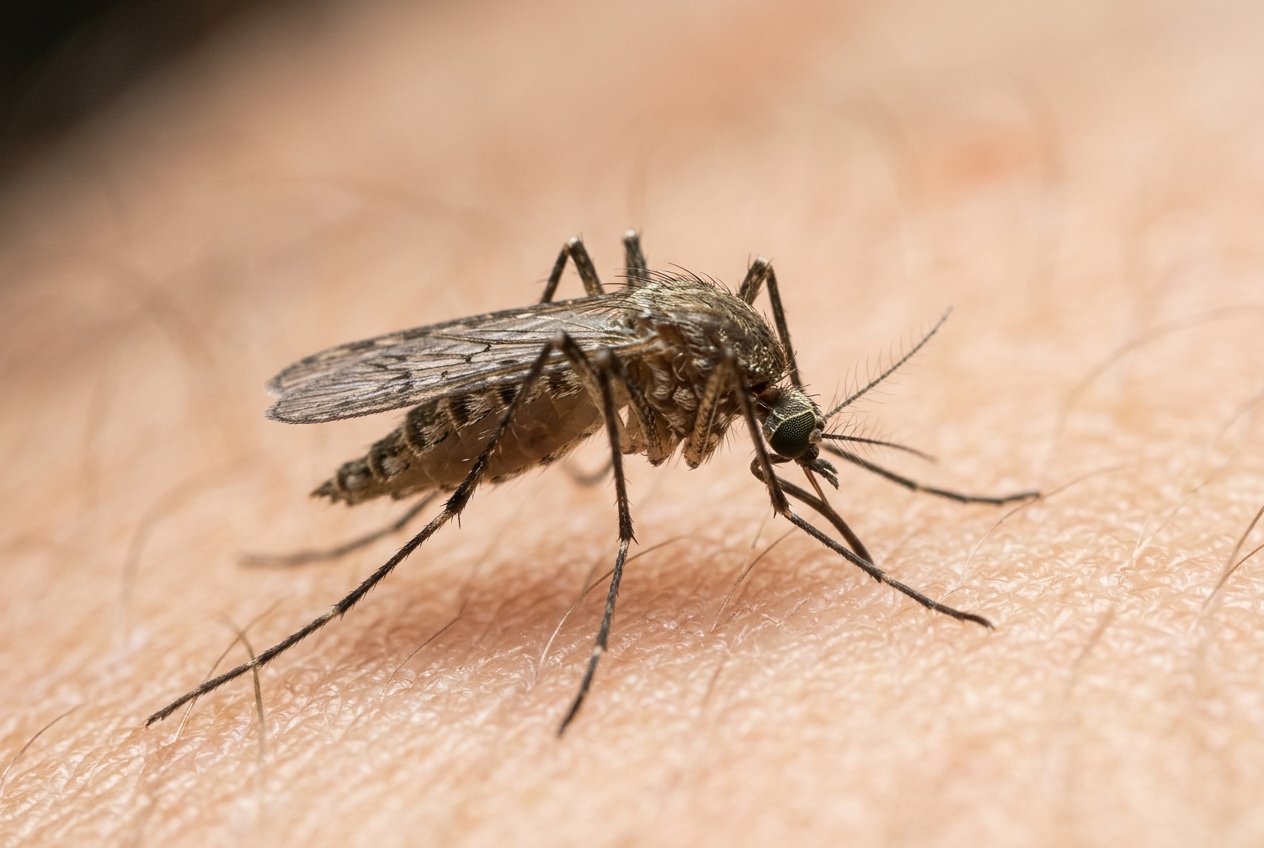
It is transmitted by Aedes aegypti, a mosquito with three behaviours that make it unusually effective at spreading disease among humans:
- It bites during the day, with peaks in the early morning and late afternoon — so a mosquito net used only for sleeping offers little protection
- It breeds in clean, stagnant water in artificial containers rather than ponds or drains — flower vases, coolers, buckets, tyres, plant saucers, discarded bottles, overhead tanks
- It rests indoors, in dark places — under beds, in closets, behind curtains
After an infected bite there is an incubation period of roughly 4–10 days, most commonly 4–7, before symptoms begin. During the symptomatic phase the person is infectious to mosquitoes, which is how transmission continues within a household.
How it presents, day by day
Days 1–3
Sudden onset of high fever, often with:
- Severe headache, particularly frontal or behind the eyes
- Pain in the eyes on movement
- Intense joint and muscle pain — the reason it was historically called “breakbone fever”
- Nausea, vomiting and loss of appetite
- Marked fatigue and weakness
- A rash in some people
Days 4–7 — the window that matters
Fever typically subsides around day four or five, and most people begin improving. This is precisely when severe dengue declares itself. As the fever breaks, plasma can begin leaking from blood vessels, platelets fall, and a patient who looked better yesterday can deteriorate within hours.
This pattern — apparent recovery followed by sudden decline — is why clinical guidance is explicit that dengue requires monitoring through the febrile period and for at least 24–48 hours after the fever resolves.
Day 7 onward
Recovery, often with a late rash and noticeable itching, and fatigue that can persist for weeks. Persistent tiredness after dengue is common and is not itself a sign of complication.
Warning signs — seek emergency care
These indicate possible severe dengue and require urgent medical assessment rather than home management:
- Severe abdominal pain or tenderness
- Persistent vomiting — three or more episodes in 24 hours
- Bleeding — gums, nose, blood in vomit or stool, or pinpoint spots on the skin
- Fluid accumulation — breathlessness or chest pain from pleural effusion, or abdominal distension
- Lethargy, restlessness or irritability, particularly in children
- Liver enlargement beyond 2 cm
- A rising haematocrit with falling platelets — the laboratory signature of plasma leakage
- Cold or clammy extremities, weak pulse, low blood pressure — signs of shock
Severe dengue — encompassing dengue haemorrhagic fever and dengue shock syndrome — involves plasma leakage, bleeding and organ impairment. With proper monitoring and timely fluid management, outcomes are good; without them, mortality rises sharply. This is why the emphasis in clinical practice is on recognition and monitoring rather than on any treatment.
Corrections to two dangerous beliefs
“Platelet count is what matters”
Platelets fall in dengue and are monitored, but the hallmark of severe dengue is plasma leakage causing hemoconcentration — the blood becomes more concentrated as fluid leaves the vessels. A patient can have a falling platelet count and be clinically stable, and conversely can be in trouble before the count looks alarming.
What clinicians watch is the trend across several measurements alongside the haematocrit, symptoms and fluid status — not any single number in isolation.
“Papaya leaf juice, kiwi or pomegranate will raise platelets”
These are widely shared and there is no good clinical evidence that they treat dengue or meaningfully change outcomes. Platelet transfusion is reserved for critically low counts with bleeding — it is a supportive measure, not a treatment for the virus.
The risk is not that the home remedy is harmful in itself. The risk is that reliance on it delays monitoring during the period when severe dengue appears. Supportive care and observation are the intervention; nothing you can drink at home substitutes for them.
Diagnosis
| Test | Best timing | What it tells you |
|---|---|---|
| NS1 antigen | Day 1–5 of illness | Early detection of active infection |
| IgM antibody | After about day 5 | Recent infection; becomes positive later |
| PCR | Early illness | Confirms and can identify the serotype |
| Blood counts | Serial | Platelet trend and haematocrit — the monitoring backbone |
A practical caution about self-administered rapid tests: a negative NS1 early in illness does not reliably exclude dengue, and IgM is negative in the first few days by design. Testing too early produces false reassurance, which is worse than not testing at all.
Treatment
There is no antiviral for dengue. Care is supportive:
- Fluids — oral rehydration, with intravenous fluids if vomiting or dehydration prevents adequate intake
- Paracetamol (acetaminophen) for fever and pain
- Absolutely avoid ibuprofen, aspirin, diclofenac and other NSAIDs — they impair platelet function and increase bleeding risk. This is the single most important medication safety point in dengue
- Rest, with adequate nutrition as appetite returns
- Monitoring — serial blood counts and clinical review where indicated
Most cases are managed at home with monitoring. Hospital admission is indicated where warning signs appear, where the patient is very young or elderly, where comorbidities exist, or where reliable follow-up at home is not possible.
Why a second infection can be worse
This is a genuine and non-obvious feature of the disease. After infection with one serotype, antibodies against it persist — but antibodies against the other serotypes are incomplete. If a later infection with a different serotype arrives, those partial antibodies can attach to the virus and actually help it enter cells more efficiently.
This is antibody-dependent enhancement, and it is the leading explanation for why secondary infections carry a higher risk of severe dengue than first infections. It is also why a dengue history does not confer safe immunity — it may increase risk on subsequent exposure to a different serotype.
Prevention — what actually works
There is no widely available vaccine in India, so prevention is environmental and behavioural. Because Aedes breeds in containers around homes, source reduction is the highest-value intervention and it is largely within individual and community control.
- Cover, clean, dry. Empty, scrub and turn over water-holding containers every week — the egg-to-adult cycle is roughly 7–10 days, so weekly interruption prevents a generation from emerging
- Empty and scrub overhead tanks, coolers and plant saucers — the most frequently missed sites
- Discard or seal tyres, bottles, cans and any container that collects rainwater
- Use larvicides where water cannot be drained, and introduce larvivorous fish (Gambusia) into tanks and unused water bodies
- Window and door screens, and repair gaps — since the mosquito rests indoors
- Repellent containing DEET or picaridin on exposed skin during biting hours; apply according to the product instructions
- Long sleeves and trousers in the early morning and late afternoon
- Household measures — coils, vaporisers and treated mats reduce indoor biting
- Community action — one household’s clean yard does not protect it from neighbours’ breeding sites. Cleaning campaigns work precisely because they are collective
Regarding vaccines: there is no routinely recommended dengue vaccine in India. Where vaccines exist elsewhere, they have important caveats — including that some increase risk in people who have never been infected. Check current guidance from Indian health authorities rather than assuming availability.
How it differs from similar illnesses
| Condition | Distinguishing features |
|---|---|
| Malaria | Cyclical fever patterns, chills and rigors; confirmed by blood test; requires specific treatment |
| Chikungunya | Similar transmission and early presentation, but joint pain is typically more prominent and prolonged; severe dengue complications are less common |
| Typhoid | Step-ladder fever pattern, abdominal symptoms, no rash or marked joint pain |
| Viral fever | Overlapping entirely — which is why testing matters when the course is atypical |
Self-diagnosis is unreliable here. Fever with severe headache and joint pain during dengue season should be tested rather than assumed.
When to see a doctor
- Fever with severe headache, pain behind the eyes, or intense joint pain during dengue season
- Fever that persists beyond seven days or returns after settling
- Any warning sign listed above — do not wait for morning
- Febrile illness in an infant, an older adult, or anyone with diabetes, hypertension, kidney disease or on immunosuppressive treatment
- Reduced urine output, marked weakness, or difficulty staying awake
For children, one additional caution: rely on observable behaviour rather than temperature alone. A child who is playful and drinking normally with a fever is a different clinical proposition from one who is lethargic, refusing fluids or unusually irritable — even at a lower temperature.
Frequently asked questions about dengue
Can dengue be treated with antibiotics?
No. Dengue is viral and antibiotics have no effect on it. Antibiotics are only relevant if a bacterial infection is present alongside — pneumonia or a urinary infection during the illness, for instance. Taking them unnecessarily adds side effects and resistance risk with no benefit.
How long does recovery take?
The acute illness is typically about a week. Fatigue, weakness and low mood commonly persist for two to four weeks and sometimes longer — this is expected rather than a sign that something is still wrong. Return to exercise gradually; resuming intense training too early after dengue is a recognised cause of prolonged recovery.
Do I need daily blood tests?
In confirmed dengue, serial monitoring is standard during the critical period because the trend matters more than any single reading. How often depends on the clinical picture, the day of illness and risk factors — your doctor will set the schedule. What is not appropriate is a single test on day two followed by no follow-up, since that captures the illness before its characteristic changes appear.
Is dengue contagious person to person?
Not directly. It spreads through an infected mosquito biting another person — there is no person-to-person transmission through touch, air or shared utensils. What does happen is household amplification: an infected person infects the mosquitoes in the home, which then bite other household members. That is why protecting the patient from further bites helps protect the family.
I had dengue before. Am I protected?
Only against the same serotype, permanently. Protection against the other three is not conferred — and as explained above, a prior infection may increase the risk of severe disease if a different serotype is encountered. Prior dengue is therefore a reason for more caution about prevention, not less.
This article is for general information only and is not a substitute for professional medical advice, diagnosis or treatment. Seek urgent medical attention if warning signs appear. See our medical disclaimer.