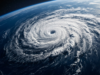










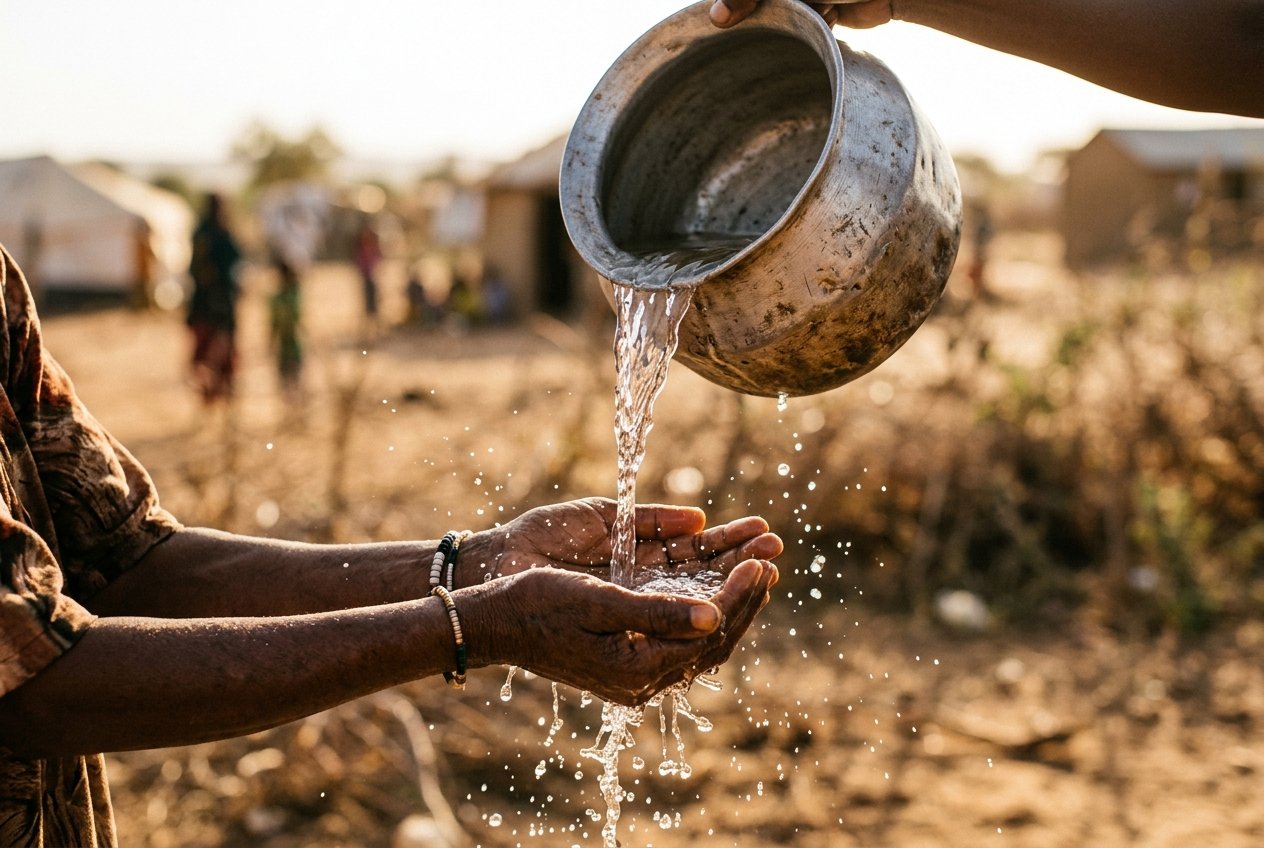
El Niño is an ocean phenomenon, but its most consequential effects are felt in human health. Nobody is made ill by a warm patch of Pacific water. What the warming does is change where rain falls, how hot it gets, whether water supplies are safe, how reliably crops grow, and how often communities are hit by floods, fires and storms — and each of those changes has a well-documented health consequence.
The connection is indirect and delayed. Health effects typically follow the weather anomaly by weeks to months, which is what makes early warning valuable: unlike many health threats, the upstream cause is visible months in advance.
The main pathways
The routes from a Pacific sea-surface temperature anomaly to an individual illness are few and fairly consistent:
- Heat — direct thermal exposure and its effect on the body.
- Water — flooding contaminates supplies; drought concentrates people around shrinking sources and reduces water for hygiene.
- Food — crop shortfall and price rises reduce dietary quantity and quality.
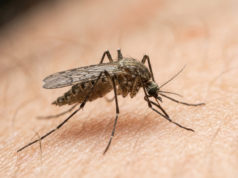
- Vectors — temperature and rainfall change where mosquitoes, and the parasites and viruses they carry, can establish.
- Air — drought and heat increase wildfire and haze exposure.
- Displacement — floods, fires and storms cause injury, destroy services and push people into crowded shelters.
- Mental health — following all of the above, plus the financial stress on farmers and fishing communities.
Heat
El Niño releases heat stored in the western Pacific into the atmosphere, which is why the calendar year following a very strong event has historically tended to be among the warmest recorded — 1998, 2016 and 2024 each followed a major El Niño.
At an individual level, the exposure concentrates in specific settings rather than affecting everyone equally:
- Outdoor workers — construction, agriculture, street vending, waste collection — face the longest unbroken exposure, often with no ability to stop.
- Older adults and those with cardiovascular or respiratory disease have reduced capacity to dissipate heat and regulate circulation.
- Infants and young children have a high surface-area-to-mass ratio and immature thermoregulation.
- People without cooling — this is the strongest social gradient in heat illness. Housing, income and access to electricity matter more than geography.
Exertional heat illness — the acute, life-threatening form — follows heavy physical work in heat rather than ambient temperature alone, and is the reason occupational guidance focuses on work-rest cycles, hydration and acclimatisation rather than on temperature thresholds in isolation.
Water, sanitation and diarrhoeal disease
Waterborne disease responds to both ends of the rainfall spectrum, through different mechanisms:
After flooding
Floodwater mixes sewage, agricultural run-off and waste, contaminating shallow wells, surface sources and piped systems whose integrity is compromised. Crowding in shelters interrupts handwashing and sanitation. Diarrhoeal illness — particularly in children under five — rises in the weeks that follow. The mechanism is contamination plus loss of hygiene capacity, not the water itself.
During drought
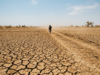
Shrinking water sources concentrate users in fewer places, so more people share the same supply. Water volume per person falls, so handwashing and cleaning are the first things sacrificed. People drink from lower-quality sources as preferred ones dry up. The result is that drought also increases waterborne disease — a counterintuitive finding that is well established in outbreak investigation literature.
Cholera is the clearest example of the link. Major El Niño episodes have coincided with large cholera outbreaks — the 1997–98 event was followed by a severe East African epidemic, and subsequent events have shown the same association. Cholera surveillance is sensitive enough to serve as an early indicator of exactly this kind of disruption.
Vector-borne disease
Temperature and moisture change the geography and pace of transmission. Both dengue and malaria are affected, but the relationship is not simply “more rain means more disease”.
- Dengue is transmitted by Aedes aegypti, which breeds in small containers of standing water. Both heavy rain (which fills containers) and drought (which prompts households to store water in open tanks) can increase breeding — the classic nonlinear relationship. Warmer temperatures also shorten the extrinsic incubation period, so the virus develops faster inside the mosquito and transmission efficiency rises.
- Malaria depends on Anopheles breeding sites, rainfall filling pools, and temperature determining where transmission can be sustained. The specific concern is highland transmission — regions historically too cool for sustained malaria warming enough to support it.
For the clinical picture of the most important mosquito-borne disease in India, see the dengue guide. Note that El Niño’s effect on vector disease varies by location and season — the direction is not uniform worldwide, which is why local surveillance rather than a global rule is what matters in practice.
Nutrition and food prices
A weak monsoon or failed growing season does not primarily cause illness through the field — it causes it through the market and the household budget.
- Crop shortfall reduces domestic supply.
- Prices rise, disproportionately for staples and pulses.
- Households on the lowest incomes substitute toward cheaper, less diverse food — typically reducing animal-source food, fruit and vegetables first.
- Dietary quality falls before calorie intake does, so micronutrient deficiency appears before overt hunger.
The burden falls hardest on children in the first thousand days and on pregnant women, where inadequate intake has consequences that are not fully reversible by later feeding. This is the pathway by which a weather anomaly becomes a generation-level health effect, and it is the slowest to reverse.
Air quality
Drought and heat increase fire. The resulting smoke is a respiratory and cardiovascular exposure in its own right:
- Fine particulate matter (PM2.5) penetrates deep into the lungs and enters the bloodstream.
- Exposure worsens asthma and chronic obstructive pulmonary disease, and increases cardiovascular events.
- Peat fires — as seen in Indonesia during 1997–98 — produce exceptionally dense, persistent smoke affecting populations hundreds of kilometres from the fires themselves.
Populations with pre-existing respiratory disease, children and older adults are most affected. Separately, drought-driven dust and haze raise particulate levels across wider regions for weeks at a time.
Disasters and injury
The acute injuries and deaths in an El Niño year are concentrated in a small number of events: floods and landslides, storm surges, fire, and heat collapse. The health system consequences are equally important and less visible — roads cut, clinics flooded or without power, staff unable to reach facilities, and supply chains interrupted exactly when demand rises.
Post-disaster disease outbreaks are more often explained by disrupted water, sanitation and healthcare access than by the hazard itself.
Mental health
Under-discussed and consistently observed. The relevant exposures are distinct:
- Acute trauma after floods, fires and displacement.
- Prolonged financial stress for farmers and fishing communities — crop failure, lost catch, debt. Agricultural financial distress is associated with elevated rates of depression and, in the worst cases, suicide; the relationship is well documented across multiple countries.
- Uncertainty and anticipatory stress during a long forecast lead time.
- Displacement itself — loss of home, employment, community and routine — which persists long after waters recede.
Support is often concentrated on the acute phase and withdrawn before the chronic phase, which is typically where the larger burden sits. If you are struggling, the guide to anxiety signs, causes and help sets out what is normal, what warrants attention, and where to get support.
Who is most at risk
| Group | Why the risk is higher |
|---|---|
| Children under five | Higher susceptibility to diarrhoeal disease and malnutrition; less physiological reserve in heat |
| Pregnant women | Increased nutritional requirement; heat and infection both carry pregnancy risk |
| Older adults | Reduced thermoregulation; higher cardiovascular and respiratory comorbidity |
| Outdoor workers | Longest unbroken heat exposure, often with limited control over workload |
| People with chronic illness | Reduced reserve; medication can impair heat or fluid balance |
| Low-income households | Least access to cooling, safe water, storage and healthcare; most exposure to food price rises |
| Coastal and riverine communities | Direct flood, storm and fishery exposure |
What actually reduces the risk
The uncomfortable feature of this list is that the health interventions are mostly not medical. What works:
- Acting on early warning. Seasonal forecasts are available months ahead. Pre-positioning water treatment, ORS and mosquito control ahead of an event has repeatedly been shown to do more than responding after illness appears.
- Water and sanitation continuity. Protecting supply integrity and keeping handwashing possible through both floods and drought is the highest-yield single measure for diarrhoeal disease.
- Vector control timed to the anomaly rather than to the calendar — container management before the breeding window opens.
- Heat action plans. Work-rest scheduling, cooling access, and checking on isolated older adults during heat episodes. Alert-and-response systems for heat have demonstrably reduced mortality.
- Nutrition support aimed at the highest-risk groups before prices rise, not after malnutrition appears.
- Health system readiness — supplies, staff and transport plan for the demand peak that follows.
- Mental health support continuing past the acute phase into the recovery period.
Frequently asked questions
Does El Niño directly cause disease?
No. There is no direct biological pathway from ocean temperature to illness. The effects run through heat, water, food, vectors, air quality and disaster exposure — each of which is a well-established health determinant in its own right.
Does more rain always mean more mosquito-borne disease?
No. The relationship is nonlinear for dengue in particular: both flooding and drought can raise transmission, because drought leads households to store water in open containers. Temperature also matters independently of rainfall — warmer conditions shorten the virus’s development time inside the mosquito.
Is cholera linked to El Niño?
Yes, through contaminated water and disrupted sanitation after floods, and through concentrated, lower-quality supplies during drought. Major episodes have coincided with large outbreaks, particularly in East Africa. The link is via water and sanitation failure, not the climate anomaly itself.
Who is most vulnerable?
Children under five, pregnant women, older adults, outdoor workers, people with chronic illness, and households with the least access to cooling, safe water and healthcare. Vulnerability is driven as much by resources as by exposure.
Can anything be done before an event arrives?
Yes — and this is the encouraging part, because the lead time is unusually long for a health threat. Forecasts are available months ahead, which allows water treatment, vector control, heat planning and nutrition support to be positioned in advance.
This article is general information, not medical advice, and does not replace assessment by a qualified healthcare professional. For any symptom or health concern, consult a clinician. See the medical disclaimer.