Many fridges, freezers and cold rooms are now connected to the internet so that managers can monitor and adjust temperatures remotely. That convenience creates a risk: if an attacker takes control of the controller, they can change how the equipment runs. A cyber attack can warm a freezer and spoil food long before anyone notices. This guide explains how connected cold storage works, where the risks are, and what businesses and households can do to protect it.
How connected cold storage works
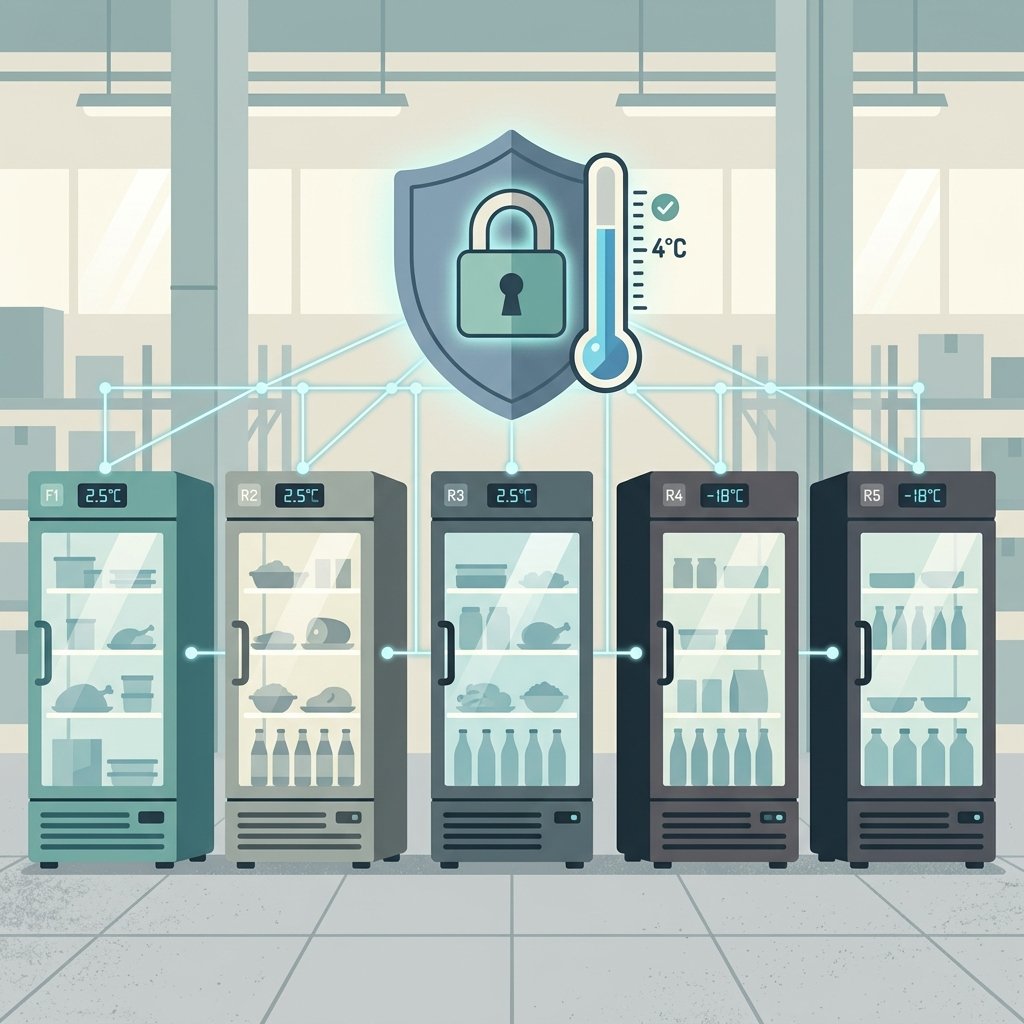
Commercial refrigeration is usually run by a controller that sets temperatures, schedules defrost cycles and records readings. Many modern systems let staff manage that controller remotely through a network or a cloud service. The equipment may be from one manufacturer, while the remote software is supplied by another firm.
Each connection is a potential way in. A device that can be reached over a network can be targeted, whether the attacker wants to disrupt operations, steal data or cause spoilage.
Why older devices are harder to protect
CISA’s cybersecurity guidance stresses that keeping software and firmware up to date is a basic defence. Devices that cannot be updated remain exposed to known weaknesses for as long as they stay in service. Equipment that is many years old may fall into this category, which is why asset inventories matter: you cannot protect a device you have not listed.
When a vendor can no longer update a device, the right response is to plan replacement, restrict its network access and monitor it closely, rather than assume it is safe.
Practical steps for businesses
- List every connected cooling unit. Record the make, model, firmware version, network address and who has remote access.
- Keep devices on supported software. Apply vendor updates promptly, and replace equipment the vendor no longer supports.
- Use multi-factor authentication for any account that can change temperature settings. CISA recommends multi-factor authentication as one of the basic cyber hygiene steps.
- Separate the network. Keep operational technology such as cold-chain controllers on their own network segment, away from staff email and general office devices.
- Limit remote access. Allow only named people to connect, and remove access when staff leave or change roles.
- Set temperature alarms that do not depend on the same system. A separate sensor that sends alerts to a phone can reveal a problem even if the controller is compromised.
- Keep a manual fallback. Staff should know how to check temperatures and move stock if the remote system fails.
Practical steps for households
The same basics apply at home. Change default passwords, keep the app and firmware updated, and turn on multi-factor authentication for the app account that controls a smart appliance. If your router supports a separate network for smart devices, use it.
Plan for a temperature failure
Whatever the cause, a freezer that warms without warning can spoil food. Keep an independent thermometer in each fridge and freezer, check temperatures after any power cut or alarm, and decide in advance which foods you would discard if they have been too warm for too long.
Related reading: For more on protecting accounts and workflows, see our guides on cloud storage for business, checking whether a website is safe, phishing warning signs and AI tools for small business. The French supermarket fridge hack explainer looks at a real cold-chain attack and how it played out in supermarkets.
Frequently asked questions
Can a fridge really be hacked?
Yes. Connected refrigeration controllers can be reached over a network, and an attacker who gains control can change temperature settings. This is why updates, network separation and access control matter.
What is the most important single step?
Keeping every connected device on supported, updated software, and replacing equipment that can no longer be updated, removes the most common route in.
Should cold storage be on the same network as office computers?
Ideally not. Separating operational devices from staff email and general computers limits how far an attacker can move if one account is compromised.
How can I tell if a temperature alarm is trustworthy?
Use a separate sensor that is not controlled by the same system, and test that the alerts reach a person. An alarm that depends on the compromised controller may stay silent during an attack.
Can a smart home fridge be hacked too?
Yes, and the same basics apply. Use a strong password and multi-factor authentication on the app account, keep app and firmware updated, and put smart devices on a separate network if your router supports one.
Sources
- CISA: Cybersecurity Best Practices
- CISA: Multifactor Authentication
- CISA: Cyber Essentials
- NIST: Small Business Cybersecurity Corner
- NIST: Cybersecurity Framework
- NIST: Small Business Cybersecurity Corner (multi-factor authentication and employee awareness)