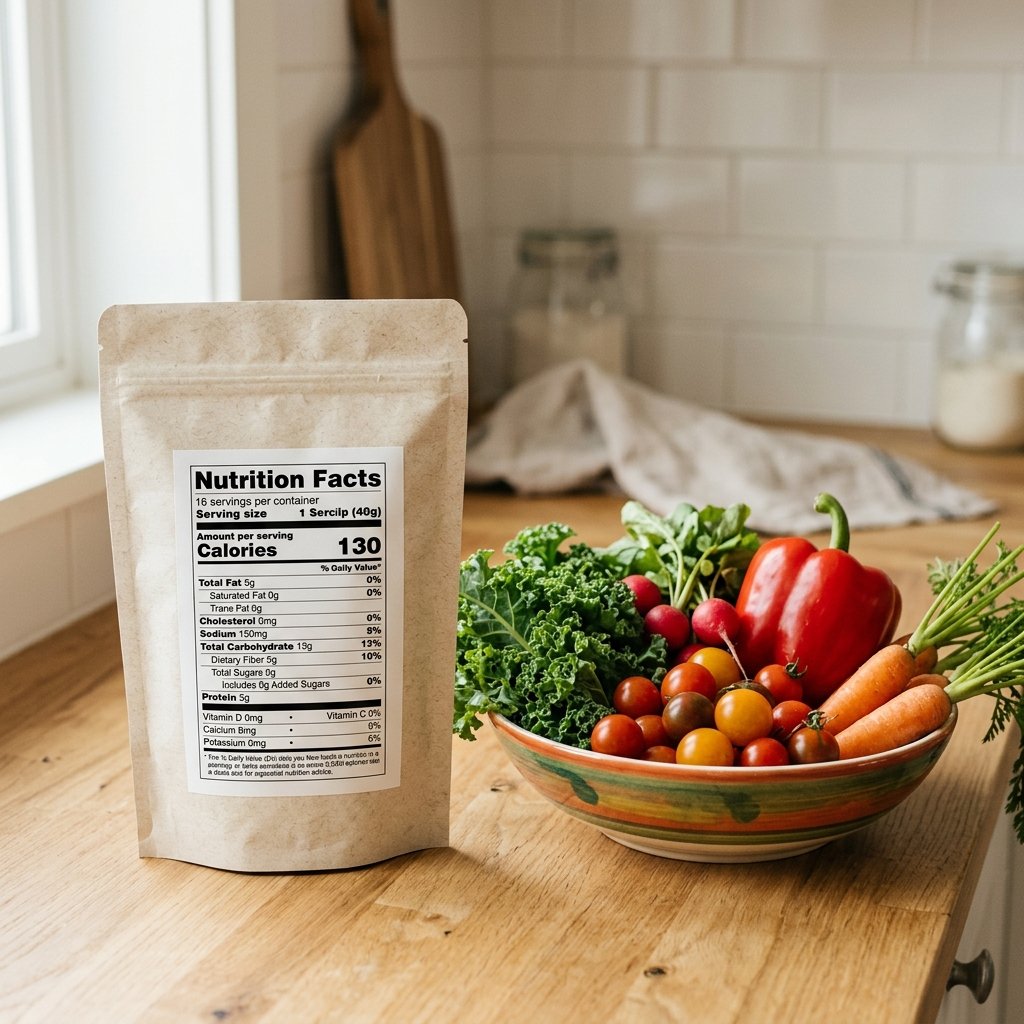
A nutrition label tells you what is in a packaged food, but it is easy to misread. Most people look at calories and stop there. A quick check of serving size, sugar, salt, saturated fat and fibre gives a much clearer picture.
Start with the serving size
Every value on the label refers to one serving, which may be much smaller than the pack. A bottle that holds two servings means you need to double the calories, sugar and salt if you drink all of it. Check the serving size first, then work out how much you will actually eat.
Check the key nutrients
- Sugar: look at total sugars. Fruit and milk contain natural sugar, but sugar added to drinks and snacks is the main target for reduction.
- Salt or sodium: check the amount per serving. Sodium on the label is often 2.5 times the salt content, so convert if needed.
- Saturated fat: a high value means you should compare with other options.
- Fibre: higher fibre helps digestion and keeps you full for longer.
- Protein: useful when you are choosing snacks or meal replacements.
Use % daily value to compare
The percentage daily value shows how much of a nutrient one serving provides, based on a typical daily diet. As a rough guide, 5 percent or less is low and 20 percent or more is high. Use this to compare two similar products, not as an exact target for your own needs.
Read the ingredients list
Ingredients are listed by weight, from the largest to the smallest. If sugar or salt appears near the top, the product is high in them. Several different sugar names in one list, such as glucose, syrup and dextrose, can point to a high total sugar content.
Practical shopping tips
- Compare products within the same category, such as breakfast cereals with other cereals.
- Choose the option with lower sugar and salt and higher fibre where taste is similar.
- Do not rely on front-of-pack claims such as “natural” or “light”. Check the label on the back.
Frequently asked questions
Is “no added sugar” the same as “low sugar”?
No. A food can have no added sugar and still be high in natural sugars. Check the total sugars line.
Do I need to count every gram?
Usually not. Focus on the few nutrients that matter most for your diet, and use the label for comparisons.
This article is for general information only and does not replace advice from a registered dietitian or doctor.