










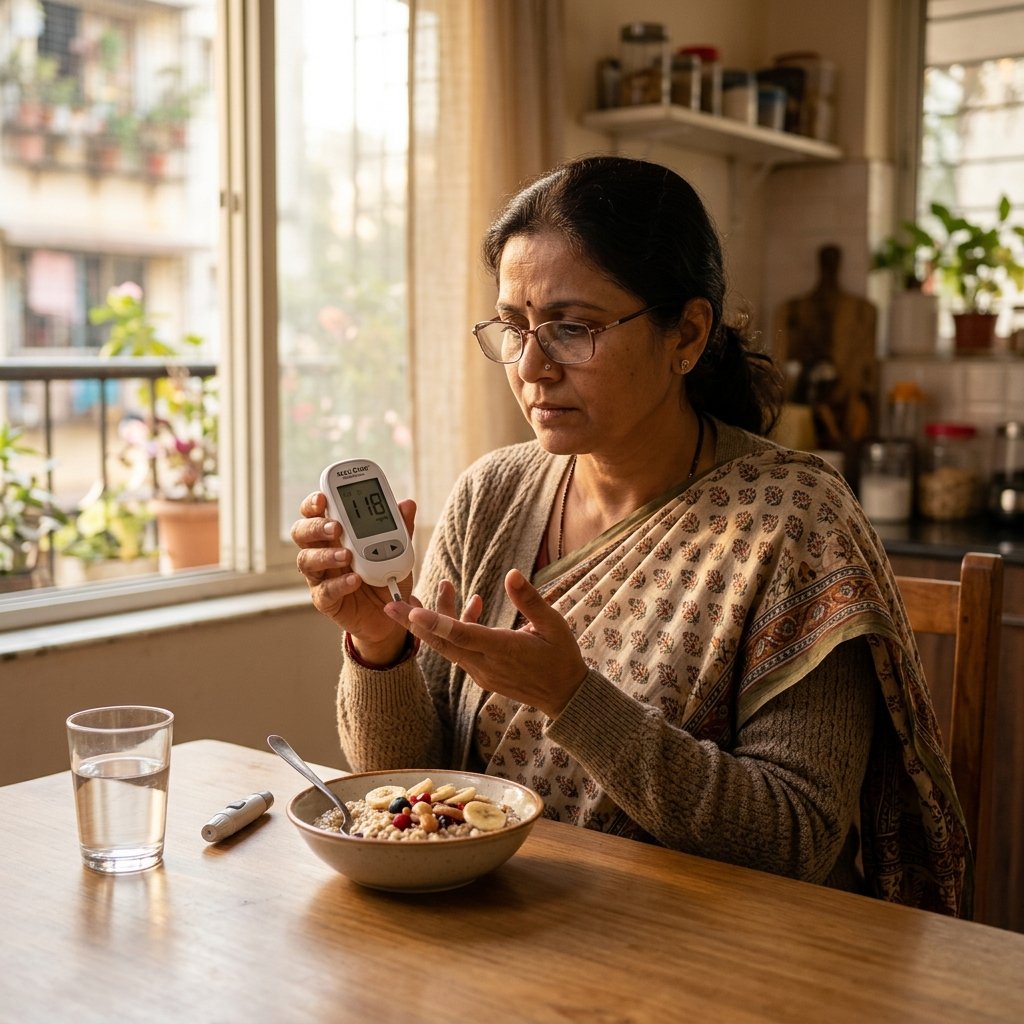
That number on your morning blood test is one of the most underrated numbers in your health: high fasting sugar is how your body announces, months or years in advance, that it is struggling to handle the food you eat. Catch it early and the condition is among the most reversible in medicine. Miss it, and it becomes type 2 diabetes with alarming predictability.
In India, roughly one in three adults already carries this warning in their blood and does not know it. It is silent, costs nothing to detect, and reverses dramatically with daily changes. This guide walks you through what the number means, how to read it, the symptoms worth noticing, and the exact steps the evidence says lower it.
What is high fasting sugar, in plain terms?
Fasting sugar is the measurement of glucose in your blood after at least eight hours without food. The test answers a precise question: with nothing coming in, how well does your body manage sugar on its own? In a healthy person the answer is a stable number under 100 mg/dL, because insulin — the hormone that opens cells to sugar — does its job quietly and consistently.
High fasting sugar begins when that quiet system starts failing. Your cells become progressively less responsive to insulin, a state called insulin resistance. Your pancreas responds by producing more insulin to force the same amount of sugar into cells, and for a while this harder work keeps blood sugar looking normal. The strain does not show in the blood immediately — it shows in the slowly climbing morning number, once the extra insulin no longer keeps pace.
The essential message most people miss: this stage is not diabetes yet. It is the reversible middle step, the exact window where the right changes pay off the fastest and the window where delaying makes everything harder.
Reading your numbers: the chart that matters
One overnight fast, one blood draw, and you have the single most useful screening number in metabolic health. The diagnostic categories are simple and worth memorising:
Normal: under 100 mg/dL. The warning zone (prediabetes): 100 to 125 mg/dL — this is the reversible range this guide is about. Diabetes: 126 mg/dL or higher, confirmed on two separate tests on two separate days.
Two companion tests complete the picture. HbA1c averages blood sugar over roughly three months — a result of 5.7 to 6.4 percent lands in the warning zone, and 6.5 percent or above means diabetes regardless of what a single morning reading says. Post-meal sugar, tested one to two hours after eating, catches the spikes that a fasting test can miss entirely — people with normal fasting readings can still have unhealthy post-meal swings.
Doctors read the set together, and so should you: a single off reading is a flag to recheck, while a consistent trend across several tests is the diagnosis.
Why the fasting test deserves its reputation
The overnight fast makes the fasting test the most standardised, repeatable blood measurement in medicine — nothing you ate at breakfast distorts it, so results from different years compare directly and honestly. That makes it the best early warning system for a disease that otherwise masquerades as feeling perfectly fine for years.
It is also the number that responds fastest when you change your habits. People who adopt even modest weight loss and daily movement routinely watch fasting sugar fall back under 100 within a few weeks. The number is genuinely sensitive to lifestyle, which makes it an excellent feedback tool — you can literally verify within a month or two whether your new routine is working, something few other health measures offer so quickly.
If you are overweight, have a family history of diabetes, or had elevated sugar during pregnancy, test yearly even when nothing feels wrong. The test costs almost nothing and takes a few minutes at any lab. The consequences of skipping it are not cheap at all — precious years of easy reversibility gone before anyone looks.
High fasting sugar symptoms: the quiet clues
The condition is famous for having no symptoms at all in the early stage — most people are diagnosed because a random health check caught it, not because they felt anything. When signs do appear, they are the kind that are easy to write off:
Unusual thirst and frequent urination top the list, because excess sugar pulls water out of your tissues. Afternoon slumps follow, because sugar swings make energy unreliable through the day. Slow-healing cuts and frequent infections appear when immune cells work in a sugar-heavy environment. Dark, velvety patches on the neck, elbows, or underarms — called acanthosis nigricans — are a strong physical clue that many people mistake for dirt or a tan. Blurred vision can come and go as sugar shifts fluid in the lenses of the eyes.
None of these alone means anything, and all of them together could still be something else. They are prompts to test — and the test settles the question in minutes.
Who develops it? The common risk factors
This condition prefers a predictable profile, and the encouraging part is that each item is also a lever you can pull:
Excess belly fat is the strongest predictor — central obesity drives insulin resistance more than overall weight. A largely sedentary day keeps muscles from efficiently clearing sugar from the blood, because the muscles that do not move stop demanding sugar. Sweet drinks and refined carbs keep insulin demand high all day, wearing the response down over years. Family history loads the dice — though lifestyle still decides most outcomes. Poor sleep and chronic stress raise stress hormones, which raise blood sugar. Even high uric acid travels in the same pack, feeding the same insulin resistance.
The liberating part is that all but family history are adjustable — and changing just two of these patterns measurably moves the number. You do not need a perfect life; you need a different pattern.
How to lower it: what the evidence actually supports
This is where the situation stops being worrying and becomes actionable. The research-backed levers, ordered roughly by impact:
1. Lose 5 to 7 percent of your body weight. This single intervention anchors every major diabetes-prevention trial. In the landmark studies, this amount of weight loss cut progression to type 2 diabetes by roughly half over years of follow-up — and it works precisely because it reverses the insulin resistance behind high fasting sugar.
2. Rebalance dinner, not just ingredients. A dinner built on protein and vegetables with a smaller grain portion beats a late, carb-heavy meal, because your morning number is largely a reprint of last night’s plate. Most of the damage is done in the evening.
3. Walk twenty minutes after dinner. Post-meal movement clears sugar that would otherwise linger in the blood, and the effect shows directly in the next morning’s fasting reading. It is the cheapest, fastest-verifying habit on this list.
4. Quit liquid sugar. Chai with sugar, packaged juices, fizzy drinks, and sweetened coffee are the fastest route to insulin resistance in Indian diets. Removing them alone moves the number within weeks.
5. Protect your sleep. Even one short night visibly raises insulin resistance the next day. Sleep is not a wellness bonus; it is a metabolic habit as real as diet.
The beautiful property of this list: every step also improves blood pressure, triglycerides, liver fat, and uric acid, because they share one root cause — insulin resistance. One set of habits treats the entire cluster at once.
When doctors get involved: diagnosis and medication
If your morning number repeatedly lands in the warning zone or beyond, your doctor will typically order an HbA1c and possibly an oral glucose tolerance test to confirm the picture. This is routine, takes minutes, and settles your exact status with far more confidence than a single reading can.
Medication is not the first move for the warning zone — lifestyle is, because it is the only intervention shown to reverse the condition rather than merely manage it. Metformin is sometimes added when lifestyle alone is not producing results quickly enough, but it works best beside, not instead of, the diet and movement changes listed above. If you are already on medication, do not stop it without medical guidance; instead, let better habits earn a conversation with your doctor about reducing the dose safely.
High fasting sugar and India: why the numbers are climbing
The pattern in India is worth understanding because it explains why this number creeps upward across so many households. Traditional Indian diets lean heavily on rice, refined wheat, and sugar-sweetened chai and sweets; combined with long commutes, desk work, and insufficient sleep, the daily insulin demand is simply higher than it used to be. Add to that the rise of delivery apps and ready-made snacks, and the average plate now contains more fast carbohydrates with fewer vegetables than it did a generation ago.
At the same time, awareness is rising slowly relative to the disease. Many people discover high fasting sugar only during a pre-employment checkup, an insurance medical, or a routine screen before surgery — which means years of easy reversibility were spent in silence while the number climbed. Screening camps and digital glucose monitors are changing that, but the gap between who is at risk and who knows it remains wide.
The good news: precisely because the driver is daily lifestyle, the first line of defence is daily lifestyle rather than anxiety or expensive treatments. A straightforward, repeatable evening routine — a lighter dinner, a brisk walk, an earlier night — remains the same prescription Indian nutrition experts give their own families, because it is the one that has worked in study after study. And because the number responds so visibly, you get early feedback that keeps the habit alive instead of waiting years for a result.
Frequently asked questions
Is this the same as prediabetes?
Essentially, yes. A fasting level of 100 to 125 mg/dL is the medical definition of prediabetes — not yet diabetes, but a clear signal that the body is straining, and that the window for easy reversal is open right now.
Can it reverse without medicine?
In most cases, yes. Weight loss, dinner rebalancing, post-dinner walking, and cutting liquid sugar are proven to bring the number back under 100. Metformin joins in when those alone are not enough, but it is rarely the first move.
How long does reversal take?
Meaningful improvement shows up within two to four weeks of consistent changes, and many people are back in the normal range within two to three months. The fasting number responds faster than HbA1c, which reflects the three-month average and lags behind.
Does drinking more water fix it?
Hydration supports kidney function and overall metabolism, but water alone will not reverse insulin resistance. The levers that actually move the number are weight, carbohydrates, movement, and sleep.
How often should I retest?
Retest with your doctor two to three months after starting changes to confirm direction. If you manage this at home, a fasting check every few months alongside a twice-yearly HbA1c keeps you honest without becoming compulsive.
Does it always become type 2 diabetes?
No. Left unchanged, a substantial share of people progress — but with a 5 to 7 percent weight loss plus lifestyle change, the trajectory reverses for many. Catching it early exists precisely so it does not have to become diabetes.
Bottom line
High fasting sugar is the earliest door to type 2 diabetes, and the easiest one to walk back through. Lose 5 to 7 percent of your weight, make dinner lighter and earlier, walk after meals, drop liquid sugar, and sleep properly — the number falls fast, and so do your triglycerides, uric acid, liver fat, and blood pressure with it. Test yearly, act early, and you stay on the on-ramp that leads away from diabetes.
Sources and references
- NIDDK: Prediabetes and Insulin Resistance
- CDC: Diabetes Prevention Program
- NHS: Type 2 Diabetes
- WHO: Diabetes Fact Sheet
- Indian Council of Medical Research
- Prediabetes: The Complete Guide
- Type 2 Diabetes: The Complete Guide
- High Triglycerides: The Complete Guide
- High Uric Acid: The Complete Guide
- Fatty Liver: The Complete Guide