










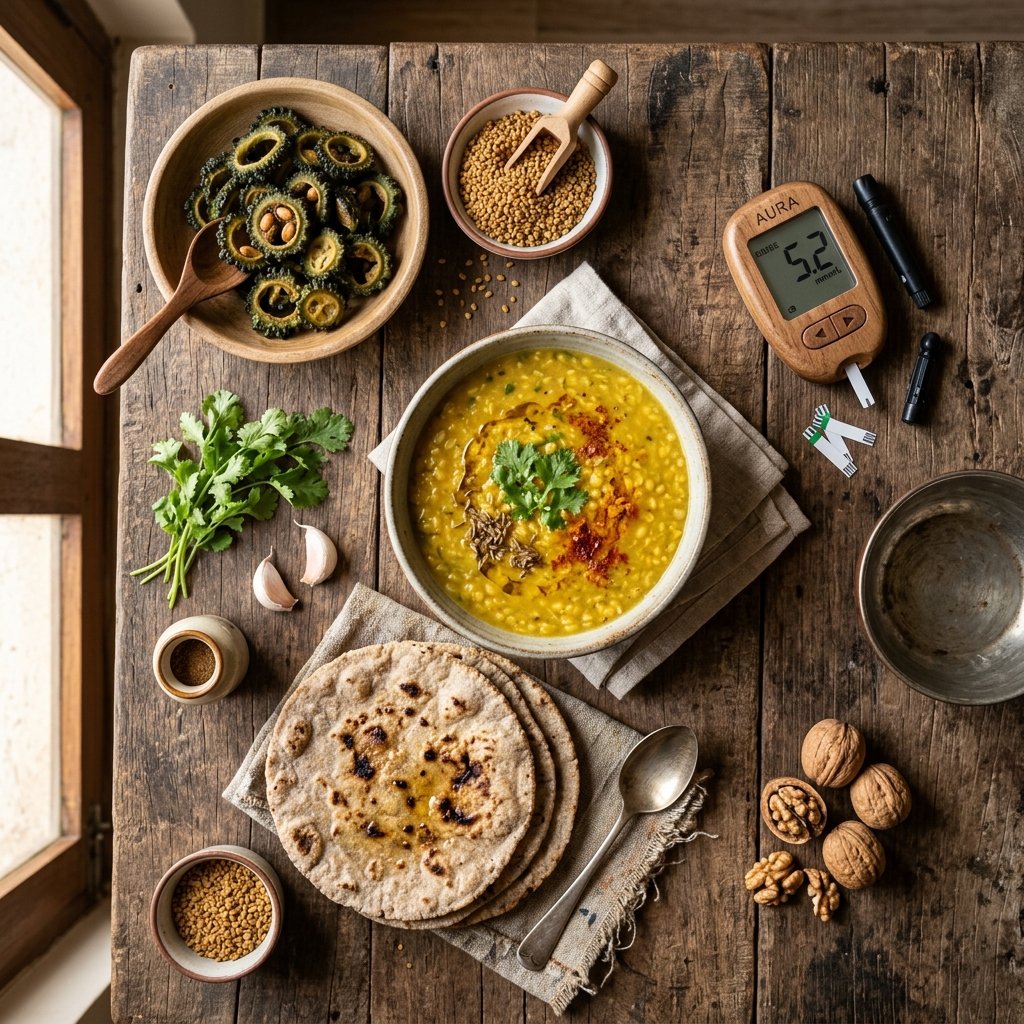
Type 2 diabetes is the health condition India cannot stop talking about — and for good reason: India is home to roughly one in six of the world’s people living with diabetes, and the large majority of them have type 2. This complete guide gives you the plain-language facts: what type 2 diabetes actually is, who is at risk, the symptoms to notice, the blood sugar numbers to understand, and the diet, exercise, and medication steps that genuinely bring them down. Read the sections you need and bookmark the rest — everything here is grounded in current evidence, not fads.
What is type 2 diabetes, in plain terms?
Type 2 diabetes is a condition where your body stops using insulin properly — a problem doctors call insulin resistance. Insulin is the hormone that unlocks your cells so sugar (glucose) can enter them for energy. When the lock stops working, sugar builds up in your blood instead of feeding your cells, and your pancreas works harder and harder to produce more insulin. Over time the pancreas can wear out, and blood sugar stays high.
The condition is very different from type 1 diabetes, where the body attacks the insulin-making cells and daily insulin injections are essential from the start. In type 2 diabetes, the body usually still makes insulin in the early years — it just is not using it well. That distinction matters, because it explains why type 2 diabetes can be slowed, and in many cases reversed, with the right care.
How common is type 2 diabetes in India?
You need the numbers to take this seriously. ICMR and National Family Health Survey estimates put the number of Indians living with diabetes at more than 100 million — the majority with type 2 diabetes — with tens of millions more in an early stage called prediabetes, where blood sugar is already above normal but not yet in the diabetic range.
Urban populations have higher rates than rural ones, and the age of onset is falling: type 2 diabetes increasingly appears in people in their 30s and 40s, not just older adults. Body weight, family history, sedentary work, and high-sugar diets are the main drivers. For the bigger picture on the condition and its global and Indian burden, the World Health Organization diabetes fact sheet and the Indian Council of Medical Research publish the most current global and country-level numbers. For our own summary, the overview of type 2 diabetes as a chronic condition digs into the data., our overview of type 2 diabetes as a chronic condition digs into the data.
Type 2 diabetes symptoms: what to watch for
Type 2 diabetes is often called a silent condition because many people have no symptoms for years while blood sugar climbs. When symptoms do appear, the typical ones are:
- Frequent urination — your kidneys work to flush excess sugar out in urine.
- Excessive thirst — dehydration follows the extra urination.
- Unexplained fatigue — cells are not getting the energy they need.
- Blurry vision — high blood sugar changes the shape of the lens in your eye.
- Slow-healing cuts and frequent infections, especially skin and urinary infections.
- Numbness or tingling in the hands or feet (nerve damage, usually later).
- Unexplained weight loss despite eating normally — more common when blood sugar is very high.
None of these alone means you have type 2 diabetes, and many people have none of them at all. They are triggers to get tested — not permission to self-diagnose.
Who is at risk of type 2 diabetes?
You are at higher risk if several of these fit you:
- A parent or sibling has diabetes — family history is one of the strongest risk factors.
- You are 35 or older, and risk rises further with age.
- You carry extra weight around your abdomen — central obesity in particular is linked to insulin resistance.
- You are physically inactive — long sitting hours, little walking, no exercise.
- You have high blood pressure or abnormal cholesterol — these travel together with diabetes. In fact, type 2 diabetes and high blood pressure are so closely linked that doctors treat them as one metabolic problem.
- You had gestational diabetes (diabetes during pregnancy).
- You are of South Asian origin — people of Indian descent tend to develop diabetes at lower body weights than many other populations, which is why doctors in India often screen earlier and more aggressively.
Risk factors are not a verdict. They are a to-do list: the stronger your risk profile, the more reason to get tested and act early.
Blood sugar numbers you should understand
Medical numbers look intimidating until you learn the three that matter. Doctors use these tests to diagnose and monitor type 2 diabetes:
- Fasting blood sugar (FBS): measured after at least 8 hours without food. Below 100 mg/dL is normal, 100–125 is prediabetes, and 126 or above on two separate tests means diabetes.
- Post-meal blood sugar: usually checked 2 hours after a meal. Below 140 mg/dL is normal, 140–199 is prediabetes, and 200 or above suggests diabetes.
- HbA1c: your three-month average blood sugar, shown as a percentage. Below 5.7% is normal, 5.7–6.4% is prediabetes, and 6.5% or higher indicates diabetes. This is the number your doctor tracks most, because it reflects the big picture instead of a single moment.
One high reading is not a diagnosis — doctors confirm with a second test. And if your numbers are in the prediabetes range, that is genuinely good news to act on: prediabetes is the stage where lifestyle changes can stop type 2 diabetes from ever developing.
Why type 2 diabetes matters: the complications
Type 2 diabetes is dangerous not because of the sugar itself, but because of what high sugar does to blood vessels over many years. Uncontrolled blood sugar damages small blood vessels and nerves, and the consequences include:
- Heart and blood vessel disease — diabetes sharply raises the risk of heart attack, stroke, and peripheral artery disease. High blood pressure and diabetes together are a particularly dangerous combination, and managing both together improves outcomes far more than treating either alone; the complete blood pressure guide covers that side of the equation.
- Kidney damage (diabetic nephropathy) — diabetes is a leading cause of chronic kidney disease and dialysis in India.
- Eye damage (diabetic retinopathy) — a leading cause of blindness in working-age adults; regular eye checks are essential.
- Nerve damage (neuropathy) — numbness, tingling, and pain, often in the feet; combined with poor circulation it can lead to foot ulcers.
- Foot problems — reduced sensation means injuries go unnoticed and heal slowly; daily foot checks matter.
The encouraging counterpoint: all of these risks fall markedly when blood sugar is brought under control early. Good control is not a small win — it is the single best protection you have.
Can type 2 diabetes be reversed?
Yes — with an important qualification. Research, including major UK trials like DiRECT, shows that substantial, sustained weight loss can put type 2 diabetes into remission for many people, meaning blood sugar returns to non-diabetic levels without diabetes medication. Remission is not the same as a cure: blood sugar can rise again if weight returns, and you still need regular monitoring.
The evidence-based formula for remission is demanding but proven:
- Losing roughly 10–15% of your body weight, as quickly as is safely possible under medical supervision, gives the best chance of remission — especially within the first 6 years of diagnosis.
- Sustaining the loss with a diet pattern you can maintain for life, not a crash diet.
- Adding physical activity and preserving muscle, because muscle tissue is your body’s biggest sugar-storage tank.
Not everyone can achieve remission, and not achieving it is not a personal failure. But it is an honest, realistic goal worth discussing with your doctor, because it changes the conversation from “manage your sugar” to “build a body that resists it.”
Type 2 diabetes diet: what actually helps
Diet is the highest-leverage tool for type 2 diabetes, and the principles are simpler than the internet makes them:
- Cut the obvious sugars first. Sugary drinks — sodas, sweetened juices, sugar in tea and coffee — are the single easiest place to cut sugar, because liquid sugar hits your blood fast.
- Choose intact grains over refined ones. Whole grains, millets, and pulses release sugar slowly; white rice, white flour, and maida products spike it. Swapping a portion of white rice for millet or whole-wheat roti is a practical Indian-diet change.
- Plate in balance. Aim for roughly half the plate as vegetables, a quarter as protein (dal, legumes, paneer, eggs, fish, chicken), and a quarter as whole grains. That balance slows the rise in blood sugar after meals.
- Be carbohydrate-aware, not carbohydrate-free. You do not need to abandon roti or rice. The goal is portion control, pairing carbs with protein and fibre so they absorb slowly.
- Watch salt, not just sugar. Diabetes and high blood pressure are partners, and excess salt raises blood pressure. The 7-day DASH diet guide shows how to eat in a way that helps both conditions at once.
There is no single “diabetes diet” — the best plan is the one you can follow for years. What that looks like in practice, meal by meal, is exactly what the DASH approach lays out for chronic-condition eating.
Exercise and daily activity for type 2 diabetes
Physical activity works on type 2 diabetes through several gears: it makes muscle cells more sensitive to insulin, it lowers blood sugar during and after exercise, and it supports weight loss and blood pressure. The practical targets:
- At least 150 minutes a week of moderate activity — about 30 minutes on most days: brisk walking, cycling on flat ground, dancing, gardening.
- Two sessions a week of strength work — squats, lunges, wall push-ups, or light weights. Muscle preserves your long-term insulin sensitivity like nothing else.
- Break up sitting time. Even a 2-minute walk every hour reduces how much your blood sugar climbs after meals. This especially matters for desk workers.
If you are new to exercise or on medication, check with your doctor first and start gently. Consistency beats intensity — someone who walks daily for years does more for their blood sugar than someone who runs hard for a month.
Type 2 diabetes medication: the basics
Lifestyle comes first, but medication is not a failure — it is a tool, and many people need it from the start. The most widely used drug is metformin, which reduces how much sugar your liver releases and how much you absorb. It has decades of safety data and is often the first step doctors prescribe.
Depending on your numbers and profile, treatment may add other classes of medicines, and some people eventually need insulin. The modern approach is personalized: the right drug depends on your age, weight, kidney function, heart risk, and how high your blood sugar is.
Two things to understand about medication:
- Medication works best alongside lifestyle, not instead of it. A drug that lowers sugar while weight keeps climbing gives you a smaller and smaller benefit over time.
- Never adjust your dose yourself. Changing or skipping medication based on home glucose readings can be dangerous — doses should be adjusted with your doctor.
Monitoring: tracking your numbers at home
Home monitoring turns type 2 diabetes from something scary into something managed. What to track:
- Fasting and post-meal readings a few times a week (your doctor will suggest a schedule and target ranges).
- HbA1c every 3–6 months at the lab — this is the report card that really counts.
- Regular checks beyond sugar: blood pressure, cholesterol, kidney function (urine protein test), and annual eye and foot examinations.
- A simple log — on your phone or a notebook — so you and your doctor can spot patterns between meals, activity, stress, and readings.
Diabetes management is a feedback loop. The more you measure, the clearer it becomes which meals and habits are working — which is exactly how people turn this condition from a life sentence into a manageable, liveable reality.
Frequently asked questions about type 2 diabetes
Is type 2 diabetes hereditary?
Family history raises your risk significantly, but it is not destiny. Lifestyle strongly influences whether inherited risk becomes disease — some people with diabetic parents never develop it, and some with no family history do.
Can I still eat rice and roti?
Yes, in controlled portions, paired with protein, fibre, and vegetables. The problem for most people is portion size, not the food itself. A glass of water and a starter salad before a meal is a simple way to naturally reduce portions.
How fast can I lower my blood sugar?
Dietary changes and movement can lower readings within days to a couple of weeks. HbA1c — the three-month average — moves more slowly and shows real change after about 12 weeks. Be patient with your body while the numbers trend in the right direction.
Is diabetes the same as being diabetic?
They are the same condition; “diabetic” is simply the adjective and shorthand people use. What matters is not the label, but treating blood sugar seriously — the condition is common, manageable, and increasingly well understood.
What is the difference between type 1 and type 2 diabetes?
Type 1 is an autoimmune condition where the body destroys its insulin-producing cells, so insulin is always needed. Type 2 — the far more common kind — is insulin resistance, where the body still makes insulin but cannot use it well, and it is strongly linked to weight, diet, and activity.
Which doctor should I see?
Start with a general physician or family doctor who can test and diagnose you, then a diabetologist or endocrinologist if you need expert management. A qualified dietitian adds a big practical advantage for everyday meals.
Bottom line
Type 2 diabetes is common, serious, and — crucially — highly manageable with early, consistent action. Test if you have risk factors, act on food and movement first, use medication without guilt, and monitor your numbers so you can see what works. This guide is your map; the managing happens one meal and one walk at a time.
This article is for general information only and is not a substitute for professional medical advice, diagnosis, or treatment. Always seek the advice of your physician or another qualified health provider with any questions about a medical condition.
Read next on Dangit: vitamin D deficiency signs and how to fix it, ways to improve digestion naturally.
Explore more on Dangit: health, technology, science, nature, featured, lifestyle, society, the local business directory and more reading.







[…] more than any one alone. If you are managing type 2 diabetes, you already know this fight. Read our complete guide to type 2 diabetes and our evidence-based guide to high blood pressure — the diet and lifestyle advice in all three […]
[…] If you are managing type 2 diabetes, you already know how these markers travel together. Read our complete guide to type 2 diabetes and our complete guide to high cholesterol — the underlying pattern is the same […]
[…] Type 2 Diabetes: The Complete Guide (Symptoms, Diet, and Prevention) […]