










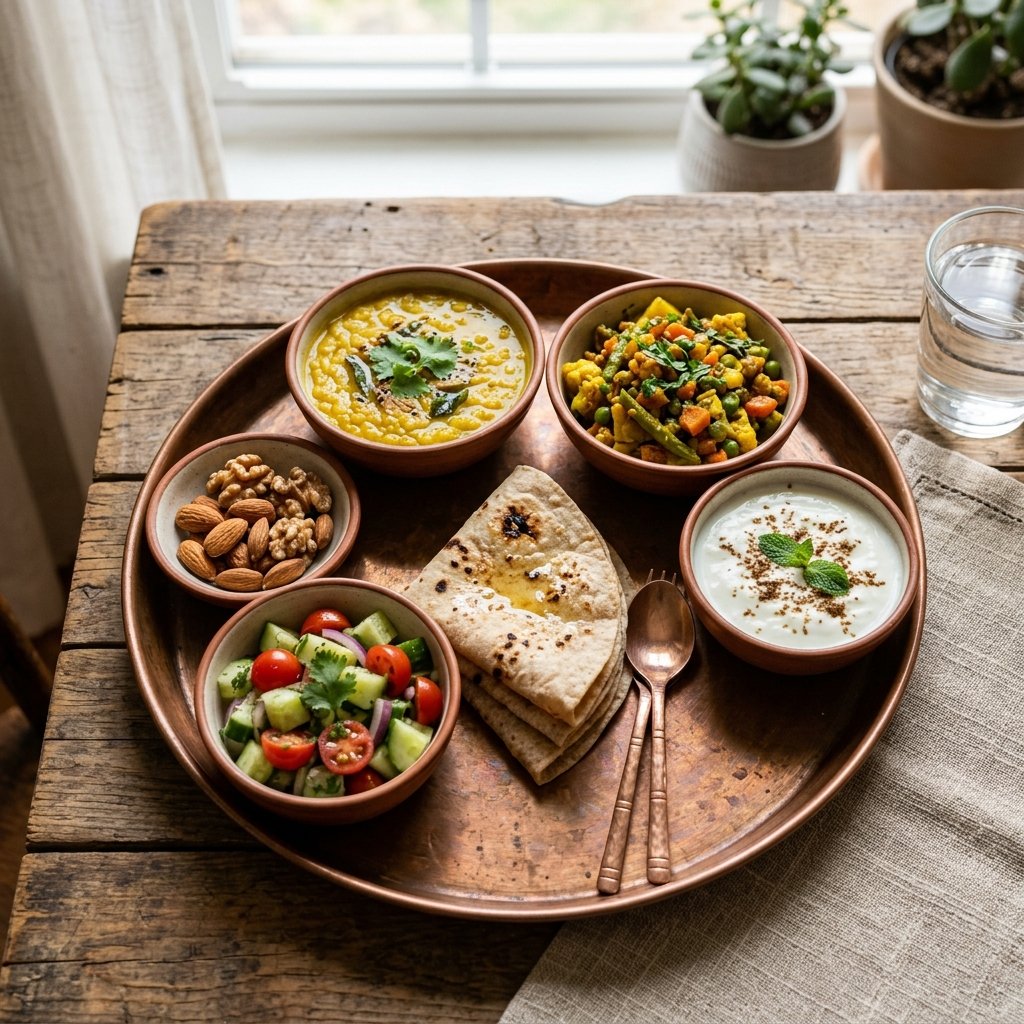
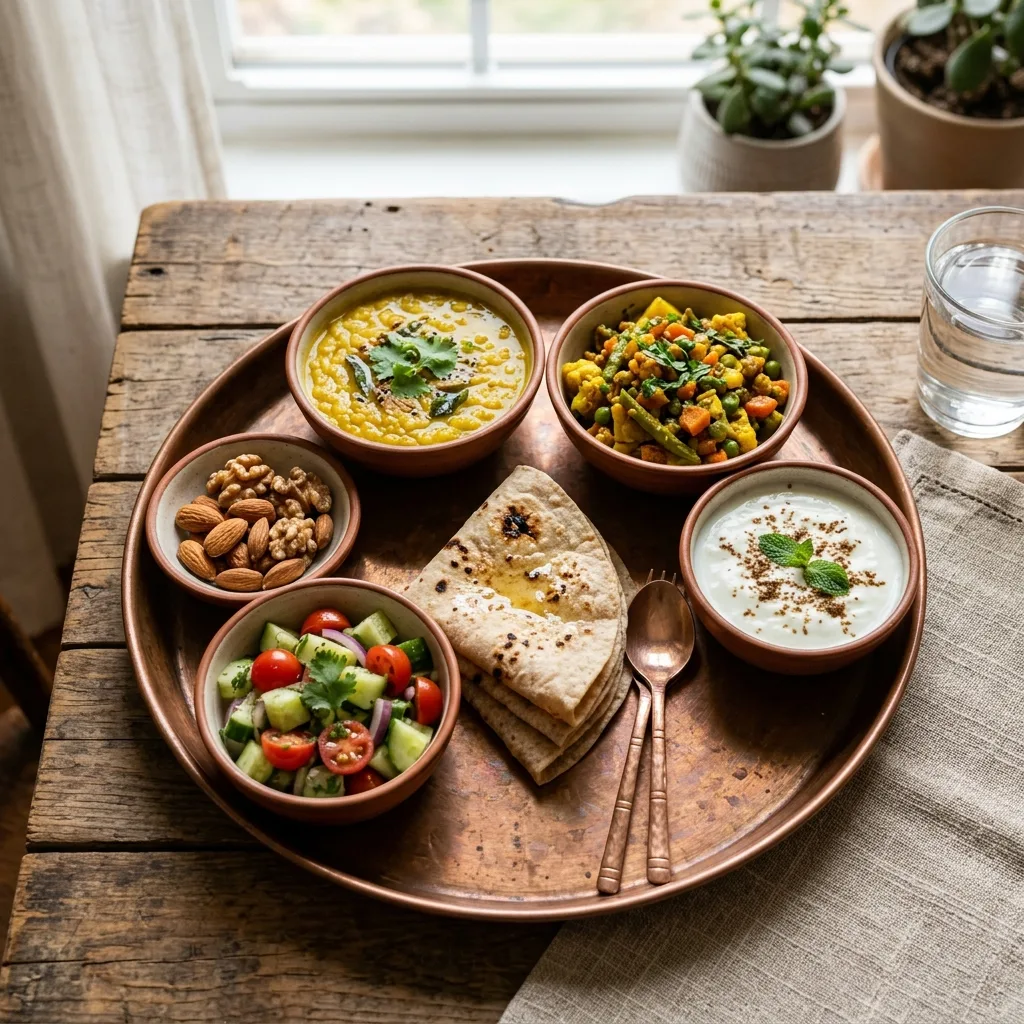
You can eat a genuinely heart healthy Indian diet without giving up roti, dal, or even rice — the problem was never traditional Indian food. The problem is what the modern Indian plate has become.
This complete guide explains what the science actually says, which parts of traditional cooking to keep, which modern habits are quietly damaging hearts, and how to build a practical meal structure for the whole family.
What a heart healthy Indian diet really looks like
The best Indian meals are naturally vegetarian, fiber-rich, and low in the fats that raise cholesterol. A plate built for your heart has four quarters: a generous serving of dal or legumes, a pile of vegetables, a fist-sized portion of whole grain, and a spoon of healthy fat.
Notice what is missing: no heavy gravy, no deep-fried side, no white sugar chai, no oversized rotis made from maida. The heart healthy Indian diet is not about eating less food — it is about swapping the empty starches and sugars for the protein and plants that your traditional meals already contain.
Which parts of Indian food protect your heart
Traditional Indian cooking is genuinely cardioprotective, and most of it deserves to stay:
Dal and legumes — moong, chana, rajma, and masoor dal are fiber- and protein-rich and lower cholesterol when eaten regularly. Vegetables and greens — most Indian meals already include sabzi, and the potassium in vegetables naturally supports healthy blood pressure. Spices — turmeric, cumin, coriander, and ginger are not magical, but they replace salt and sugar, and their antioxidant content is a genuine bonus. Ghee and mustard oil in small amounts — a spoon is fine; a jug is not. Fermented foods — idli, dosa, and curd feed the gut bacteria that influence heart risk.
The pattern hidden in all of this: traditional food is plant-heavy and cooked from scratch. That single fact explains why rates of heart disease shot up in India exactly as processed snacks replaced home cooking.
The modern habit that hurts the most
Every cardiologist will give you the same short list of the true villains:
Sugar in everything. Chai with two spoons, three times a day, plus a sweet after lunch — that alone can exceed the daily sugar budget before dinner, feeding high triglycerides and belly fat. Refined maida. Biscuits, bakery bread, and store-bought buns digest like sugar and crowd out the whole grains that protect you. Deep-fried snacks. Samosas, bhajiyas, and namkeen are cooked in reused oil; daily frying is a direct route to high cholesterol and high blood pressure. Packaged everything. “Health drinks,” instant noodles, and ready gravies are the modern anti-heart foods wrapped in convenience.
The single highest-value change for most Indian households is cutting sweetened drinks and bakery snacks first, before worrying about anything else.
How to build a heart-healthy plate, meal by meal
You do not need a meal plan written for someone else. You need a structure that fits your kitchen:
Breakfast. Poha, upma, idli, or a vegetable omelette with a glass of milk or curd. Delay the chai sugar — or drop the sugar and keep the chai, which most people find easier to sustain.
Lunch. One or two rotis (whole wheat), one large bowl of dal, two bowls of sabzi with vegetables visible, and curd. The plate should look colorful, not beige — beige is the sign of too much starch, too little plant.
Evening snack. Roasted chana, a fruit, a handful of nuts, or curd. This is the snack slot where biscuits and chips usually sneak in — replace them once and the habit sticks.
Dinner. Lighter than lunch: dal and soup or a dry sabzi with a smaller grain portion, eaten before 8 p.m. where possible.
Cooking rules. Use one spoon of oil or ghee per dish, not a poured amount. Batch-cook dal and grains so healthy meals are as convenient as ordering in. Keep fried foods for occasions, not days.
Indian diet and weight loss: the same plate works
The rebalanced Indian plate and a weight-loss Indian diet are the same thing, which is why this approach is so sustainable. Weight loss in this framework happens through four small changes rather than a diet overhaul:
Protein first. Doubling the dal portion and halving the rice or roti keeps you full longer and naturally cuts total calories. Vegetables as the base. A sabzi-heavy plate delivers volume without calories. Cut liquid calories. Sugar in chai and juices is the quietest source of daily calories in India. Fist-sized grains. One fist of rice or roti per meal is enough for most people, and most portions today are double that.
Because these are rebalances rather than restrictions, they survive long enough to actually lower cholesterol, triglycerides, weight, and blood pressure — which is what makes the plate itself the medicine.
A sample week on the rebalanced Indian plate
Concrete examples make the structure real. Here is a typical day, and the logic behind each choice:
Monday breakfast: two small suji or oats idlis with sambar, a glass of unsweetened curd, and tea with no sugar. Lunch: two whole-wheat rotis, a bowl of moong dal, palak sabzi, cucumber salad, and curd. Snack: a fist of roasted chana and one seasonal fruit. Dinner: khichdi with vegetables and a spoon of ghee, finished before 8 p.m.
Tuesday breakfast: vegetable poha with peanuts and a glass of milk. Lunch: a fist of brown rice, a large bowl of rajma, mixed vegetable sabzi, and salad. Snack: a handful of almonds and a banana. Dinner: dal soup with a small roti and stir-fried methi.
Wednesday breakfast: a two-egg vegetable omelette with one toast. Lunch: chana masala with one roti, cucumber raita, and a generous mixed sabzi. Snack: curd with a spoon of roasted flaxseed. Dinner: vegetable soup and a light paneer bhurji with a small grain portion.
Notice what the week does not contain: no sweetened drinks, no biscuits, no deep-fried snacks, no oversized roti stacks. Every meal keeps a visible protein, a visible vegetable, and a modest grain. Swap the days freely — the pattern matters more than the menu.
The hidden danger: “healthy” marketing on Indian products
Labels designed to sound heart-friendly are responsible for a surprising share of daily calories. Knowing what to ignore is as valuable as knowing what to eat:
“Health drinks” for growth and brain power — the leading such products in India are essentially sugar, malt, and flavour ahead of any meaningful nutrition. The label is packaging; the nutrition facts read dessert. “Digestive” and “high-fiber” biscuits — a biscuit is still a biscuit; the fiber added is trivial compared with the sugar and maida base. “No-added-sugar” juices — without added sugar, fruit juice is still concentrated fruit sugar with the fiber gone. “Diet” and “weight-loss” packaged foods — replacing fat with sugar, or shrinking portions while keeping the same unhealthy ingredients, does not make a snack heart-friendly.
The rule that saves you: read nutrition labels in grams of sugar, not in claims. A healthy packaged heart claim is rare; a whole-food homemade meal needs no label at all.
Eating out and festivals without derailing the plate
Indian life revolves around celebrations, and no diet that bans festivals survives. The approach is damage control, not denial:
Pace yourself on sweets. Have one genuine sweet, freshly made, and skip the snacks that accompany every festival table — the samosa-and-biscuit loop does more cumulative harm than the festivity itself. Choose the grilled or dry-roasted option. At restaurants, tandoori, grilled, and dry-subji preparations beat the curry-and-fried options every time, for the same cuisine. Share the fried. Split a fried starter among the table rather than ordering one per person. Hydrate between bites. Water before and during meals fills the stomach and reduces the portion you naturally reach for.
Most people do not fail because of the occasional festival day; they fail because the festival never ends. Prototyping the family as “occasions only” for sweets and frying is the sustainable line between deprivation and damage.
How the Indian diet compares with the DASH diet
The DASH diet is the gold standard for lowering blood pressure, and its core rules map neatly onto Indian food: more vegetables and fruit, more legumes and whole grains, low-fat dairy, and sharply less sodium and added sugar.
The easier translation is to think of it as “unprocessed with less salt”: cook dal and sabzi at home, use salt-and-sugar-conscious seasoning, keep packaged and restaurant food as the exception, and keep curd on the table. The heart healthy Indian diet is DASH after five thousand years of eating this way — the structure was always there, and modernization simply moved us off it.
Frequently asked questions about heart healthy Indian food
Is roti better than rice for the heart?
Whole-wheat roti has an edge — more fiber and a lower sugar spike than white rice — but portion matters more than the grain. A fist of brown rice with a big dal and sabzi side is as healthy as the equivalent roti plate. The real enemy is oversized portions of either.
Can I eat ghee if I have high cholesterol?
A single spoon of ghee in the day is unlikely to move your cholesterol meaningfully, and traditional amounts are small. The habit that raises cholesterol is generous daily frying and fried snacks, not a spoon of ghee in dal. Keep ghee to a spoon and the fried food to occasions.
Is curd good for heart health?
Yes. Curd, especially homemade and unsweetened, provides calcium, protein, and probiotics, and observational studies link regular fermented-dairy intake with better heart health. Skip the sweetened commercial flavoured products.
Are eggs safe on a heart-healthy Indian diet?
Yes. Current evidence finds that an egg a day does not raise heart risk in healthy people, and eggs are an excellent breakfast protein — a vegetable omelette is a genuinely heart-protective Indian breakfast choice.
How much salt is too much?
The guideline is under about 2,300 mg of sodium daily — roughly a teaspoon of salt total, including what is already in breads, pickles, papad, and packaged snacks. The practical rule: stop adding salt at the table and cut the papad-and-pickle habit if you are managing blood pressure.
What about coffee and chai?
Both are fine in moderation for the heart; unsweetened coffee may even be mildly protective. The problem is the sugar and the full-fat milk piled into multiple cups a day. Drop the sugar, moderate the milk, and keep it to two or three cups.
How quickly do heart markers improve after changing the diet?
Cholesterol and blood pressure can begin moving within a few weeks, with meaningful change visible at two to three months. As with everything metabolic, the diet needs to be the new normal — not a temporary fix — for the numbers to stay down.
Should the whole family make the change?
Yes, and that is exactly why this approach works where individual diets fail. When the family eats the same rebalanced meals, there is no “special food,” no separate cooking, and no relapse pressure from the household pantry. Children especially form their lifelong food normal around what they eat at home every day.
The bottom line: make the traditional plate the default again
What the science and five thousand years of Indian cooking agree on is simple: eat the traditional plate — dal, sabzi, whole grains, curd — in normal portions, keep sugar and fried snacks for occasions, and let your kitchen be the pharmacy and the table the prescription. It is healthy enough to be called a heart healthy Indian diet without the irony.
Sources and references
- American Heart Association: Diet and Lifestyle Recommendations
- National Heart, Lung, and Blood Institute: DASH Eating Plan
- NHS: Eating a balanced diet
- Mayo Clinic: Cholesterol Diet
- World Health Organization: Healthy Diet
- High Blood Pressure: The Complete Guide on Dangit
- Sodium and Blood Pressure: The DASH Diet on Dangit
- High Cholesterol: The Complete Guide on Dangit
- High Triglycerides: The Complete Guide on Dangit
- Fatty Liver: The Complete Guide on Dangit






[…] Heart Healthy Indian Diet Guide […]
[…] Heart Healthy Indian Diet Guide […]