Rainwater harvesting means collecting rain from a roof and storing it for later use. It can cut the amount of mains or borewell water you use for gardening, washing and toilet flushing. It also reduces runoff that causes flooding on paved areas.
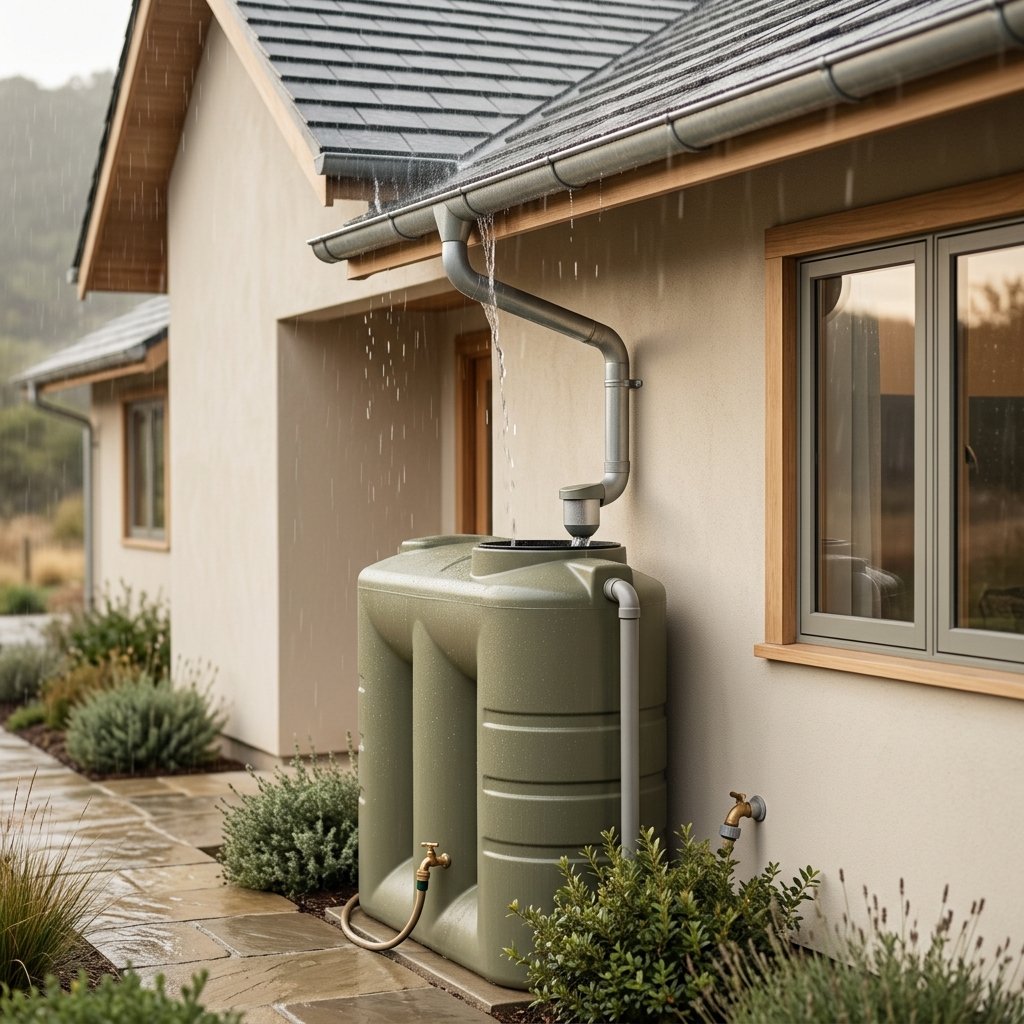
The main parts of a system
- Catchment: the roof surface that collects rain. Clean, non-toxic roofing works best.
- Gutters and downpipes: channel water from the roof to the storage.
- Filter: removes leaves, dust and debris before the water enters the tank.
- Storage tank: a covered tank that keeps out light, mosquitoes and sunlight, which reduces algae growth.
- Outlet and overflow: a tap or pump for use, and an overflow pipe for heavy rain.
What you can use it for
- Watering gardens and lawns
- Cleaning floors, vehicles and outdoor areas
- Flushing toilets, if plumbed in separately
- Recharging groundwater through a percolation pit
For drinking, rainwater needs treatment, such as boiling or filtration, and testing. Do not use it for drinking without proper treatment.
Simple first steps
- Measure your roof area and check your local average rainfall.
- Estimate how much water you could collect. As a rough guide, one millimetre of rain on one square metre of roof gives about one litre.
- Start with a small system for the garden, then expand if it works well.
- Clean the filter and gutters before the monsoon, and check the tank for cracks each year.
Frequently asked questions
Is rainwater harvesting expensive?
A basic barrel system for a garden costs little. A full system with a tank, filter and plumbing costs more, but many people recover part of the cost through lower water bills.
Does it need a permit?
Rules vary by city and state. Check with your local water authority before installing a large system or a percolation pit.