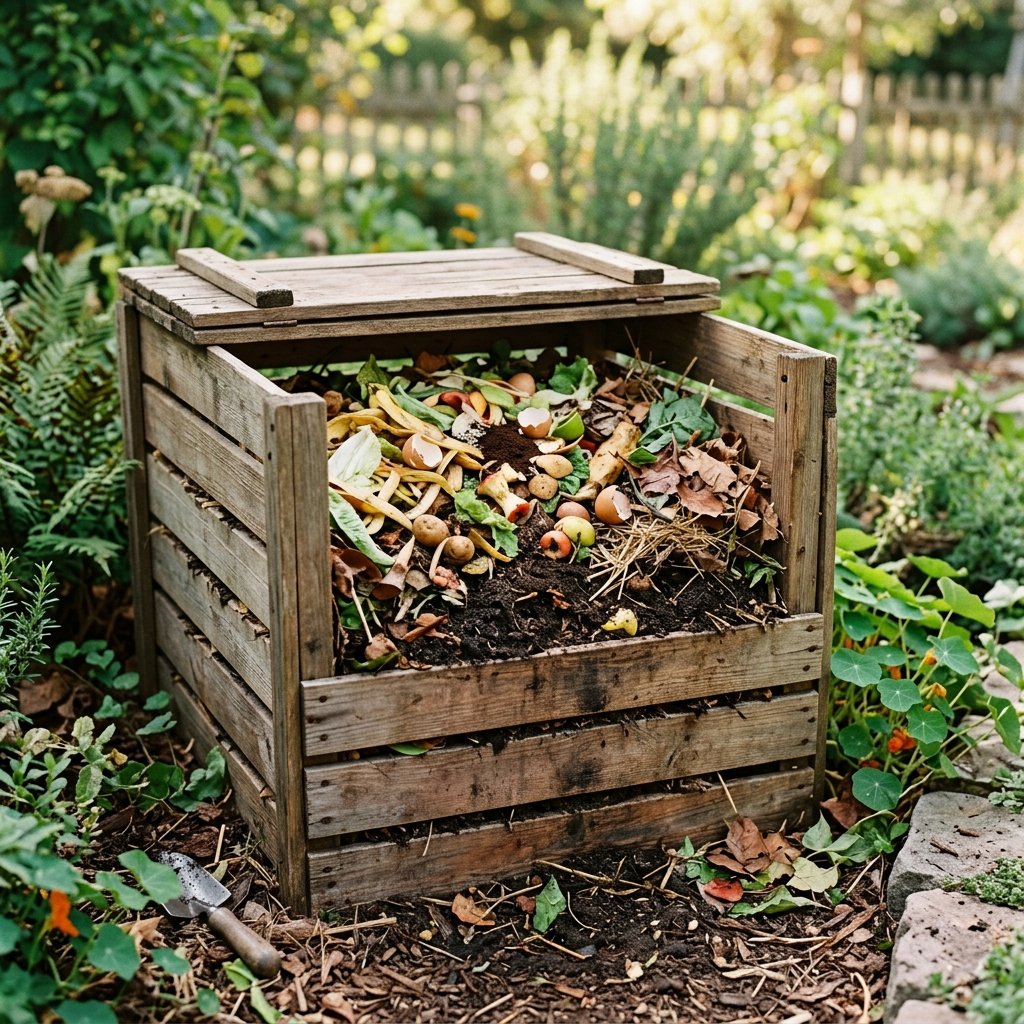
Composting turns food scraps and garden waste into dark, crumbly soil. It cuts the amount of waste sent to landfill and gives plants a useful soil conditioner. You do not need a large garden to start. A small bin, a bucket or a corner of a terrace is enough.
The basic recipe: greens and browns
- Greens (nitrogen): vegetable peelings, fruit scraps, tea leaves, coffee grounds and fresh grass clippings.
- Browns (carbon): dry leaves, shredded paper, cardboard, dry twigs and sawdust.
Aim for roughly equal volumes of greens and browns. Too many greens make the pile smell and turn slimy. Too many browns slow the process.
What to keep out
- Cooked food, meat, fish, dairy and oily food, which attract pests and smell
- Diseased plants and weeds with seeds
- Pet waste
- Plastic, glass and metal
Simple methods
- Open heap: layer greens and browns on bare soil in a corner of the garden. Slow, but low effort.
- Bin or tumbler: a closed container with a lid keeps pests out and is easy to turn.
- Bucket or bokashi: fermented kitchen waste that you bury or add to a pile later. Suitable for small spaces.
Keep it healthy
The pile should feel like a damp sponge. Turn it every week or two to add air, and chop large pieces into smaller bits to speed decomposition. When the compost is dark, earthy and no longer recognisable as scraps, it is ready, usually in a few months.
Frequently asked questions
Why does my compost smell?
Usually there is too much wet food and not enough dry material, or the pile needs air. Add browns and turn it.
Can I compost in an apartment?
Yes. A small closed bin or a bokashi bucket works well on a balcony, and the finished compost can go into potted plants.