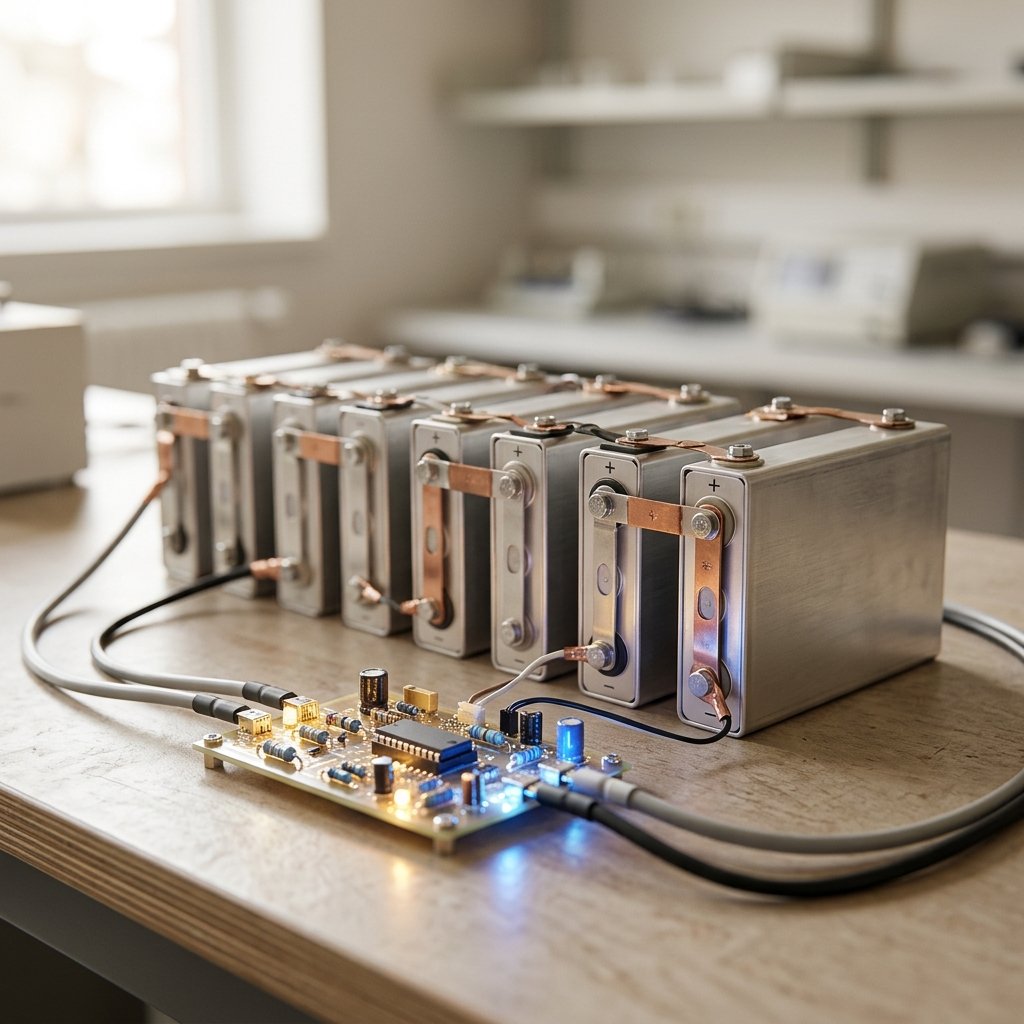
A battery stores chemical energy and converts it into electrical energy when you use it. Inside every cell, two chemical reactions happen at the same time. One releases electrons and the other accepts them. The electrons travel through your device, which is what powers it.
The three main parts
- Anode (negative electrode): the material that releases electrons during discharge. In lithium-ion batteries, this is often graphite.
- Cathode (positive electrode): the material that accepts electrons. Lithium metal oxides are common in lithium-ion cells.
- Electrolyte: a substance that lets charged particles move between the electrodes but blocks electrons, forcing them to travel through the external circuit.
What happens when you use a battery
During discharge, the anode gives up electrons. They flow through the wire and your device to the cathode. Meanwhile, ions move through the electrolyte to balance the charge. When the materials can no longer react, the battery is flat.
What happens when you charge it
A charger pushes electrons back the other way, reversing the reactions. Rechargeable batteries are designed so these reactions can happen many times, though each cycle causes slight wear.
Why batteries lose capacity
Over time, side reactions build up a thin layer on the electrodes, and some active material becomes less effective. Heat and deep discharging speed this up. This is why a phone battery holds less charge after several years, even when it is not used much.
Why different batteries differ
Each battery chemistry trades off energy density, power, cost and safety. Alkaline batteries are cheap and suited to low-drain devices. Lithium-ion batteries store more energy per kilogram, which is why they power phones and electric vehicles.
Frequently asked questions
Why do batteries get warm when used heavily?
Chemical reactions and electrical resistance both produce heat. Fast charging and heavy loads increase it.
Is it bad to leave a phone charging overnight?
Modern phones stop charging at full, so the risk is mainly heat and long periods at high charge. Many phones offer an optimised charging setting for this.