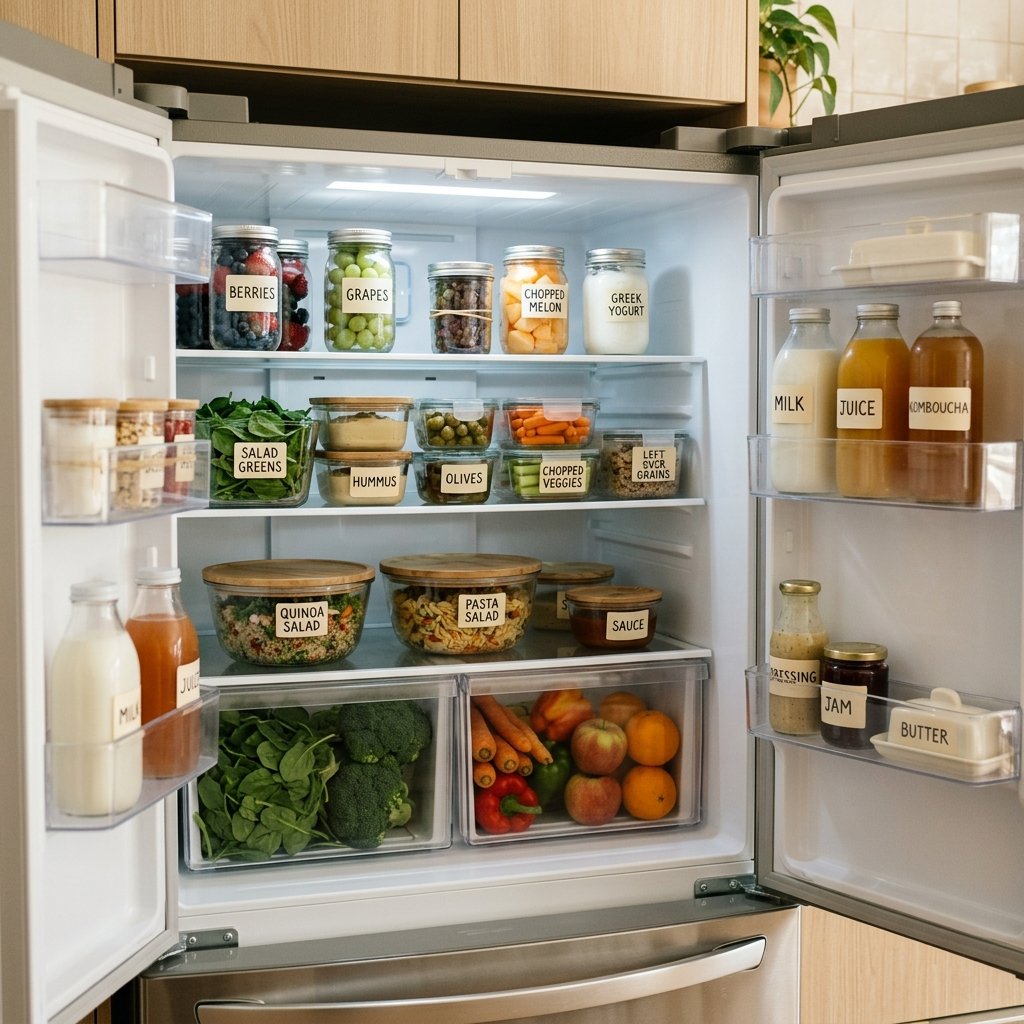
Good food storage does two things. It keeps food safe to eat, and it stops good food from being wasted. Most household food storage problems come from keeping things at the wrong temperature, storing them in the wrong place or forgetting what is in the back of the fridge.
Set your fridge correctly
Keep your fridge at 4°C (40°F) or below and your freezer at -18°C (0°F) or below. Use a fridge thermometer if you are unsure. Do not overfill the fridge, because cold air needs to circulate.
Where to store common foods
- Top shelf: ready-to-eat foods, leftovers and dairy.
- Middle shelves: eggs, cheese and cooked food.
- Bottom shelf: raw meat, poultry and fish, in sealed containers so juices do not drip onto other food.
- Crisper drawers: fruit and vegetables. Keep the humidity setting suitable for each.
- Pantry: dry goods, oils, onions, potatoes and bread, kept cool, dry and sealed.
Typical shelf life
- Cooked leftovers: 3 to 4 days in the fridge
- Raw poultry and minced meat: 1 to 2 days in the fridge
- Opened milk: about 3 to 5 days in the fridge
- Eggs: 3 to 5 weeks in the fridge, once you store them there
- Most frozen foods: 2 to 6 months for best quality, and safe for longer if kept frozen
These are general guidelines. Always check the date and storage instructions on the packet.
Signs that food is unsafe
- A sour or unusual smell, or a slimy texture
- Mould on soft foods such as bread, cooked dishes or soft cheese. Hard cheese can be cut well beyond a small mould spot, but soft foods and cooked dishes should be thrown away if mould appears.
- Bulging or leaking packaging
When in doubt, throw it out. Tasting food to check is not a safe test.
Habits that reduce waste
- Label leftovers with the date you cooked them.
- Move older items to the front, so you use them first.
- Freeze bread, meat and leftovers before they go off.
- Keep a simple list of what is in the fridge, and plan meals around it.
Frequently asked questions
Can I refreeze thawed food?
If food was thawed in the fridge and is still cold, it can usually be refrozen, though quality may drop. Food thawed at room temperature should not be refrozen.
Is it safe to keep cooked rice overnight?
Cool it quickly, refrigerate it within an hour or two, and eat it within a day. Rice can carry bacteria that survive cooking if left out too long.