





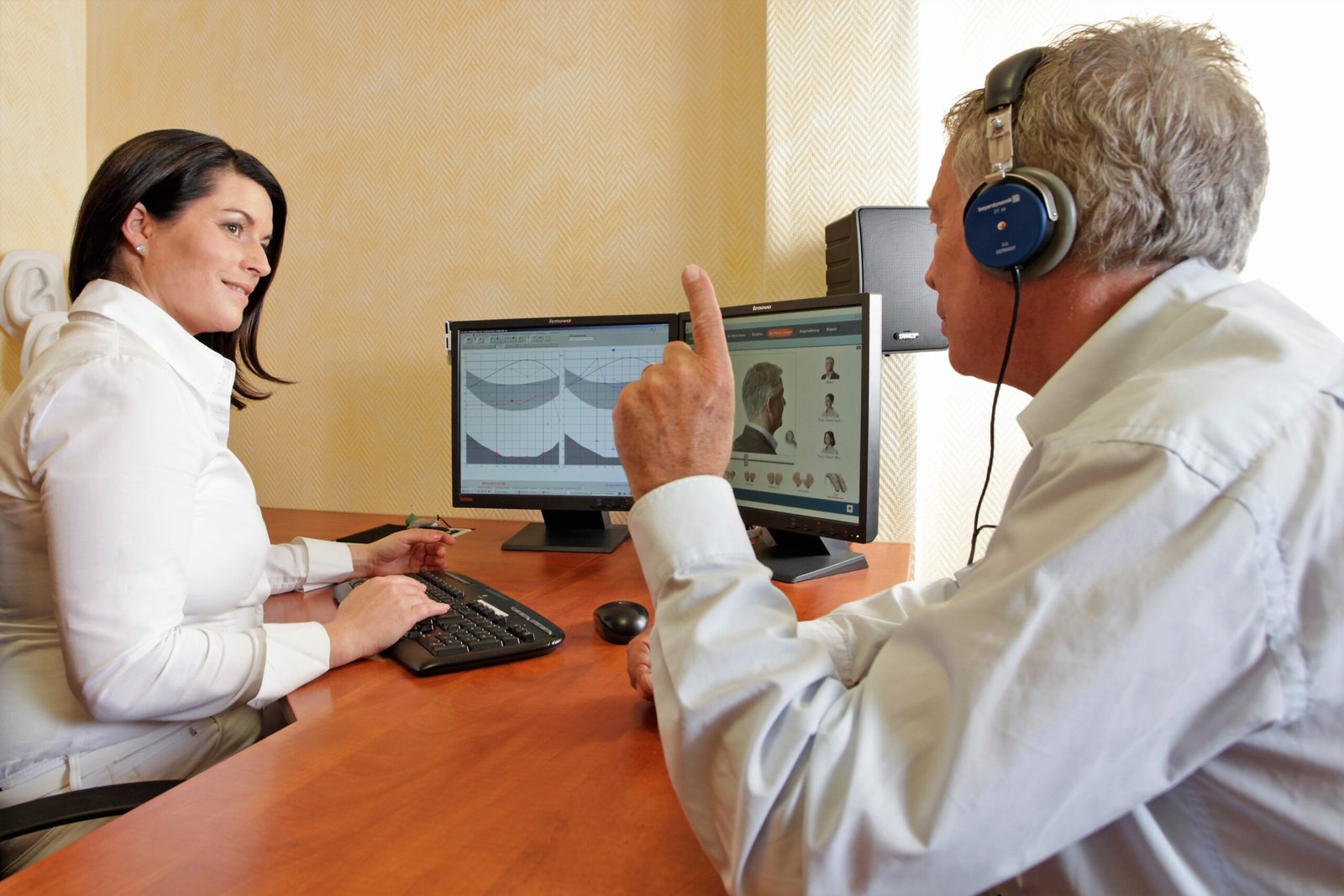
Hearing aids are one part of hearing rehabilitation. Rehabilitation is the wider set of support that helps people with hearing loss take part in everyday life, including work, education, family and community. The World Health Organization (WHO) describes its aim as helping people function as independently as possible.
This guide explains what rehabilitation includes, what hearing aids can and cannot do, and how to find out whether you may be eligible for subsidised hearing aids in Australia.
What rehabilitation includes
The WHO lists these rehabilitation options:
- Hearing technology: hearing aids, cochlear implants, bone conduction implants and middle ear implants, with training in how to use them.
- Speech and language therapy: to improve listening skills and communication.
- Other communication methods: such as sign language, speech reading and signed communication.
- Hearing assistive technology: including frequency modulation (FM) and loop systems, alerting devices, telecommunication devices, captioning and sign language interpretation.
- Counselling and support: to help people stay involved in education, work and community life.
What hearing aids do
The NHS says that if you have permanent hearing loss, a specialist will often recommend hearing aids. It also notes that hearing aids will not make your hearing perfect, but they make sounds louder and clearer.
Some people need an implant instead. The NHS describes these as devices attached to the skull or placed deep inside the ear.
Other tools and questions to ask
The NHS suggests asking a GP or specialist about other tools that can help, such as telephone and television amplifiers, flashing or vibrating alarms, and apps for smartphones or tablets.
Useful questions to ask a clinician include what tests were used, which device would suit your hearing loss and daily life, what it is likely to cost and whether any part is subsidised, what follow-up is included, and what happens if the device does not suit you.
Subsidised hearing aids in Australia
The Australian Government’s Hearing Services Program provides subsidised hearing services and devices to eligible people. Simply Hearing states that its subsidised hearing aids are available under the program’s conditions, for eligible Pension card and Department of Veterans’ Affairs (DVA) Gold and White card holders.
Eligibility rules can change. Confirm your eligibility with the clinic and the government before you book.
Where to get fitted in Australia
Simply Hearing is an audiology clinic on the Gold Coast, with locations at Broadbeach, Pimpama and Hope Island. It lists hearing aids and assistive listening devices, hearing aid programming and repair, and fully subsidised hearing aids for eligible patients. Visit simplyhearing.com.au or call +61 422 388 005. Check the clinic’s current terms before you buy.
Frequently asked questions
Do hearing aids restore normal hearing?
No. The NHS says hearing aids will not make your hearing perfect, but they can make sounds louder and clearer.
Is rehabilitation only about hearing aids?
No. The WHO includes speech and language therapy, communication methods, assistive technology and counselling in rehabilitation.
Who decides whether I need hearing aids?
A hearing assessment by an audiologist, together with your GP or a specialist, helps decide. The NHS says a specialist will often recommend hearing aids for permanent hearing loss.
Sources
- World Health Organization, “Deafness and hearing loss,” fact sheet, 3 March 2026: who.int
- NHS, “Hearing loss,” Health A to Z, page last reviewed 30 May 2025: nhs.uk
- Simply Hearing, subsidised hearing aids and services, accessed for this article: simplyhearing.com.au
This article is general information, not medical advice. It does not replace an assessment by a qualified audiologist or GP. Clinic services, eligibility and prices can change. Seek urgent care for sudden hearing loss, ear pain, discharge, dizziness or facial weakness.