










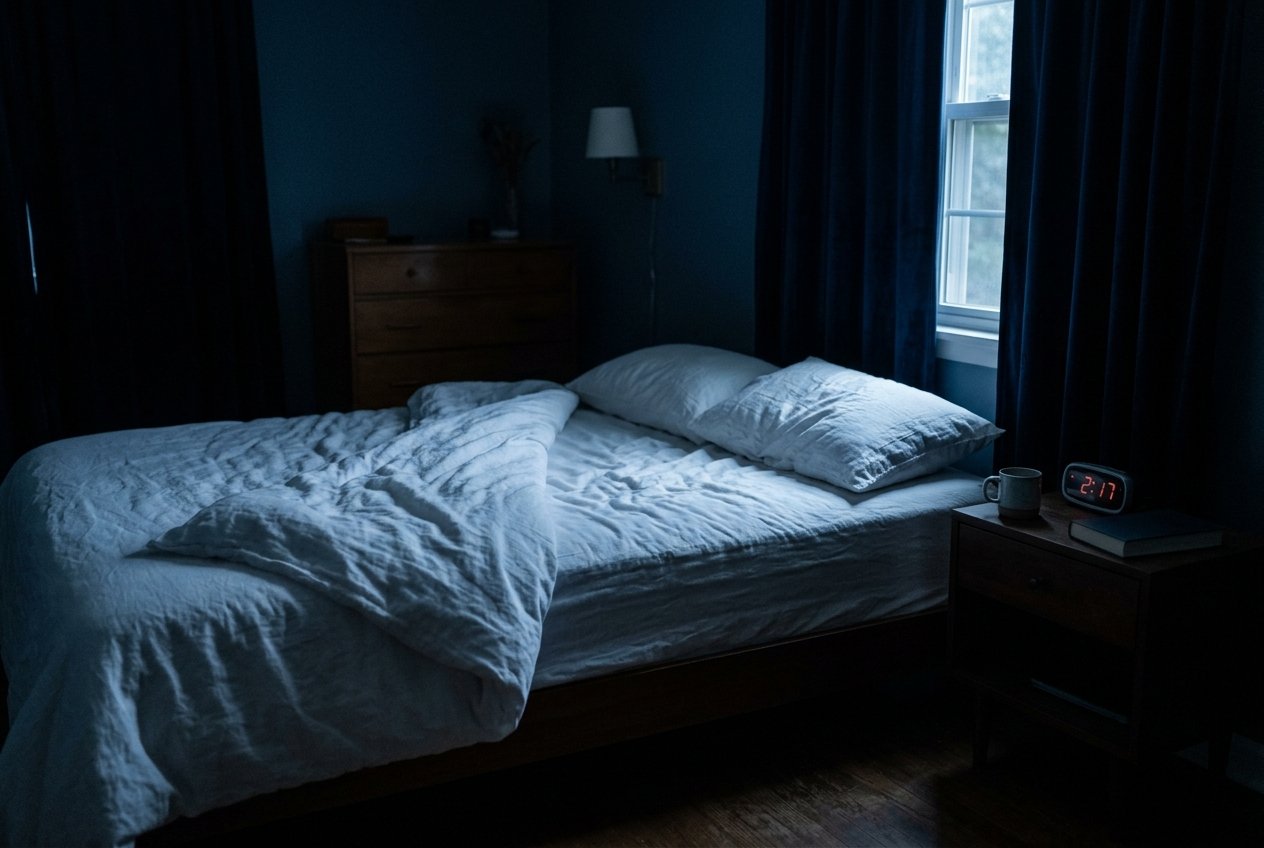
Almost everyone has spent a night watching the ceiling. When it happens a few times a year, it is annoying. When it happens three or more nights a week for three months or longer, it meets the clinical definition of chronic insomnia disorder — a condition that affects an estimated 6% to 10% of adults and is more common in women and older people.
The good news is that insomnia is one of the most treatable sleep problems, and the treatment that works best is not a pill. Cognitive behavioural therapy for insomnia (CBT-I) is recommended as the first-line treatment for chronic insomnia by the American College of Physicians, and it keeps working after treatment ends.
What counts as insomnia
Insomnia is not simply “not sleeping enough”. It is a specific pattern of difficulty that causes real daytime consequences. A diagnosis generally requires all of the following:
- Difficulty falling asleep, staying asleep, or waking earlier than intended
- Symptoms at least three nights per week
- Continuing for at least three months (shorter than this is called acute or short-term insomnia)
- Daytime impairment — fatigue, irritability, poor concentration, or distress about sleep itself
- Not explained by another sleep disorder, a medical condition, or a substance
That last point matters more than people expect. Sleep apnoea, restless legs syndrome, depression, chronic pain, an overactive thyroid and a long list of medications can all look like insomnia from the outside. Treating only the surface symptom while the cause goes untreated is why some people struggle for years.
Why you cannot sleep: the common causes
Stress and a racing mind
The most frequent trigger is an alert mind at bedtime. Work deadlines, money worries and conflict keep the arousal system switched on. The cruel part is that the bed becomes associated with frustration rather than rest, which makes the problem worse the moment your head hits the pillow.
Irregular sleep and wake times
Your body clock is set by when you wake, not when you go to bed. Sleeping in on weekends pushes the clock later, which makes Sunday night difficult — the pattern many people know as “social jet lag”.
Light and screen exposure at night
Bright light in the evening, especially the cool-toned light from phones and laptops, suppresses melatonin and delays the signal that tells your brain it is night. The content matters too: an argument on social media or an urgent email is stimulating on its own.
Caffeine, alcohol and late meals
Caffeine has a half-life of roughly five hours, so an afternoon coffee can still be active at midnight. Alcohol is sedating but fragments the second half of the night, increasing wakefulness after it is metabolised. Eating a heavy meal close to bedtime raises body temperature and can trigger reflux, which is one reason people with persistent heartburn sleep poorly — our guide to acidity home remedies covers that angle in more detail.
Medication and medical causes
Corticosteroids, some antidepressants, decongestants, stimulant ADHD medication and beta-blockers are commonly implicated. Underlying conditions such as chronic pain, thyroid disorders, night sweats and sleep apnoea need to be ruled out by a clinician rather than self-managed.
Primary sleep disorders
Restless legs syndrome and sleep apnoea are frequently mistaken for insomnia. If you snore heavily, wake gasping, or feel an irresistible urge to move your legs in the evening, those are separate conditions with their own treatments.
CBT-I: the first-line treatment that is not a drug
CBT-I combines several techniques. It is usually delivered over six to eight sessions, but the individual components are simple enough that many people can start applying them immediately.
Stimulus control
Go to bed only when sleepy. Get out of bed if you are not asleep after roughly 15 to 20 minutes, and return only when sleepy again. Use the bed for sleep and intimacy only — not work, scrolling or watching the clock. Keep a consistent wake time even after a bad night.
Sleep restriction
This sounds counterintuitive and is the component people resist most: you temporarily limit time in bed to roughly the amount of sleep you are actually getting, which concentrates sleep and reduces the long, frustrating stretches of lying awake. As sleep efficiency improves, time in bed is increased in 15 to 30 minute steps. Because it is demanding and can cause next-day sleepiness at the start, it works best with guidance from a clinician or a structured programme.
Cognitive work
Insomnia is maintained by beliefs — “if I do not get eight hours I will be useless tomorrow”, “I must try harder to sleep”. These thoughts produce the anxiety that prevents sleep. The work is to examine them honestly rather than argue with them at 2am.
Sleep hygiene, in its proper place
Regular schedule, a dark cool quiet bedroom, exercise earlier in the day, no caffeine in the afternoon, screens off before bed. Sleep hygiene alone rarely resolves chronic insomnia, but it supports the techniques above. For the exercise element specifically, see how regular exercise benefits immunity.
Sleeping pills: what the evidence says
The American College of Physicians notes that while direct comparisons are limited, CBT-I is likely to have fewer harms, and sleep medications can be associated with serious adverse effects. The FDA has approved insomnia medications for short-term use — typically four to five weeks — and labelling states that insomnia not remitting within seven to 10 days of treatment should be re-evaluated.
Realistic risks include next-morning grogginess, falls and fractures in older adults, complex sleep behaviours, tolerance and dependence. Stopping some medications abruptly can cause rebound insomnia. Sleeping pills have a role, particularly for short-term acute insomnia or alongside CBT-I when symptoms are severe, but they are a second-line option rather than the plan.
What to do tonight
- Pick one wake time and hold it. Even on weekends. This single change does more than any other habit.
- Get bright light soon after waking. Daylight in the first hour anchors your clock for the following evening.
- Set a caffeine cut-off. Around early afternoon for most people; earlier if you are sensitive.
- Dim screens 60 minutes before bed, or use night mode and lower brightness. Better, put the phone out of arm’s reach.
- Keep the bedroom cool, dark and quiet. Around 18°C works well for most adults.
- Use the 20-minute rule. Not asleep in about 20 minutes? Get up, do something dull and dim, and return when sleepy.
- Write tomorrow’s worries down earlier in the evening. A ten-minute “worry dump” before dinner keeps them out of bed.
When to see a doctor
Book an appointment if insomnia has lasted more than three months, if daytime functioning is clearly suffering, or if over-the-counter and habit changes have not helped. Also seek assessment if you snore heavily or wake gasping, if your legs move restlessly at night, if you fall asleep unexpectedly during the day, or if you are using alcohol or medication to sleep.
Ask specifically about CBT-I. It is underused because it requires a trained provider or a structured programme, and many primary care visits end with a prescription instead. It is worth being direct about what you are asking for.
Frequently asked questions about insomnia
How long does it take for CBT-I to work?
Many people notice improvement within two to four weeks, with fuller results across the typical six to eight sessions. The advantage over medication is durability — the skills continue working after treatment finishes, whereas benefits often stop when medication does.
Is melatonin effective for insomnia?
Melatonin is a circadian signal rather than a sedative. It is most useful for timing problems — jet lag, delayed sleep phase, shift work — and evidence for ordinary chronic insomnia is modest. Small doses taken a few hours before the intended bedtime are generally more appropriate than large doses at bedtime.
Is it better to get out of bed or to lie there quietly?
Get up. Lying awake teaches your brain that the bed is a place for wakefulness and frustration. The 20-minute rule exists to break that association rather than because lying still is harmful.
Can insomnia cause serious health problems?
Chronic insomnia is associated with poorer mood, reduced daytime performance and, over time, elevated risks that track with the conditions it shares risk factors with. It is a legitimate medical condition in its own right, not a character flaw or something to simply push through.
This article is for general information only and is not a substitute for professional medical advice. See our medical disclaimer.