









It is often said that AI will take everyone’s job. The research on this is more careful, and it points to a narrower conclusion. Blue-collar trades and healthcare work are among the least exposed occupations to full automation, not because AI cannot touch them, but because the work depends on physical presence, dexterity and judgment in unpredictable settings that software cannot currently navigate.
This article explains what the research actually measures, why these two fields come out less exposed, and where AI is nonetheless changing the work. It does not claim these jobs are untouched.
What the research actually measures
Two studies are often cited on this question, and it matters what they do and do not say.
Economists at Goldman Sachs, Joseph Briggs and Devesh Kodnani, analysed databases covering the task content of more than 900 occupations. They estimate that roughly two-thirds of US occupations are exposed to some degree of automation by AI, and that for exposed occupations, roughly a quarter to as much as half of their workload could be replaced. They also estimate that shifts in workflows could expose the equivalent of 300 million full-time jobs worldwide.
The important word is “exposed.” Exposure means some tasks within a job could be done by AI. It does not mean the job disappears. The Goldman Sachs report says explicitly that not all automated work will translate into layoffs.
A second study, by Tyna Eloundou, Sam Manning, Pamela Mishkin and Daniel Rock, examined large language models such as ChatGPT. It found that around 80% of the US workforce could have at least 10% of their work tasks affected, while roughly 19% of workers may see at least 50% of their tasks affected. The authors note the effects span all wage levels, with higher-income jobs potentially more exposed than lower-income ones.
That last point is the one that matters here. Language models are tools for language. The work they can do is written and cognitive: drafting, summarising, coding, analysis. Occupations built around those tasks are the most exposed. Occupations built around physical work in unstructured environments are not.
Why blue-collar work is less exposed
Consider a plumber fixing a leaking pipe behind a wall, an electrician tracing a fault in a building wired decades ago, or a care worker helping someone out of bed. Each task takes place in a setting that varies, requires hands that adapt to what they find, and demands judgment when the situation is not what was expected.
AI systems do not have bodies. Software can schedule, invoice and diagnose from a distance, but it cannot climb a ladder, feel a fitting tighten, or lift a person. Robot hardware exists, but it operates in structured environments such as factory floors. Unstructured environments, which is what most maintenance and trade work involves, remain far harder.
The research reflects this. In the Goldman Sachs analysis, the most exposed occupations are clerical and administrative roles, where the core task is processing information. In the Eloundou study, the occupations with the highest exposure are those where language is the main output. Trades do not rank near the top of either list.
Why healthcare work is less exposed
Healthcare is a different case, because it contains both highly exposed and barely exposed work under one roof.
The exposed part is administrative. Medical records, referral letters, coding, scheduling and prior authorisation are largely information work, and they already absorb a large share of clinicians’ time. This is exactly the category that language models can help with.
The part that is not exposed is the care itself. A nurse turning a patient, a physiotherapist guiding a movement, a surgeon operating, a community health worker sitting with someone who is frightened, all depend on physical presence, fine motor skill, and reading a person in the room. These are the tasks least amenable to automation.
The workforce numbers also point away from replacement. The World Health Organization estimates a projected shortfall of 11 million health workers by 2030, mostly in low- and lower-middle income countries, though it notes countries at all levels face difficulties in education, deployment and retention of health workers. A field facing a shortage of workers is not a field with workers to spare.
What is changing anyway
It would be wrong to say nothing is changing. A few shifts are already visible.
- Admin is being automated in healthcare. Documentation and drafting tools are being used to reduce the paperwork load. This changes what a clinician’s day looks like without removing the clinician.
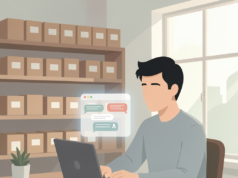
- Trades use software for the office side. Quoting, invoicing, scheduling and customer messaging are increasingly handled by apps. The work on site is unchanged; the paperwork around it is faster.
- Diagnosis is assisted, not replaced. AI tools can flag findings on scans and in records for a clinician to review. The decision and the responsibility remain with the clinician.
- Some routine physical tasks are mechanised. Warehouse picking and factory assembly have seen robotics for years. This is steady mechanisation, not a new wave of language models, and it affects specific tasks rather than whole trades.
What could change this
Honesty requires naming the limits. The studies above describe exposure under current capabilities. They do not predict a timeline, and the Eloundou authors say so explicitly.
Robotics for unstructured environments is improving slowly. If general-purpose robots became capable and cheap enough to work in homes, buildings and hospital wards, the reasoning in this article would need revising. No research reviewed for this article says that has happened. It is a future possibility, not a present condition.
Frequently asked questions
Will AI take healthcare jobs?
The WHO projects a shortfall of 11 million health workers by 2030, and the care side of healthcare depends on physical presence. The exposed part of healthcare is administrative work, which AI can assist with. This is a shortage field, not a surplus one.
Are blue-collar jobs safe from AI?
They are less exposed to automation than desk-based cognitive work, because the tasks are physical and take place in unstructured settings. Software does change the admin around the work. “Less exposed” is not the same as “untouched.”
Which jobs are most exposed?
Clerical and administrative roles rank as the most exposed, since the core task is processing information. In the Eloundou study, exposure rises with the share of a job that is language work.
Do these studies say jobs will disappear?
No. Goldman Sachs exposure means some tasks could be automated, and the report notes that not all automated work translates into layoffs. Eloundou measured task exposure, not job loss, and made no prediction about adoption timing.
Sources
- Goldman Sachs, “Generative AI could raise global GDP by 7%,” citing Briggs and Kodnani on 300 million jobs exposed and the two-thirds occupation figure: goldmansachs.com
- Eloundou, Manning, Mishkin and Rock, “GPTs are GPTs: An Early Look at the Labor Market Impact Potential of Large Language Models,” arXiv:2303.10130: arxiv.org
- World Health Organization, “Health workforce,” on the projected shortfall of 11 million health workers by 2030: who.int
This article describes research on task exposure, not predictions of job loss. The studies cited measure exposure under current AI capabilities and do not forecast adoption timelines. Figures are as published by the sources above.