








Meditation is a family of practices that train attention, awareness and emotional regulation. It is not one thing, it does not require belief, and — importantly — the evidence for it is real but considerably more modest than the marketing suggests.
Both halves of that sentence matter. Meditation is worth doing, and it is not a treatment for serious illness. Holding both at once is the honest position.
What meditation actually is
The commonest misconception is that meditation means emptying the mind. It does not. A better description: the practice is in noticing that your attention has wandered and bringing it back. The return is the repetition. Every mind that wanders and comes back has done one complete unit of the exercise.
That reframe resolves most of the beginner experience. People sit down, find their thoughts are loud, conclude they are failing at it, and stop. In fact they are doing the thing — the wandering is the equipment working, not the equipment breaking.
The main techniques
Focused attention
Sustain attention on a single object — the breath, a phrase, a point of sensation. When you notice the mind has gone, return. This is the simplest starting point and the foundation of most other practices. Counting breaths from one to ten gives attention something concrete to hold.
Open monitoring
Instead of fixing on one object, observe experience as it arises — thoughts, feelings, bodily sensations — labelling them lightly and letting them pass without engaging. This is the core of Vipassana and of mindfulness as taught in clinical programmes. The skill being trained is noticing a thought as a mental event rather than as a fact or a command.
Loving-kindness (metta)
Deliberately generating goodwill — first toward yourself, then someone you care about, then a neutral person, then someone difficult, then everyone. It sounds soft, but it directly targets self-criticism and social hostility, and it is among the better-evidenced styles for emotional outcomes.
Body scan
Systematic attention moving slowly through the body, noticing sensation region by region. Widely used in stress-reduction programmes and as a sleep-onset practice.
Breath work (pranayama)
Deliberate control of breathing — slow exhale-focused breathing, box breathing, coherent breathing around six breaths a minute. This has a fairly direct physiological effect via vagal tone rather than being purely attentional, which is why it can shift state quickly.
Movement-based
Walking meditation, tai chi, qigong, and yoga with attentional focus. For people who sit still badly — which is a substantial proportion — these are legitimate practices rather than lesser substitutes.
What the evidence shows
The research base is large and of uneven quality. The recurring methodological problems: hard to blind participants to which group they are in, frequent use of waitlist rather than active controls, reliance on self-report, and small samples. All of these inflate apparent effects.
Where the support is reasonably good
- Depression relapse prevention — mindfulness-based cognitive therapy is recommended specifically for people with recurrent depression, with meta-analyses showing meaningfully reduced relapse rates. This is the single strongest clinical application
- Anxiety and stress — meta-analyses show small-to-moderate effects, around the order of 0.3 standard deviations. Comparable in magnitude to many accepted interventions, but not dramatic
- Chronic pain — modest direct pain reduction, with clearer benefit in changing the relationship to pain — reduced catastrophising, improved functioning
- Blood pressure — modest reductions, generally secondary outcomes
Where claims outrun the data
- Physical brain changes — studies reporting cortical thickening are frequently cited as proof. Effect sizes are small, samples are usually tiny, and replication has been inconsistent. Treat as preliminary
- Immune function, telomerase, “ageing reversal” — early positive findings that have not held up robustly
- Productivity and performance — attention improvements exist but are smaller than commercial programmes imply, and often disappear when measured against an active control
The safety point
Meditation is not risk-free. Intensive practice can increase distress, particularly in people with trauma histories or PTSD, and rare adverse experiences — including dissociation and destabilisation — are documented in the research rather than merely anecdotally. Longer is not better. Anyone with significant trauma, psychosis or a serious mental health condition should practice with a suitably experienced teacher or clinician, not alone from an app.
How to actually start
- Three to five minutes, daily. Consistency beats duration entirely — five minutes every day outperforms one long session a week
- Anchor it to an existing habit — after coffee, before you check your phone, immediately after sitting down at your desk
- Sit upright and alert, on a chair with feet flat or a cushion. Lying down reliably becomes sleeping
- Eyes closed or lowered — closed is easier for most beginners; a soft downward gaze helps if closed eyes produce restlessness
- Choose one object — the breath at the nostrils, or the rise and fall of the chest. Something concrete
- Expect the mind to wander. It will, constantly, and that is the correct behaviour. Notice, label (“thinking”), return. That sequence is the practice
- Do not chase an experience — expecting bliss sets up a disappointment loop. The point is attention, not a feeling
The obstacles, and what to do
- “I can’t stop thinking” — nobody does; that is not the objective. Return to the breath each time
- Sleepiness — sit more upright, try earlier in the day, open the eyes slightly with a downward gaze
- Restlessness and impatience — shorten the session rather than forcing it. Restlessness usually means the interval is too long for where your attention currently is
- Strong emotions surfacing — not unusual, and not a reason to stop. Note the sensation in the body rather than the narrative. If it is overwhelming, reduce intensity and seek guidance
- “Nothing is happening” — a common early complaint. Attention training produces subtle, cumulative change rather than episodes. Judging after three sessions is judging too early
Apps and teachers
Guided apps are genuinely useful for structure during the first weeks, when having someone else decide what to do removes a real barrier. The reasonable caution is dependence — at some point practising without audio develops a different and more transferable skill. Many traditions also emphasise that if meditation starts to feel destabilising rather than clarifying, individual guidance matters more than a programme.
How it differs from relaxation
Relaxation reduces physiological arousal. Meditation trains attention — and may produce relaxation as a by-product, but that is not the target. Practices that focus on attention will not necessarily leave you sleepy; breath-focused practices intended for sleep will. Choosing according to what you want determines whether the practice feels like it is working.
Frequently asked questions about meditation
How long until I notice something?
Attentional and stress-related effects are typically reported within two to four weeks of daily practice, though they are subtle and easy to attribute to something else. Clinical programmes such as the standard eight-week stress-reduction format run for a reason: that is roughly how long structured practice takes to produce measurable change. Expectations of an immediate shift are the main reason people quit in week one.
Is it religious?
It originates in Buddhist, Hindu and other contemplative traditions, and those remain valid contexts for practice. Secular versions — mindfulness-based stress reduction and mindfulness-based cognitive therapy — extract the attentional training from the religious framework and are taught in hospitals and clinics worldwide. You do not need to adopt any belief to practise, and you do not need to abandon any.
Can it replace medication or therapy?
For serious conditions, no. The evidence supports meditation as an adjunct — and specifically as a maintenance strategy for preventing depressive relapse. If you are taking medication or receiving therapy, meditation supplements that; it does not justify stopping either on your own judgement. For severe anxiety, psychosis or active trauma, unsupervised intensive practice can worsen things.
Why do I fall asleep every time?
Almost always posture and timing. Reclining positions and evening sessions reliably produce sleep, because you are removing stimulation at a point where the body is already descending. Sit upright, practise when alert, keep eyes slightly open, and reduce the session length. If you are sleep-deprived, the practice may simply be revealing that — which is useful information.
Do I need to meditate for twenty minutes to get benefits?
No, and the duration figures quoted from research programmes are not requirements for individuals. Shorter daily sessions produce the consistency that drives benefit. The evidence on whether longer sessions are proportionally better is weak; what is clear is that a schedule you actually maintain beats an ambitious one you abandon.
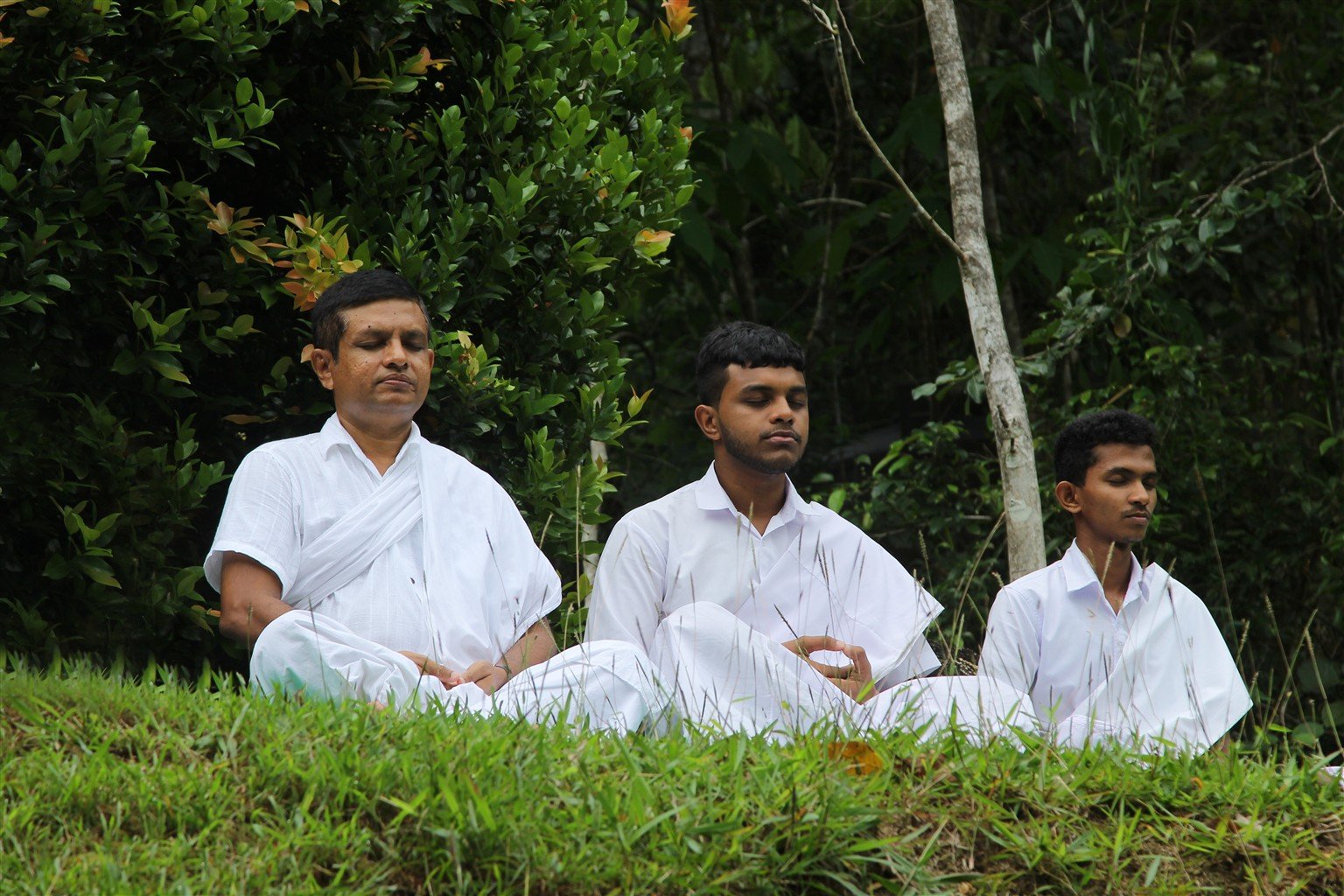
Image credit: Man-3224891 by SadahamYathra, via Wikimedia Commons (CC0 public domain dedication).
This article is for general information only and is not a substitute for professional medical advice. If you have a mental health condition, speak to your clinician before beginning intensive practice. See our medical disclaimer.