










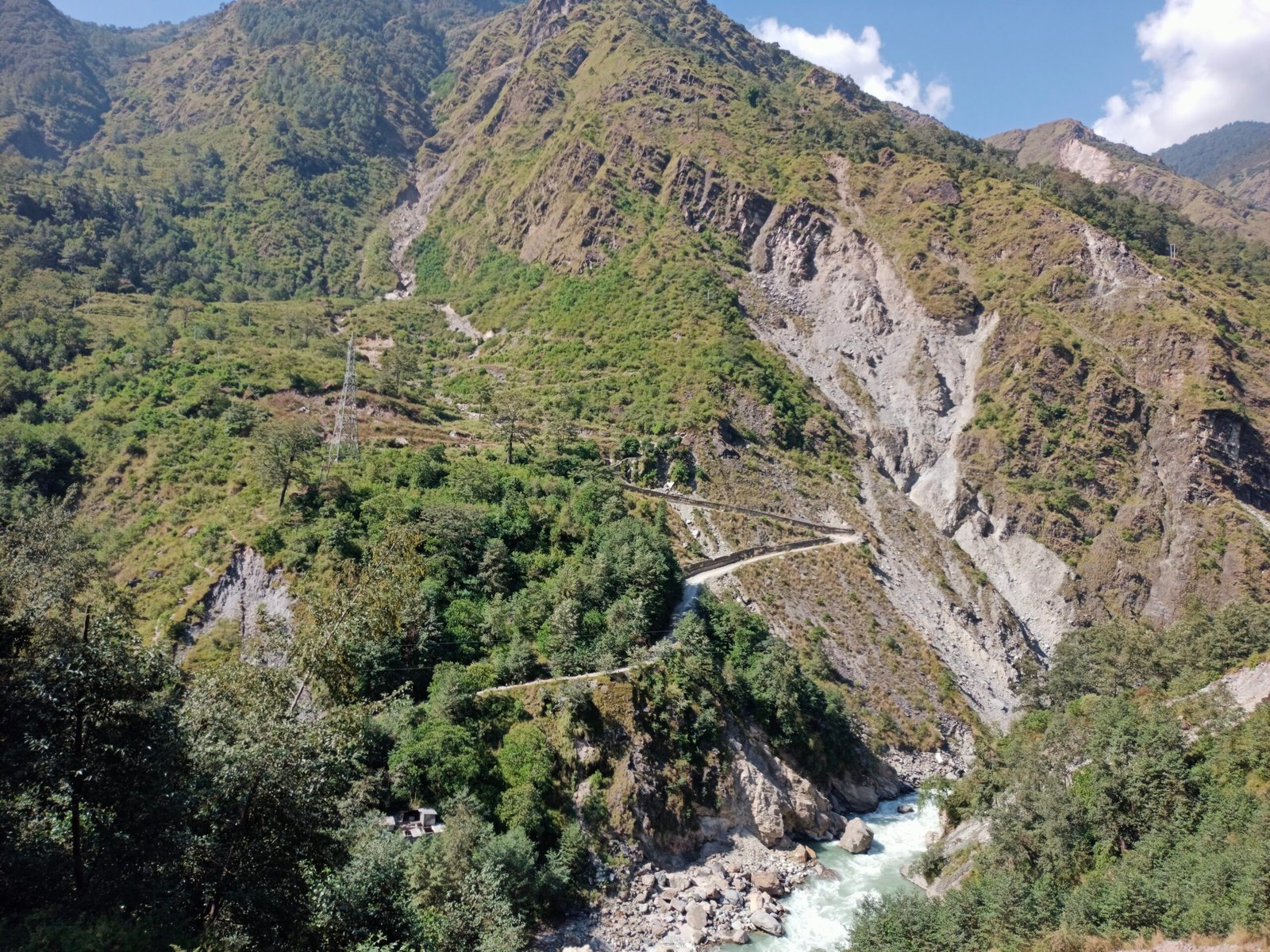
On 26 August 2026, an ice-rock avalanche near the border with China’s Xizang Autonomous Region set off a flash flood in Nepal’s Rasuwa district. The water ran down the Lhende, Bhotekoshi and Trishuli river system, and the damage spread across several districts. Six weeks later, the death toll and the list of losses are still being counted, and the figures differ by date and source.
This article sets out what the official and relief-agency sources report, where the figures disagree, and what is known about the effects on homes, schools and children.
What happened
The EU Civil Protection Mechanism’s daily map of 2 September 2026 describes the event as an ice-rock avalanche followed by a flash flood. The map also lists estimated arrival times of the flood at several settlements downstream, including Syabrubesi (about 08:50 to 09:00 on 26 August), Malekhu (about 11:26) and Devghat (about 14:30 to 14:40). The map sources these as estimates from ADPC and GeoClash, not timed observations.
The flood reached several districts, and the Bagmati provincial government’s preliminary assessment covers damage along the whole Lhende, Bhotekoshi and Trishuli system. Rasuwa and Nuwakot were among the most affected areas.
The death toll and the figures
Two sets of official figures are now available. They come from different dates and methods, so they should not be read as a trend.
| Measure | 2 September (EU map, citing NDRRMA, Xinhua and UN OCHA) | 8 October (Bagmati provincial preliminary report) |
|---|---|---|
| Deaths | 1,114, including 407 in the two Nawalparasi districts that the map does not show | 1,455 |
| Missing | 3,916 | 5,285 |
| Injured | 292 | 344 still receiving treatment |
| Affected people | 84,270 | Not reported |
The provincial report is the more recent figure, but it is described as preliminary. The missing count in particular may change as families are traced and records are checked.
Homes, roads, schools and livelihoods
The provincial report, handed to Bagmati’s chief minister on 8 October, gives this picture of the damage:
| Area | Reported damage |
|---|---|
| Homes | 2,300 private homes destroyed and 269 partly damaged; more than 2,300 families displaced, with 1,085 people in temporary camps |
| Transport | 34 motorable bridges and 51 suspension footbridges destroyed; 3.5 km of blacktopped road and 14 government buildings damaged, with an estimated cost of Rs5.69 billion |
| Schools | 35 school buildings and 317 classrooms at 12 schools destroyed, affecting 9,248 students; 18 other schools partly damaged |
| Health | Six government and seven private health facilities and pharmacies destroyed |
| Water and irrigation | 55 drinking-water projects and 44 irrigation canals damaged, with an estimated cost of Rs526.9 million |
| Business | About 300 cottage and small industries, 67 shops and 30 warehouses damaged, with losses above Rs2.97 billion; more than 1,700 workers lost their jobs |
| Farming and livestock | 973 hectares of farmland affected, with crops on 471 hectares destroyed; 702 large and 2,123 small livestock killed, along with 134,000 chickens and other birds; estimated cost Rs285.9 million |
The damage to schools affects thousands of students, and the report counts 9,248 of them among those affected.
Children left without parents
The National Child Rights Council, working with UNICEF and Save the Children, released a preliminary report on 8 October. It assessed 584 children living in holding centres in Kathmandu, Nuwakot and Rasuwa. Of these:
- 269 children (46%) had lost contact with one or both parents
- 41 children had lost both parents
- 161 children had lost their father
- 67 children had lost their mother
The council says the number may rise. Some children were still being documented, and people from other districts had also gone missing. An earlier rapid assessment had recorded 102 children who lost both parents and 439 who lost one. The council says the two reports are not directly comparable, and that some children may have been counted twice in the earlier records.
The report also identifies other problems. Children whose birth certificates were destroyed may struggle to access relief and enrol in school. Some children have health conditions, including pneumonia, lung problems that need surgery, heart disease and autism. The report documents a case of caste-based discrimination and abuse involving a girl staying at a monastery in Kathmandu, where 296 displaced children were sheltering.
The council recommends that children who have lost a parent be cared for within their families where possible, with psychosocial counselling, free replacement birth certificates and continued schooling.
Relief and the international response
According to the EU map, Nepal asked for assistance through the EU Civil Protection Mechanism on 29 August. The accepted offers include 3,060 water, sanitation and hygiene (WASH) items and 20,800 shelter and technical items. The EU has also deployed a rapid response coordinator and an operational logistics coordinator, mobilised 82 tonnes of supplies from EU stocks, and committed EUR 2.5 million in funding. The Copernicus Emergency Management Service was activated to map the damage, producing 19 maps across six areas of interest.
At provincial level, Bagmati has given Rs25 million in grants to 12 affected local units and is asking the federal government for a further Rs1 billion for reconstruction. The provincial ministry has recommended an integrated reconstruction plan, with damage figures verified through technical assessments.
What comes next
The main open questions are how many people are still missing, how many children will need long-term care, and whether the federal government will approve the Rs1 billion requested for reconstruction. The provincial report says the damage estimates are preliminary and need technical verification, so the cost of recovery may change.
The council’s recommendations point to the same priorities for affected families: shelter, schooling, birth documents and counselling for children who have lost family members.
Frequently asked questions
What caused the 2026 Nepal flood?
The EU Civil Protection map describes the event as an ice-rock avalanche that triggered a flash flood, and it credits the national disaster agency (NDRRMA) and USGS for that description. The sources reviewed for this article do not give a fuller account of the cause.
How many people died?
There is no single agreed figure. The EU map reported 1,114 deaths as of 2 September 2026. A provincial preliminary report published on 8 October put the number at 1,455. Both are preliminary, and the number of missing people is still high.
Which areas were affected?
The EU map places the avalanche in Rasuwa, and the Child Rights Council names Rasuwa and Nuwakot as the districts most of the children it assessed came from. The map also shows affected municipalities in Dhading, Gorkha, Tanahu, Chitawan and Nawalparasi, which the sources list as areas with reported impacts.
How many children have been affected?
In the National Child Rights Council’s preliminary assessment, 269 of 584 children in holding centres had lost contact with one or both parents. The council says that figure may rise.
Sources
- Kathmandu Post, “Bagmati province seeks Rs1 billion for Bhotekoshi flood reconstruction,” 8 October 2026: kathmandupost.com
- Kathmandu Post, “Bhotekoshi floods leave 269 children without one or both parents,” 9 October 2026: kathmandupost.com
- Emergency Response Coordination Centre (ERCC), DG ECHO Daily Map, “Nepal, China: EU-response to ice-rock avalanche and flash flood event,” 2 September 2026 (public domain, via Wikimedia Commons): commons.wikimedia.org
This article is general information and draws on official reports, which are preliminary and may change. Figures are as reported by each source on the date given.



[…] coverage of that flood is here, including the death toll figures from Bagmati province’s preliminary […]