










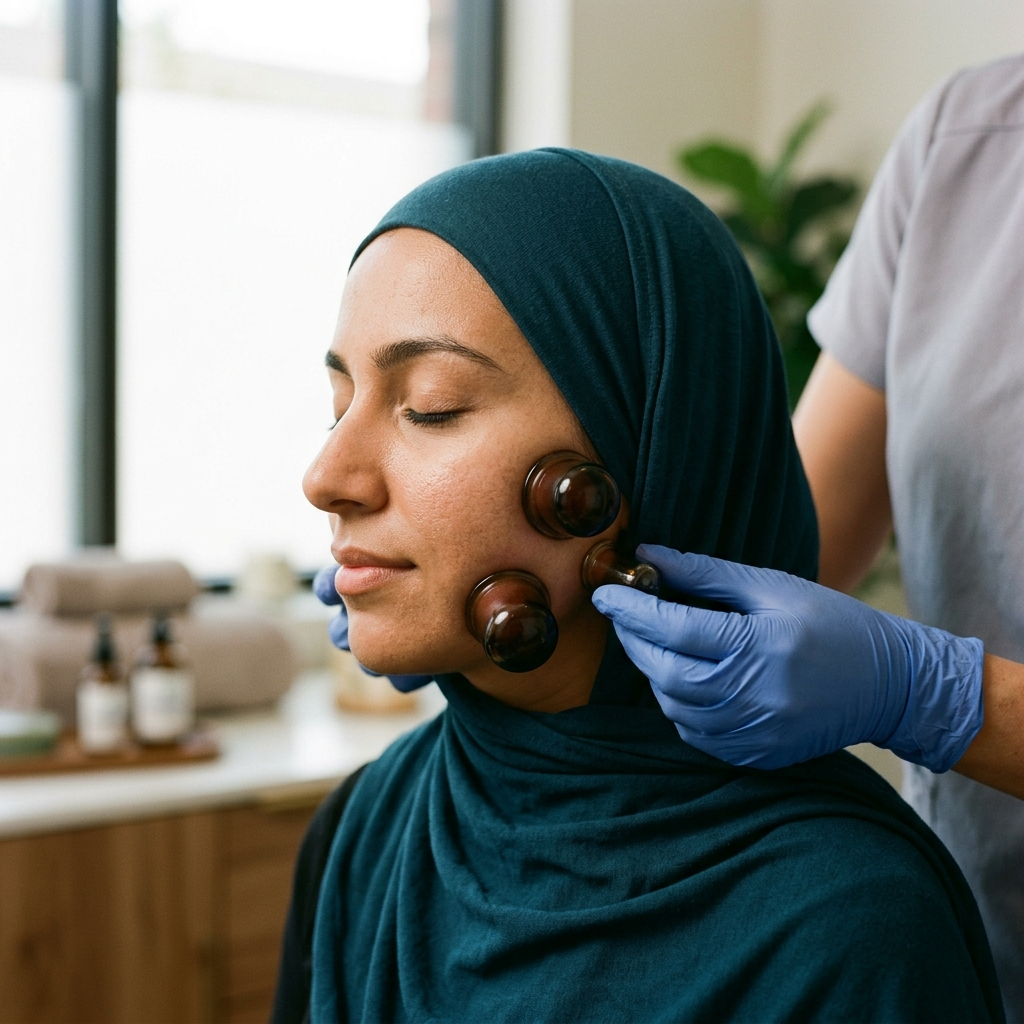
Hijama on Face: 7 Benefits, Real Risks, and a Complete Safety Guide
Searching for hijama on face usually means one thing: you have read about wet cupping on the face, you have seen the round marks in photos, and you want to know whether it is safe, whether it actually works, and exactly how the procedure is done. In this guide we cover the science behind facial hijama, the real benefits and risks, the difference between wet hijama and dry facial cupping, aftercare instructions, cost, and when you should absolutely not do it.
If you want the short version first: hijama on the face is an increasingly popular traditional therapy, but the evidence for most of its claims is thin, and the facial region comes with real anatomical risks. Read the full guide before you book a session, and always choose a certified practitioner using single-use sterilized cups and blades.
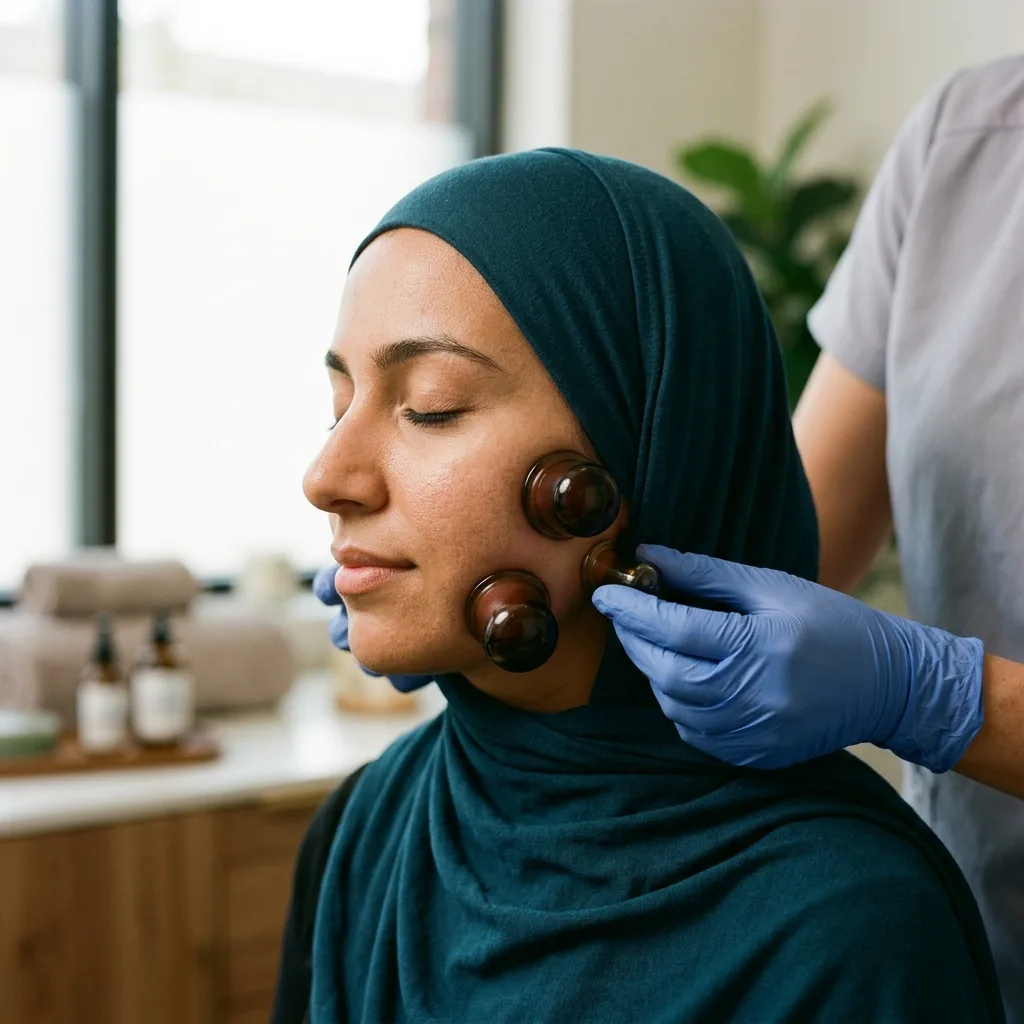
What Is Hijama on Face?
Hijama is the Arabic word for cupping, a therapy that has been practiced for thousands of years across Chinese, Middle Eastern, and South Asian medicine. Hijama on face is exactly what the name suggests: cupping therapy applied to the cheeks, forehead, jawline, and under-eye area. The two main forms are:
- Dry hijama on the face: suction cups are placed on the facial skin and left for a short time. No skin is broken. The goal is to increase local blood flow and relax facial muscles.
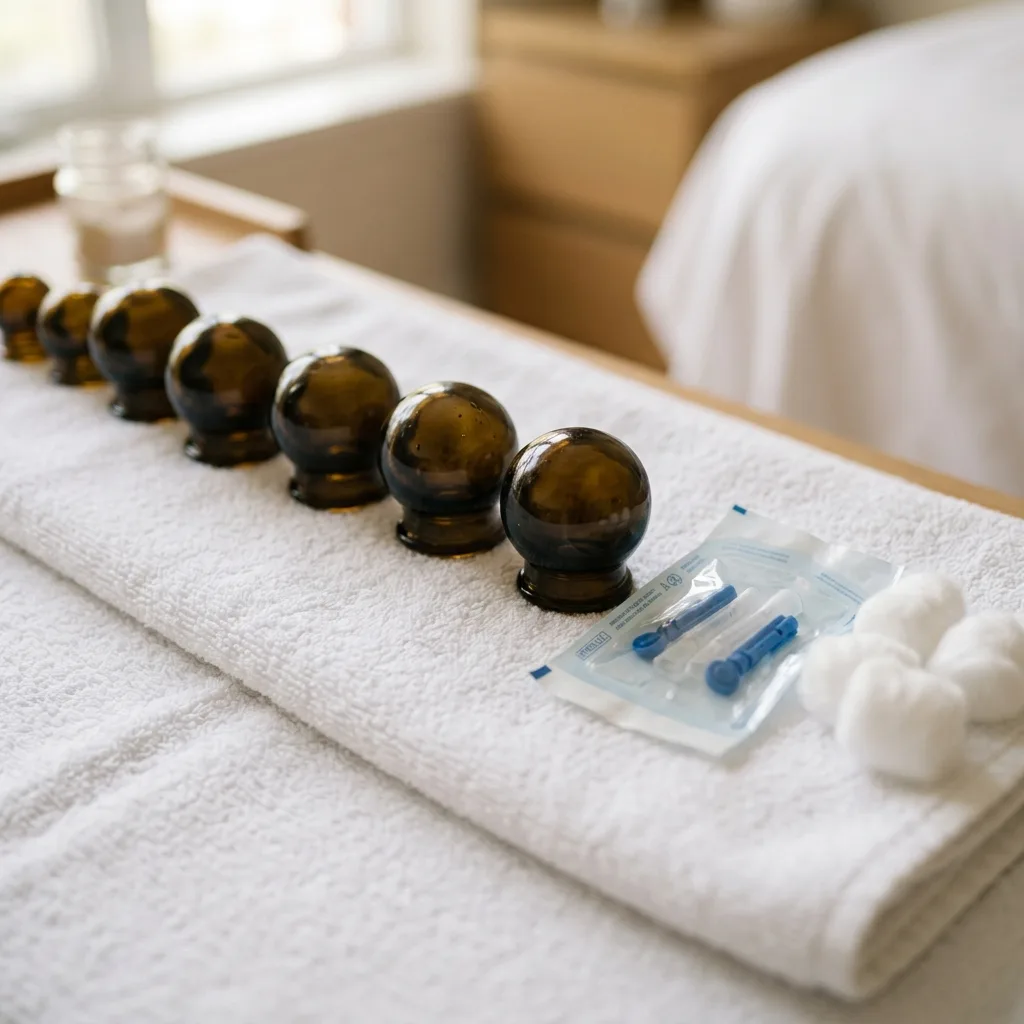
- Wet hijama on the face: after suction, the skin is lightly nicked with a sterile lancet and a small amount of blood is drawn out with the cup. This is the form most people imagine when they hear the word hijama.
Wet cupping on the face is more intense, carries more risk, and should only be performed by a trained therapist. The facial area is thin-skinned, close to your eyes, ears, and major blood vessels, so demonstration videos you see online rarely show the full risk picture.
Why People Try Hijama on Face
People search for hijama on the face for a handful of reasons. Understanding the motivation matters, because it tells you whether the therapy is likely to help your specific situation:
- Facial rejuvenation and anti-aging: the most common goal. Fans believe the increased blood flow can plump the skin, reduce fine lines, and brighten the complexion.
- Migraine and headache relief: practitioners often apply cupping to the forehead and temples as part of a wider headache treatment.
- Sinus congestion: cups to the forehead and the sides of the nose are claimed to relieve sinus pressure.
- Facial pain and TMJ tension: cupping the jawline is used by some practitioners for jaw tension.
- Acne and skin conditions: a smaller group tries facial cupping to improve circulation to acne-prone skin.
- Blemishes and dark circles: advocates claim better circulation reduces puffiness and dark under-eye circles.
Notice a pattern: nearly every reason is cosmetic or involves improving circulation. hijama on the face is rarely a cure for a diagnosed condition. It is a complementary therapy, and it should be treated that way.
Does Hijama on Face Actually Work? What the Evidence Says
The honest answer is that hijama on the face has very little high-quality scientific evidence behind it, and some of the evidence that exists is mixed. Here is exactly what the research shows, without the marketing gloss.
What Studies Do Show
- Local blood flow increases: suction mechanically increases blood flow to the treated area. This is well established and is the mechanism behind the temporary redness and the round marks cupping leaves behind.
- Possible short-term relief for neck and shoulder pain: cupping has moderate evidence for musculoskeletal pain relief, mostly on the back, neck, and shoulders. That evidence does not automatically transfer to the face.
- Perceived relaxation: many people report feeling relaxed after a session. This may be related to the placebo response and to the therapeutic ritual itself.
What the Evidence Does Not Support
- Removing toxins: there is no evidence that cupping draws toxins out of the body. The blood in wet cupping is not “bad blood.” Skin and blood are already filtered by the liver and kidneys.
- Permanent skin tightening: no controlled study shows lasting collagen or skin-tightening effects from facial cupping.
- Fixing acne or pigmentation: anecdotal reports exist, but clinical evidence is absent or weak.
In short: facial hijama can increase circulation and may feel pleasant, but most people are drawn to it by claims that outrun the science. Go in with realistic expectations.
For a more clinical perspective, the US National Center for Complementary and Integrative Health page on cupping therapy sets out what mainstream health bodies actually conclude about the evidence base, and a wider look at cupping trials is available through the PubMed database of systematic reviews.
Wet vs Dry Cupping on the Face: What Is the Difference?
| Feature | Dry facial cupping | Wet hijama on the face |
|---|---|---|
| Skin broken? | No | Yes, small nicks with a lancet |
| Blood drawn? | No | Yes, small amount |
| Pain level | Mild suction only | Sharp pinprick sensation plus suction |
| Common use | Cosmetic, relaxation, facial massage | Traditional therapy, headache, congestion |
| Risk level | Lower | Higher: infection, scarring, bruising |
| Typical duration | 5-15 minutes | 15-30 minutes |
If your goal is purely cosmetic, dry facial cupping is gentler and a far more reasonable starting point. Wet hijama on the face is a medical-adjacent procedure and should be treated with more caution.
Where Is Hijama Applied on the Face?
The exact placement depends on the goal. A trained practitioner will explain the areas before starting, and the areas must be chosen carefully to avoid the eyes, thin skin near the contours of the nose, and the larger facial arteries.
- Forehead: used for headaches, sinus pressure, and forehead lines.
- Temples: targeted for migraine and tension headaches, close to hairline.
- Cheeks: the most common cosmetic site for plumper, brighter skin.
- Jawline and chin: used for jaw tension, TMJ discomfort, and contour.
- Under-eye region: very delicate; only dry cupping should ever be performed here, and only by experienced hands.
Under no circumstances should cups be placed directly on the eyelids, inside or too close to the eye socket, inside the nostrils, or inside the mouth. These are not cosmetic preferences, they are safety boundaries.
Step-by-Step: How a Hijama on Face Session Goes
Knowing the steps in advance helps you judge whether a practitioner is doing things correctly. A safe wet hijama session on the face looks roughly like this:
- Cleansing: the face is washed thoroughly with antiseptic solution.
- Inspection: the practitioner checks for broken skin, active acne, cold sores, sunburn, or visible blood vessels in the target area.
- Dry suction first: small cups are applied to the chosen facial points for a few minutes to increase local blood flow.
- Nicking: the cup is removed, and the skin is lightly pricked with a sterile single-use lancet. You feel a sharp scratch.
- Reapplication: the cup goes back over the nicked points to draw out a small amount of blood.
- Cleaning and dressing: the area is cleaned again, antiseptic is applied, and a clean dressing or plaster covers the small wounds.
- Aftercare instruction: the practitioner tells you what to avoid for the next 24-48 hours.
Every instrument must be single-use and opened in front of you. If a practitioner reuses cups, blades, or appears unclear on sterilisation, walk out. That is non-negotiable for face procedures.
Reported Benefits: What People Notice Afterwards
While evidence is limited, users consistently report these subjective benefits. Notice the recurring theme of circulation and relaxation:
- Brighter, fresher complexion: increased blood flow can temporarily give the skin a rosier, more rested look.
- Reduced facial tension: the suction and release feels like a deep facial massage, which many people find relaxing.
- Headache relief: some people report relief from tension headaches after forehead and temple cupping. Research on cupping overall supports a possible effect on headache frequency, though facial-specific studies are scarce.
- Sinus drainage sensation: users sometimes feel a clearing sensation after forehead and nasal-side cupping.
- Reduced puffiness: gentle dry cupping may help lymphatic drainage and temporarily reduce facial puffiness.
- Sense of wellbeing: the ritual itself, done by a caring therapist, can have a genuine calming effect.
Keep these benefits in context: most are temporary sensations rather than permanent structural changes to the skin.
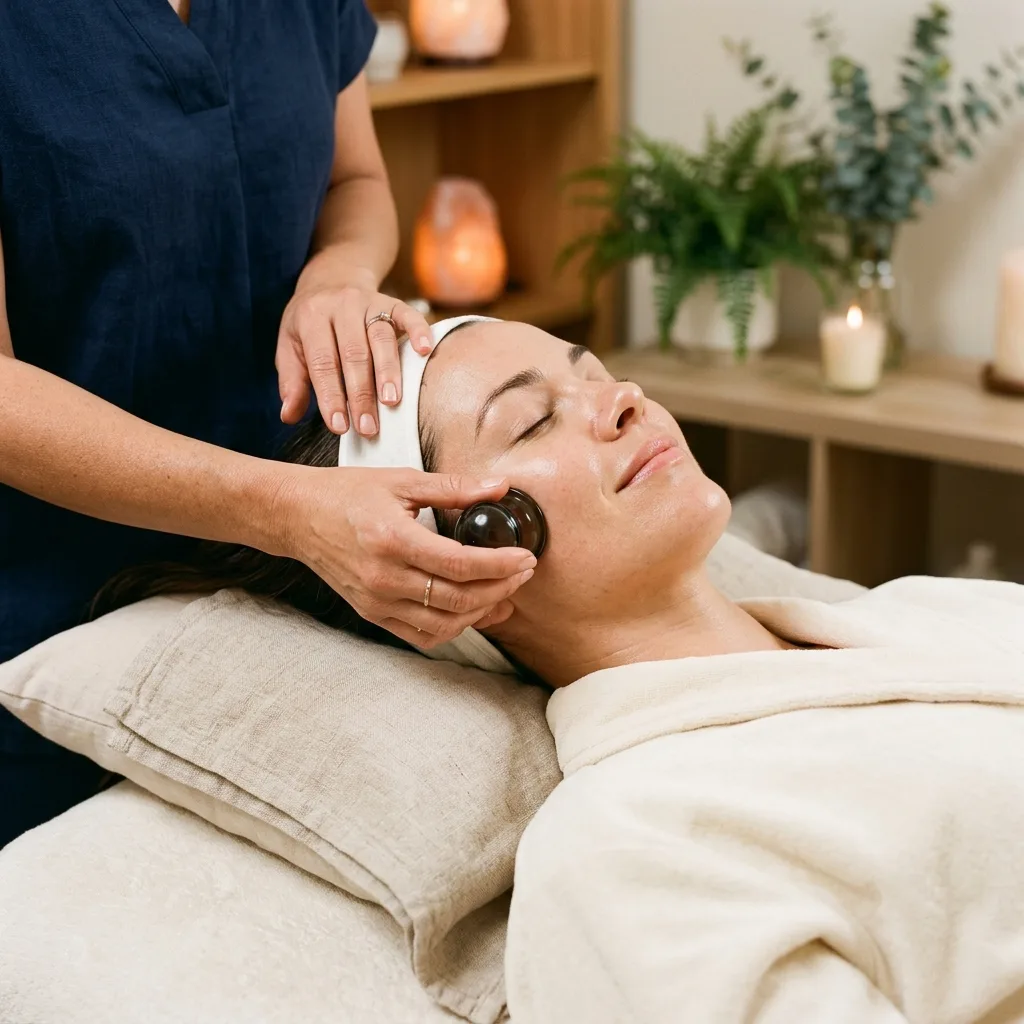
Side Effects and Risks on the Face
The face is not like the back. The skin is thinner, the area is highly visible, and the consequences of a mistake are more serious. These are the real risks:
- Bruising and dark marks: the round suction marks can last several days to a couple of weeks. On the face they are impossible to hide.
- Infections: any time skin is broken, bacteria can enter. Facial infections are more visible and can be more serious. Look for signs: increasing redness, warmth, swelling, pus, or fever.
- Scarring and hyperpigmentation: repeated wet hijama in the same facial spot can cause permanent small scars or dark spots, especially on darker skin tones.
- Cold sores and herpes spread: if you carry the cold sore virus, cupping over a tingling or visible cold sore area could spread the outbreak.
- Worsened acne: suction can rupture already-inflamed pimples and spread bacteria.
- Burns: any practitioner using flamed (fire) cups anywhere near the face creates a burn risk.
- Contact with eye structures: cups or drops of blood near the eye carry risks that do not exist elsewhere on the body.
- Anemia risk in repeated sessions: wet cupping removes blood every time. Repeated frequent sessions could matter if you are already low on iron.
If you experience worsening pain, spreading redness, swelling, fever, or eye symptoms after facial hijama, seek medical attention promptly.
Who Should Avoid Hijama on Face
Certain people should not have hijama on the face at all. The list is not optional:
- Pregnant women: cupping over the face, particularly near acupressure points, is generally avoided during pregnancy.
- People with bleeding disorders or on blood thinners: wet cupping causes bleeding that may be hard to control. This includes warfarin, aspirin in high doses, and similar medications.
- People with anemia: you are already low on blood; removing more is risky.
- People with active skin conditions: eczema, psoriasis, active acne, cold sores, or rosacea flares in the area.
- People with kidney or liver disease: if your body cannot clear waste products efficiently, hijama poses higher risk, and no evidence exists that it helps.
- People taking certain diabetes or hypertension medications: always check with a doctor first. For context on managing your numbers, our guide on high fasting sugar and our high blood pressure guide explain the conditions hijama advocates often claim to support.
- Children and elderly people: fragile skin and higher complication risk.
If you have any chronic condition, get a doctor’s clearance before your first session. A practitioner who tells you straight away not to have hijama if you are high-risk is a good sign; one who pushes you to proceed anyway is a red flag.
How Many Sessions and How Often?
There is no universal rule. Traditional protocols often start with a small course of sessions rather than a single treatment:
- Cosmetic dry cupping: often done weekly or every two weeks as part of a facial routine.
- Wet hijama: traditionally scheduled in short courses, for example once a week for two to three weeks, then spaced out.
- Maintenance: some people go once a month or every few months.
More is not better. The facial skin needs time to heal between sessions, and the marks should fade before you repeat the same area. Ask your practitioner for their protocol and question them if it seems aggressive.
How Much Does Facial Hijama Cost?
Prices vary widely by country, city, and clinic. Typical ranges give you a realistic budget:
| Country / Region | Typical cost per facial hijama session |
|---|---|
| India | ₹800 – ₹2,500 |
| Middle East (UAE, Saudi Arabia) | 150 – 450 AED / SAR |
| United Kingdom | £40 – £80 |
| United States | $60 – $150 |
| Canada | $70 – $140 CAD |
| Australia | AUD $80 – $150 |
Facial hijama is usually a little more expensive than body cupping because it is more delicate and takes skill. Extremely cheap sessions should make you ask how disposable supplies are being paid for. Extremely expensive ones should make you ask what exactly you are paying for beyond the cups themselves.
How to Find a Safe Practitioner
The skill of the practitioner matters more than any other factor. Use this checklist before booking:
- Ask about certification: genuine training includes hygiene standards, not just technique.
- Watch a consultation: a safe practitioner asks about your medical history, medications, and skin conditions before touching your face.
- Confirm single-use equipment: cups, lancets, and gloves should be new and opened in front of you.
- Check reviews and photos: look for consistent hygiene and clean results.
- Insist on a test patch: a small dry cupping test on one cheek is reasonable for a first session.
- Reject fire cupping on the face: there is no good reason to bring flame near your face.
For a broader overview of how cupping is performed on the body, which cups are used, and how to care for the marks afterwards, read our complete guide to cupping therapy. It explains the methods, the aftercare, and what to expect across the whole body.
Aftercare: What to Do in the First 48 Hours
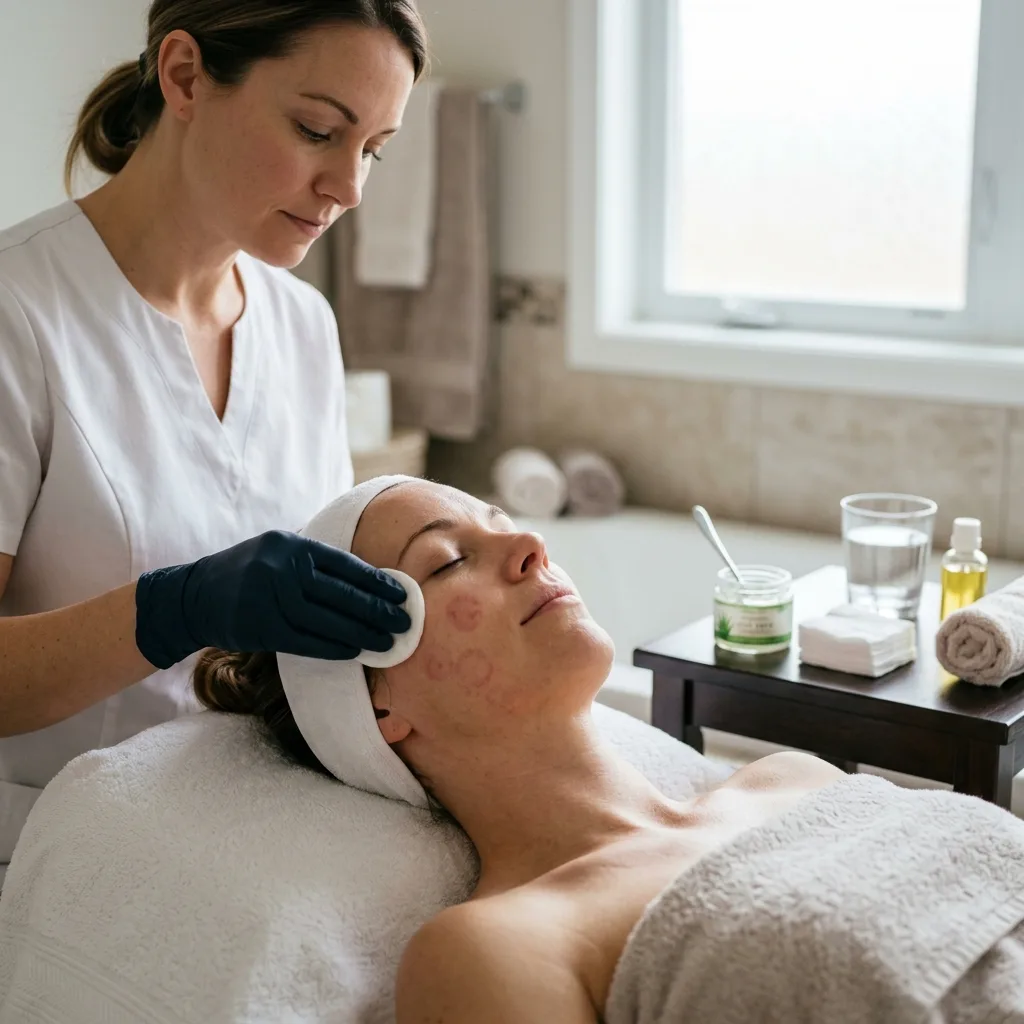
Aftercare determines how well the marks heal and how low your infection risk is. Follow these rules for at least 24-48 hours:
- Keep it clean: wash your face gently with a mild cleanser and apply the antiseptic or healing cream recommended by your practitioner.
- Do not touch or scratch: the nicked points are small wounds; your hands carry bacteria.
- Avoid makeup on the treated areas for at least 24 hours.
- Skip harsh actives: no exfoliators, retinoids, or strong acids over the treated skin for a few days.
- No saunas, steam rooms, or heavy sweating for 24-48 hours.
- Keep the area out of direct sun: sun exposure on healing marks increases hyperpigmentation risk.
- Sunscreen daily: after healing starts, protect the area to reduce darkening.
- Watch for warning signs: worsening redness, swelling, warmth, pus, or fever means get to a doctor.
Can You Do Hijama on Face at Home?
Short answer: no, especially not wet hijama. Home facial cupping sets are sold online, and dry kits for gentle home use exist, but the face is a poor place to learn. The risks of broken skin near the eyes, uneven suction, bruising, and infection are simply not worth a small saving. If you want the cosmetic benefit of facial massage, a professional dry facial cupping or gua sha routine led by a therapist is a far safer path. Leave wet hijama on the face to trained practitioners.
Frequently Asked Questions
Does hijama on the face really help headaches?
Some users report relief from tension headaches after forehead and temple cupping, and cupping therapy overall has some evidence for pain relief. But facial-specific studies are sparse, and headaches have many causes. Treat facial hijama as one complementary option, not a replacement for medical assessment of a new or severe headache.
How long do the marks from hijama on the face last?
Typically anywhere from a few days to about two weeks, depending on how much suction was used and how your skin heals. Marks on the face are difficult to hide, so plan sessions around your schedule.
Is dry or wet hijama better for the face?
For cosmetic goals, dry facial cupping is gentler and safer. Wet hijama is more traditional and is chosen more often for headache or sinus-related goals. Either way, a trained professional should perform the procedure.
Can facial hijama cause acne?
It can make acne worse if suction is applied over active inflamed pimples, and broken skin can spread bacteria. If you have active acne, discuss it with the practitioner before proceeding.
Does hijama on the face remove dark circles?
There is no clinical evidence that cupping removes dark circles. Gentle lymphatic drainage may temporarily reduce puffiness, but dark circles caused by genetics, thin skin, or fatigue will not be fixed by cupping.
Is hijama on face painful?
Dry cupping feels like strong suction or a deep massage. Wet hijama adds a sharp pinprick when the skin is nicked. Pain should be brief; significant or spreading pain is a warning sign.
Can pregnant women do hijama on the face?
Cupping is generally avoided during pregnancy, including facial application. Check with your obstetrician before considering any traditional therapy while pregnant.
The Bottom Line on Hijama on Face
Hijama on the face is a popular traditional therapy that many people enjoy for its relaxing effect, increased circulation, and temporary skin brightness. But it is not a scientifically proven cure for any skin or health condition, and it carries real risks because the face is delicate and highly visible. If you want to try it, choose a certified practitioner who uses single-use equipment, start with a small dry test patch, follow the aftercare rules, and have realistic expectations about what the marks and the results will look like.
If you are considering hijama for an underlying health condition such as high blood pressure or high blood sugar, address the condition with a doctor first. Our related guides can help you understand the basics: a full look at cupping therapy, the older overview of facial cupping, and evidence-based guides on high blood pressure and heart healthy eating.
Explore more on Dangit: health, technology, science, nature, featured, lifestyle, society, the local business directory and more reading.







[…] modern, safety-first version of this guide? We have written a complete, evidence-checked guide to hijama on face covering benefits, real risks, cost, and […]
[…] Applying cupping to the face? Facial application has its own risks, costs, and aftercare rules, and hijama on the face is covered in detail in our dedicated guide: Hijama on Face: Benefits, Side Effects, and What You Should Know. […]