










Cholesterol numbers scare people more than almost any other blood result, but the response rarely needs to be sudden or drastic. Most people can reduce cholesterol naturally with a coherent set of daily habits — a specific food pattern, soluble fibre, better fat choices, consistent movement, and weight loss — and in many cases that combination is enough to bring levels back into range without medication. This guide explains what your LDL, HDL, and triglycerides actually mean, the diet steps with the strongest evidence, and when medicine still has a role.
How to reduce cholesterol naturally: the 3 levers that matter most
If you want to reduce cholesterol naturally without an extreme diet, three levers carry almost all of the effect, and they are easier to hold than a strict meal plan. First, replace saturated with unsaturated fats — swap the ghee base of dishes for mustard or olive oil, and use butter sparingly. Second, eat a daily serving each of oats, pulses, and a small handful of nuts, which together provide the soluble fibre and plant sterols with the clearest trial evidence. Third, walk 30 to 40 minutes most days and let that movement compound with weight loss.
These three together are the core of any credible plan to reduce cholesterol naturally, and they are the same instructions a nutritionist would give for blood pressure and blood sugar — which is exactly why they matter. The metabolic markers improve together when asked the same question.
Which cholesterol number should you focus on first?
A standard lipid panel returns four headline numbers: LDL cholesterol — the “bad” fraction that builds up in artery walls and is the main target of treatment; HDL cholesterol — the “good” fraction linked to carrying cholesterol away; triglycerides — a form of fat in the blood tied closely to diet; and total cholesterol — the sum, which matters mostly in context.
The target most doctors focus on is LDL: under about 100 mg/dL is generally desirable, and the goal drops lower — under 70 or even 55 — for people with existing heart disease or diabetes. Triglycerides below 150 mg/dL are normal, and HDL above 40 (men) or 50 (women) is the favourable side. The honest framing: LDL is the number the lifestyle changes below move most, so it is also the number worth knowing before you start.
The plate that lowers LDL cholesterol
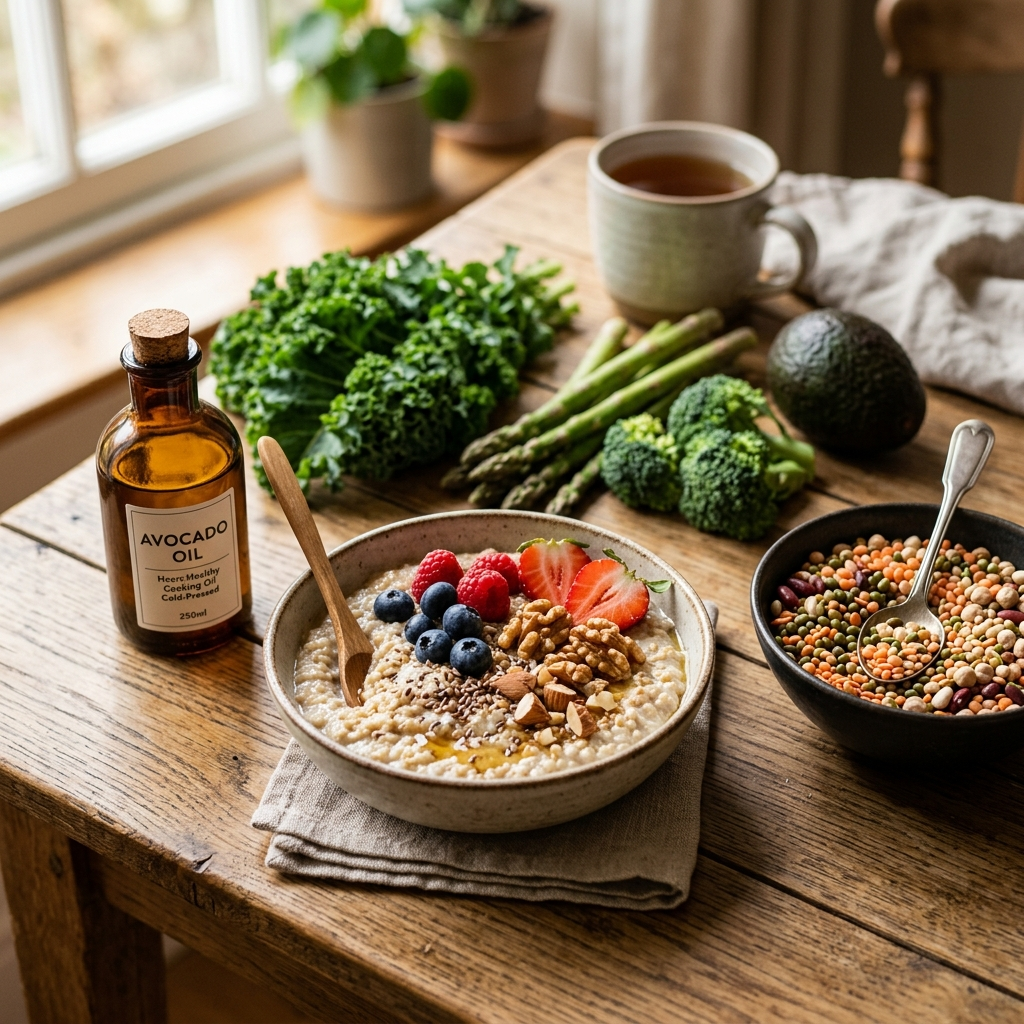
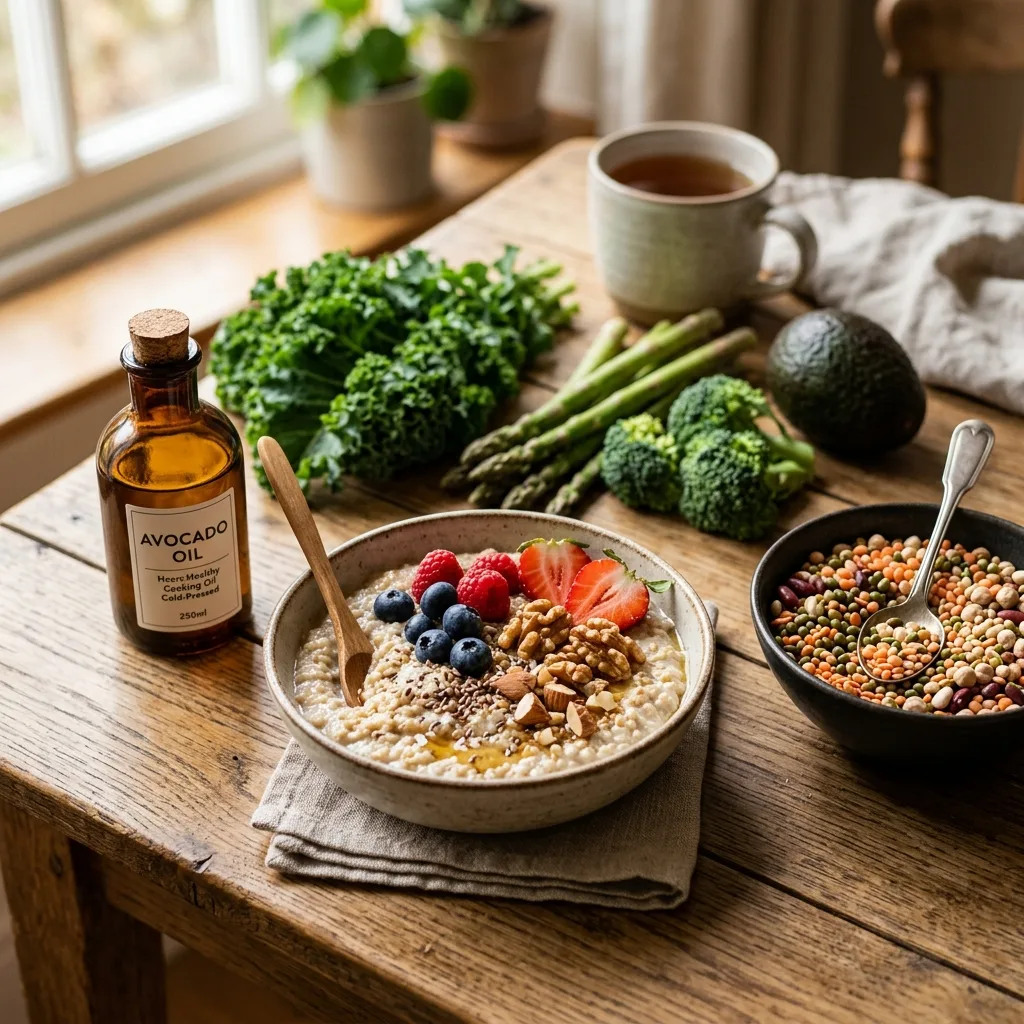
The cholesterol-lowering diet is not a mystery diet; it is a plant-forward pattern with three levers that each have direct evidence behind them. The first is eating more soluble fibre — oats, barley, beans, lentils, apple, and eggplant, which bind cholesterol in the gut and carry it out. The second is switching saturated to unsaturated fats: less butter, ghee, red meat, and fried foods; more olive, mustard, and nut oils, nuts, and fatty fish. The third is eating more vegetables and whole grains generally, which displaces the calorie-dense, lipemic foods that push LDL and triglycerides up.
A useful shorthand for Indian readers: the traditional meal pattern of dal, vegetables, whole wheat roti or millet, yogurt, and modest oil is already close to heart-healthy. The drift happens with deep-fried snacks, heavy sweets, and generous ghee — precisely the extras that move the numbers up. Reversing the drift counts for more than any single single superfood.
Foods scientifically shown to lower LDL
Several foods stand apart from the general advice because trials have measured their effect directly:
Oats and oat bran, through the beta-glucan fibre, reduce LDL by a few percent when eaten regularly. Whole walnuts and almonds, in about a small handful a day, modestly reduce LDL and improve the overall profile. Pulses — beans, chickpeas, lentils — rank among the best cholesterol-lowering foods in aggregated trials. Soy protein and soy milk contribute a small but real LDL reduction in some people. Psyllium husk, a soluble fibre supplement, produces one of the more measurable LDL reductions available without a prescription, typically 5 to 10 percent.
None of these are magic. They work as a stack, and the stack works best when it replaces, rather than tops up, the foods that pushed the numbers up.
Cooking oil choices that reduce cholesterol
Oil is where many households unknowingly invert their lipid profile. The key distinction is between saturated fat — firm at room temperature: butter, ghee, coconut oil, palm oil — and unsaturated fats — liquid oils: olive, mustard, groundnut, sunflower, and rapeseed. Replacing the former with the latter is one of the single clearest dietary levers for LDL.
Practically: cook with mustard or olive oil for daily use, keep ghee for occasional flavour rather than the base of every meal, and limit deep frying. Even better, shift the fat emphasis toward whole sources — nuts, seeds, and fish — which bring fat with protein and fibre attached, not alone.
Foods you can eat freely on a cholesterol-lowering approach
The cholesterol-friendly plate is far from empty. Vegetables of every colour, whole fruits, dal and whole beans, whole grains, oats, nuts in moderation, lean poultry, and fish can form the backbone of every meal. What shrinks is the fried layer, the generous ghee, and the constant sweet snacks — and the meals that remain are genuinely filling because fibre and protein are what make people feel full.
This is why a plan to reduce cholesterol naturally rarely feels like deprivation once it becomes the default way of cooking. The food on the plate changes in proportion rather than disappearing, and the flavour improvements — assertive spices, lemon, fresh coriander, real oil — are exactly the parts traditional cooking already does well.
Exercise and cholesterol: how movement changes the profile
Exercise has its strongest and most reliable effect on triglycerides, which respond to aerobic work within weeks, and a solid effect on HDL. Its direct LDL reduction is more modest — the bigger LDL wins come from the weight loss and dietary substitutions that usually travel with an active routine.
The prescription that matters: 30 to 40 minutes of brisk walking, cycling, or swimming on most days, built up gradually. People with high triglycerides see among the fastest improvements from this change, and the effect compounds with the same walking routine that lowers blood pressure and improves fasting blood sugar. Consistent movement is the one habit that touches every cardiovascular number at once.
Weight loss and cholesterol: the dose–response
Body weight and LDL travel together, and weight loss improves the whole lipid panel — LDL down, HDL up, triglycerides sharply down. The most impressive triglyceride reductions come from weight loss combined with reduced refined carbohydrates, which is the metabolic-health pattern this site keeps returning to.
A 5 to 10 percent weight reduction produces measurable lipid changes, and the biggest jumps happen in people who lose fat from the abdominal region. No single food does what consistent weight loss does, which is why the plate, the walk, and the sleep habit all feed the same effort. This is identical to the route to lower blood pressure, since cholesterol and pressure respond to the same lifestyle foundations.
How quickly does diet lower cholesterol?
LDL cholesterol responds to diet changes within four to six weeks, and the full effect of a sustained pattern shows by about three months — the window in which most doctors would re-test after starting lifestyle changes. Reductions of 10 to 20 percent in LDL are realistic for a genuinely committed dietary shift, which is clinically meaningful but often not enough alone when starting LDL is severely elevated.
The three-month timeline is also why the habit must be consistent rather than heroic. A two-week salad sprint followed by a return to ghee-heavy meals produces no durable change; a moderate, consistent, plant-forward pattern produces the numbers. Measuring at the three-month mark, rather than weekly, is the honest way to evaluate it, and it is the same horizon used in trials that show how to reduce cholesterol naturally with lasting results.
Natural cholesterol supplements: what works and what does not
Several supplements are marketed for cholesterol with claims far ahead of the evidence. The ones with real (modest) support include psyllium husk and other soluble fibres, green tea extracts, and plant sterols, which block a small amount of dietary cholesterol absorption. The ones with thin or negative evidence include red yeast rice, which acts like a weak statin and carries safety and quality concerns, and most antioxidant “heart” blends.
The pattern worth noticing: the supplements with evidence are the ones that mimic dietary fibre — which is just another way of saying the whole-food pattern already delivers the effect with far less cost and risk. Supplements should be a doctor-approved addition, not a substitute for the plate, and never a reason to skip a prescribed statin.
What your lipid panel does not tell you
Two gaps in the standard panel go unmentioned in most conversations. First, the LDL it reports is usually a calculated rather than measured value, and the calculation becomes less reliable when triglycerides are very high or very low — a detailed lipid profile measures directly when that matters. Second, the panel says nothing about particle size and inflammation, the details of the apolipoprotein-B story that some cardiologists use for finer risk decisions. For most people the standard numbers are enough; the nuance matters mainly when risk is ambiguous.
Practical upshot: do not let jargon stall you. Knowing your LDL, HDL, and triglycerides, acting on the food and activity levers, and retesting at three months covers a large share of the benefit. The detailed panels are for when a doctor wants to refine the picture, not for delaying the obvious.
When diet alone is not enough: statins and when they matter
Lifestyle change is the foundation, but many people still need medication, and the decision is risk-based, not a test of willpower. Statins are the best-studied cholesterol drugs in medicine and reduce heart attack and stroke risk substantially in people with elevated LDL, especially those with diabetes, a family history, or established heart disease. For someone with LDL above about 130 with those risk factors, the expected benefit of a statin routinely outweighs the small risk of side effects.
The honest position to bring to your doctor is neither “pills are a failure” nor “I will fix it all with oats.” Bring your commitments — dietary changes underway, weight and movement goals, and your numbers — and ask the question the decision actually hinges on: what is my computed cardiovascular risk, and does a statin change it enough to matter? That is a conversation, not a verdict.
Which Indian food swaps help reduce cholesterol naturally
Practical swaps beat abstract advice, especially when eating out is a daily reality. Choose the dal and vegetable dishes over the paneer and bhature; pick tandoor-roasted or grilled chicken over the deep-fried cutlet; take a roti and sabzi over a heavy paratha and white-rice plate; and use the yogurt-on-the-side habit to replace a second helping of the fried course. Each swap is small, but multiplied across a week they remove a meaningful share of the saturated fat that drives LDL up. Portion habit matters too — the largest plate in the house is usually the wrong size for a heart-healthy goal.
This is also where the pattern becomes culture-friendly rather than foreign. The traditional Indian kitchen — dal, legumes, millets, vegetables, and modest oil — already contains the elements of a heart-healthy diet, and restoring its earlier proportions is the most comfortable way to reduce cholesterol naturally while keeping the food you grew up with on the table.
Body weight, sleep, and cholesterol: the indirect levers
Weight loss, as covered, improves the whole panel. Sleep and stress affect cholesterol more than people realise through the metabolic hormones that govern appetite and fat handling — a tired body reaches for dense calorie sources, which quietly works against every food swap above. Protecting sleep therefore protects the food pattern, which is why the practical advice is consistent: fix the plate, move daily, and sleep enough so the other two stay achievable.
How to make these changes stick
Durability comes from defaults, not discipline. Buy oats and pulses in bulk and keep them visible; cook one pot of dal that covers two meals; choose the oil that is already in the pantry by default rather than switching oils per dish; and walk at the same time each day so it becomes a calendar event instead of a decision.
Keep a monthly diary of the two or three swaps you actually completed, because visible progress is the strongest motivator there is. When the environment does the remembering, the food pattern survives a busy month without heroic effort. The same principle applies to the three-month re-test: book it when you start, so the sample is drawn on schedule instead of being postponed indefinitely.
Frequently asked questions about reducing cholesterol naturally
Can you lower cholesterol in a month?
Partial reduction within four weeks is realistic, and the full effect of a consistent pattern appears around three months. A 10 to 20 percent LDL fall is achievable with committed diet and weight changes in that window.
Are eggs bad for cholesterol?
Moderate egg intake — up to one a day in most people — does not meaningfully raise LDL for the majority, because dietary cholesterol matters far less than saturated fat and body weight. People with diabetes or high LDL should match egg intake to their doctor’s guidance.
Does lemon or garlic actually lower cholesterol?
Garlic shows small, inconsistent LDL effects in trials; lemon on its own does not. Both are fine as food, but neither replaces oats, pulses, unsaturated fats, and weight management.
Is high cholesterol hereditary?
Sometimes. Familial hypercholesterolaemia causes very high LDL from birth and needs medication even in healthy-weight people. If your LDL is strikingly high or a close relative had early heart disease, that pattern deserves a lipid specialist conversation, not just diet advice.
Can I stop statins once my cholesterol is normal?
Only with your doctor’s explicit plan. Statins reduce long-term risk in people for whom they are prescribed; stopping without guidance can allow LDL to rebound and risk to return. Some people do reduce doses or stop under medical supervision when lifestyle becomes strong enough.
What is the quickest single change for triglycerides?
Removing sugar-sweetened drinks and cutting refined carbohydrate portions produces the fastest triglyceride improvements, usually visible within weeks, often ahead of LDL changes.
Bottom line
You can reduce cholesterol naturally with a pattern that is consistent, not heroic: a plant-forward plate with oats, pulses, and soluble fibre; unsaturated oils replacing ghee and butter; a small daily handful of nuts; 30 to 40 minutes of daily movement; and weight loss where needed. Choose the fat swaps, fibre, and movement as the foundation, and let the numbers confirm the direction. LDL responds within weeks and matures by three months. Know your numbers, act before they demand medication, and treat a statin — when genuinely indicated — as protection, not defeat, because it works on top of the same habits that guard your blood pressure and blood sugar together.
Sources and references
- American Heart Association: Cholesterol
- NHS: High Cholesterol
- CDC: About Cholesterol
- Mayo Clinic: Cholesterol Diet
- WHO: Cardiovascular Diseases
- High Cholesterol: The Complete Guide
- High Triglycerides: The Complete Guide
- Heart Healthy Indian Diet Guide
- High Blood Pressure: The Complete Guide
- Fatty Liver: The Complete Guide



[…] Reduce Cholesterol Naturally: 7 Simple Dietary Swaps That Work […]